
Prince of Orange Robinsons pub in Ashton-under-Lyne, Tameside, Greater Manchester, England, UK.
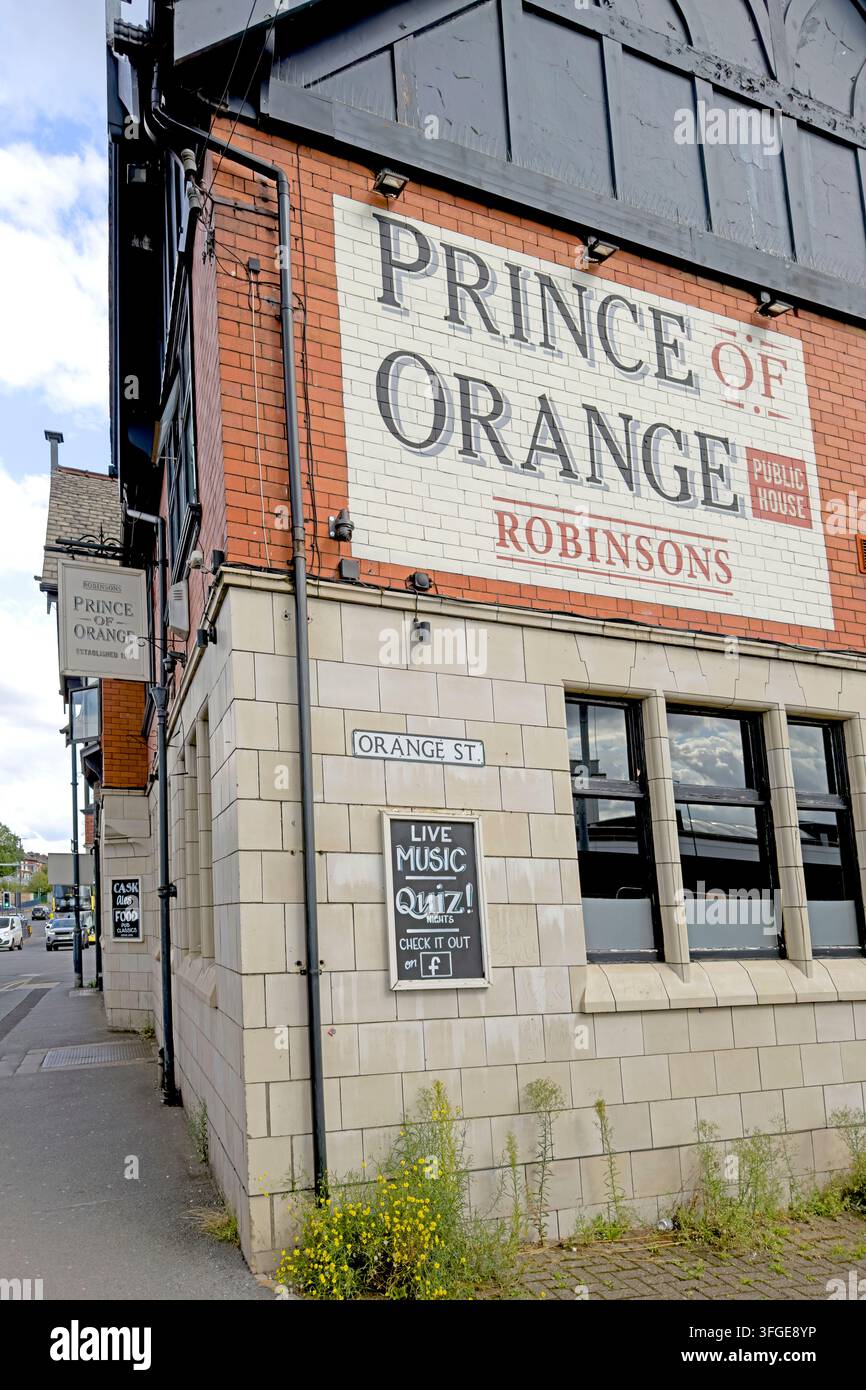
Image details
Contributor:
Tony SmithImage ID:
3FGE8YPFile size:
82.2 MB (2.9 MB Compressed download)Releases:
Model - no | Property - noDo I need a release?Dimensions:
4376 x 6564 px | 37.1 x 55.6 cm | 14.6 x 21.9 inches | 300dpiDate taken:
22 August 2026Location:
Ashton-under-Lyne, Tameside, Greater Manchester, England, UKMore information:
. The Prince of Orange pub in Ashton-under-Lyne displays a traditional tiled Robinsons brewery sign on its dark-painted frontage. The historic-looking exterior and brewery branding give the building the appearance of a classic Greater Manchester tied house. Robinsons is a long-established family brewery based in Stockport and its pub estate remains a visible part of the built environment across Greater Manchester and Cheshire. Traditional local pubs have faced sustained pressure from changing drinking habits, rising operating costs and competition from supermarkets, bars and restaurant chains. Surviving brewery signs and façades are therefore both commercial branding and part of local streetscape history. The tiled 'Prince of Orange' panel and Robinsons name are embedded architectural advertising, designed to survive much longer than temporary vinyl pub signs. Brewery ownership once shaped the appearance and beer choice of thousands of British pubs, and tied-house branding is still visible across the North West. The frontage therefore records both a functioning hospitality business and the historic relationship between local breweries, property estates and neighbourhood drinking places. The survival of distinctive pubs is also a question of town-centre character because closures can remove long-established meeting places as well as individual businesses. Traditional brewery signs and tiled name panels can outlast several operators, turning commercial branding into part of the architectural history of a street. Real ale and independent brewing give some venues a specialist identity that differentiates them from standardised chain bars and mass-market lager offers. Hospitality businesses rely heavily on discretionary spending, so changes in household income and city-centre footfall can quickly affect trade. The venue is shown as a functioning part of the surrounding street or station rather than as a detached sign.

