
Waters Edge apartment development at Old Station Gardens, Station Road, Warrington, Cheshire, UK.
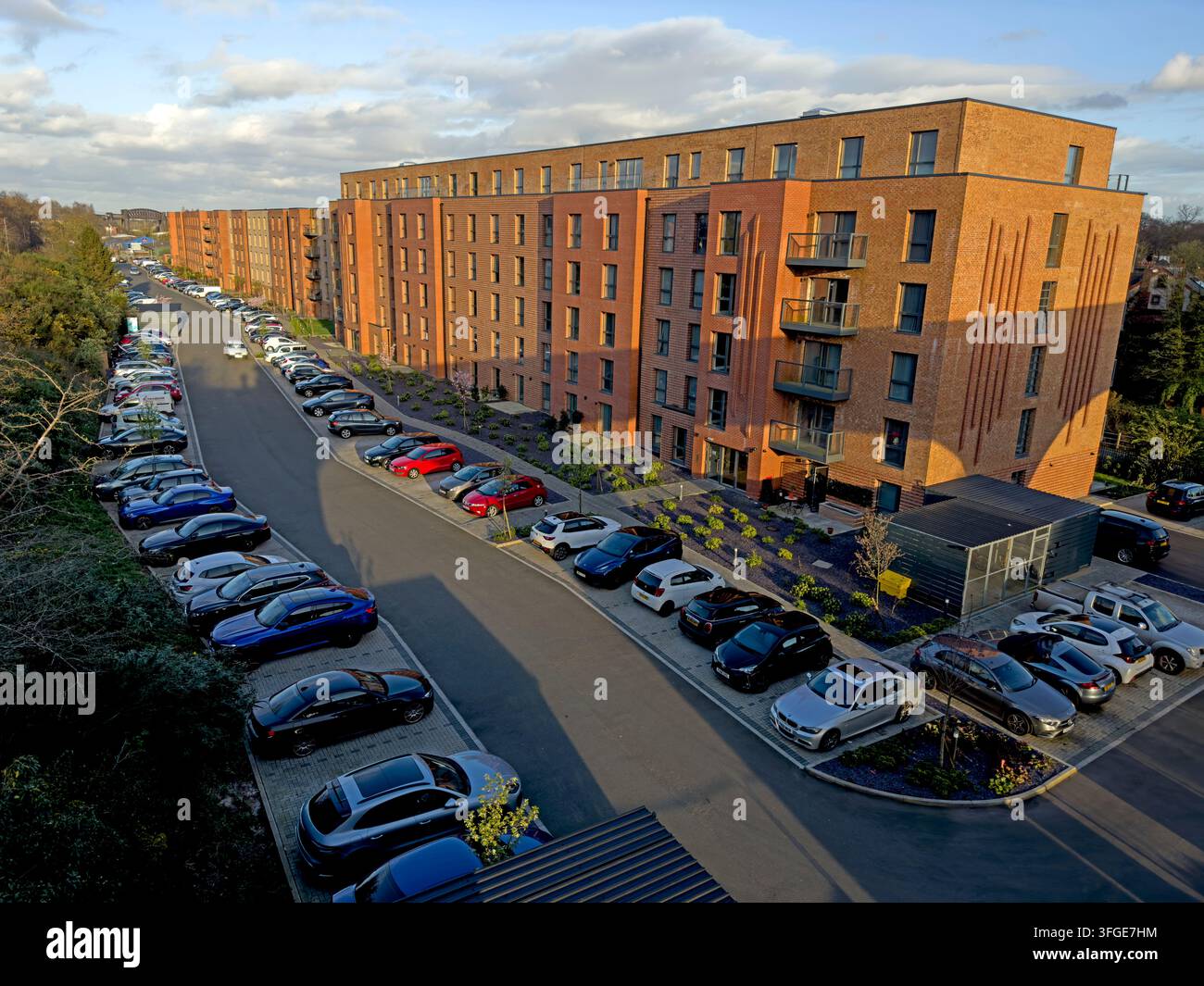
Image details
Contributor:
Tony SmithImage ID:
3FGE7HMFile size:
89.7 MB (3.9 MB Compressed download)Releases:
Model - no | Property - noDo I need a release?Dimensions:
6464 x 4848 px | 54.7 x 41 cm | 21.5 x 16.2 inches | 300dpiDate taken:
22 March 2024Location:
Old Station Gardens, Station Road, Warrington, Cheshire, WA4 1DH, UKMore information:
. Waters Edge is a large modern red-brick apartment development at Old Station Gardens off Station Road in Warrington. Several residential blocks overlook extensive surface parking, with a mix of balconies, repeated window bays and landscaped edges. High-density apartment schemes around railway corridors and town centres reflect the push to place more homes on previously developed land and near public transport. They also raise practical issues around parking provision, service charges, building management, energy efficiency and long-term maintenance. The development provides a contemporary contrast with Warrington’s older terraces and suburban housing estates. The development is arranged around a broad parking court, showing how even relatively dense apartment schemes in Warrington still make substantial provision for cars. The red-brick palette helps the large blocks sit within a North West residential context, while repeated balconies and windows give the scheme a contemporary apartment character. Its Station Road setting also raises the wider planning question of how new housing near transport corridors can reduce car dependence in practice. Social landlords have to balance day-to-day responsive repairs with planned investment in roofs, windows, heating, insulation, safety systems and the long-term condition of homes. Direct-labour operations require much more than tradespeople: scheduling, mobile working, vans, materials, appointments, stock control and customer communication all affect first-time completion. Affordable homes in high-value locations help maintain mixed communities and keep lower-paid workers within reach of jobs, schools and public transport. Housing associations operate as landlords, developers and long-term asset owners, so property decisions have consequences measured over decades rather than a single commercial lease. The setting remains clearly identifiable.

