
United Utilities maintenance van in a Warrington residential street, amid scrutiny of sewage pollution, water-sector performance and executive pay
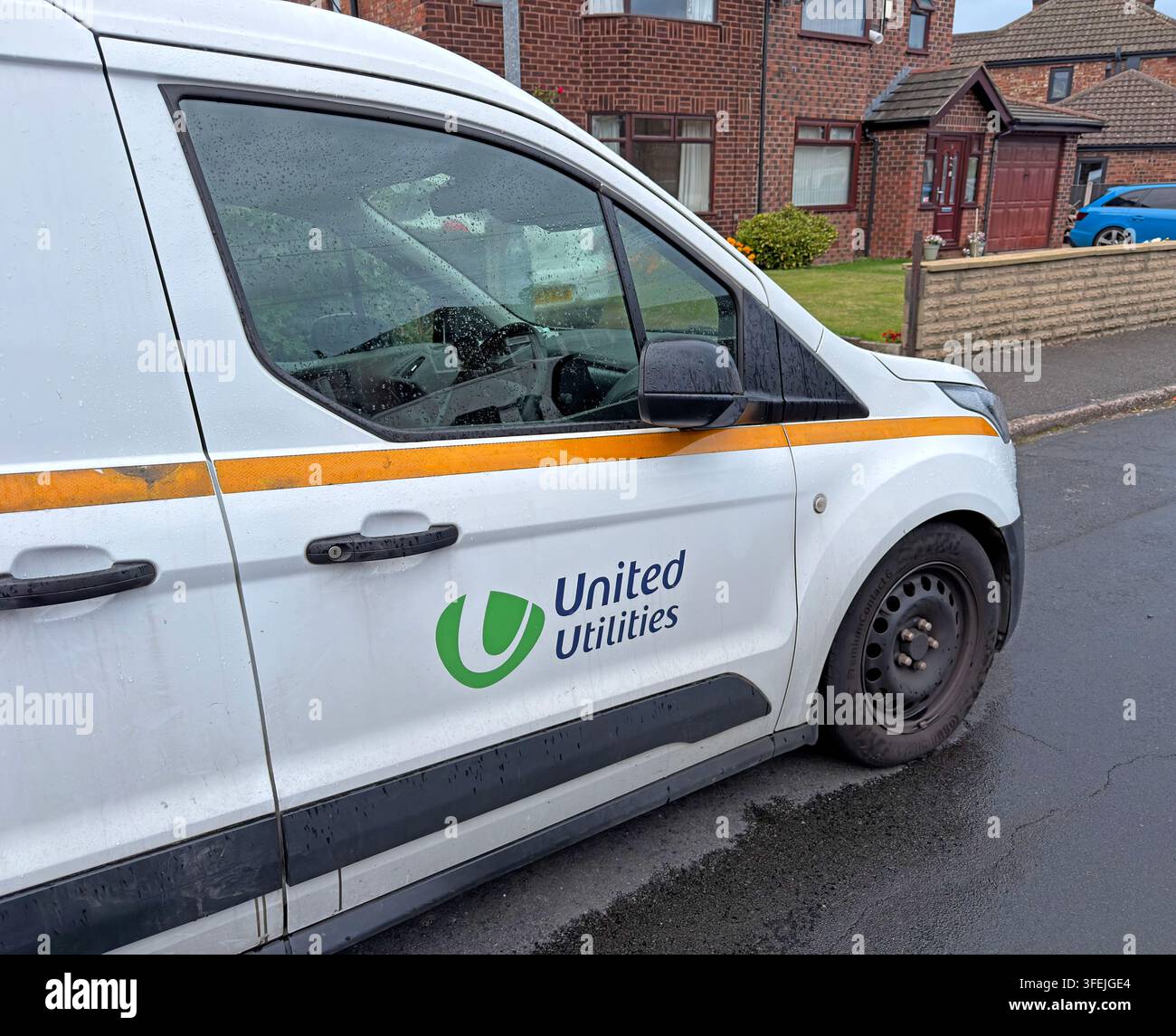
Image details
Contributor:
Tony SmithImage ID:
3FEJGE4File size:
90.8 MB (3.2 MB Compressed download)Releases:
Model - no | Property - noDo I need a release?Dimensions:
6252 x 5074 px | 52.9 x 43 cm | 20.8 x 16.9 inches | 300dpiDate taken:
3 September 2026Location:
Warrington, Cheshire, England, UKMore information:
United Utilities maintenance van parked on a residential street in Warrington, Cheshire, England, showing the operational face of a major privatised water and wastewater company. The vehicle carries the company’s green-and-blue branding and is used by field staff maintaining water mains, sewers and network assets across the North West. The image has strong editorial value because United Utilities, like other English water companies, faces scrutiny over sewage pollution, storm-overflow discharges, environmental performance, customer bills, infrastructure investment and executive remuneration. In September 2026 the company was fined £900, 000, plus costs, after admitting five environmental permit offences linked to raw sewage discharges along the Fylde Coast in 2023. The Environment Agency classified that episode as a Category 1 pollution incident. Earlier in 2026, United Utilities also agreed to fund more than £500, 000 of environmental improvements following separate sewage-discharge permit breaches affecting the River Tame. The company says it is investing heavily to reduce storm-overflow use and improve wastewater infrastructure, reporting a further fall in spill numbers during 2025 and planning billions of pounds of investment across the North West. This contrasts frontline maintenance with debate over whether privatised water companies invest quickly enough to protect rivers, coastlines and customers. Executive pay remains controversial. United Utilities’ 2024/25 annual report initially showed CEO Louise Beardmore receiving total remuneration of £1.671 million, including a provisional annual bonus, although the company later confirmed that no annual bonus was ultimately paid for that year. The photograph can illustrate water privatisation, sewage pollution, storm overflows, environmental regulation, executive pay, public accountability, infrastructure maintenance, water bills and the contested performance of England’s privately owned water industry

