
Historic fingerpost signs pointing to Dutton, Northwich, Hatton, Stretton and Daresbury, Cheshire.
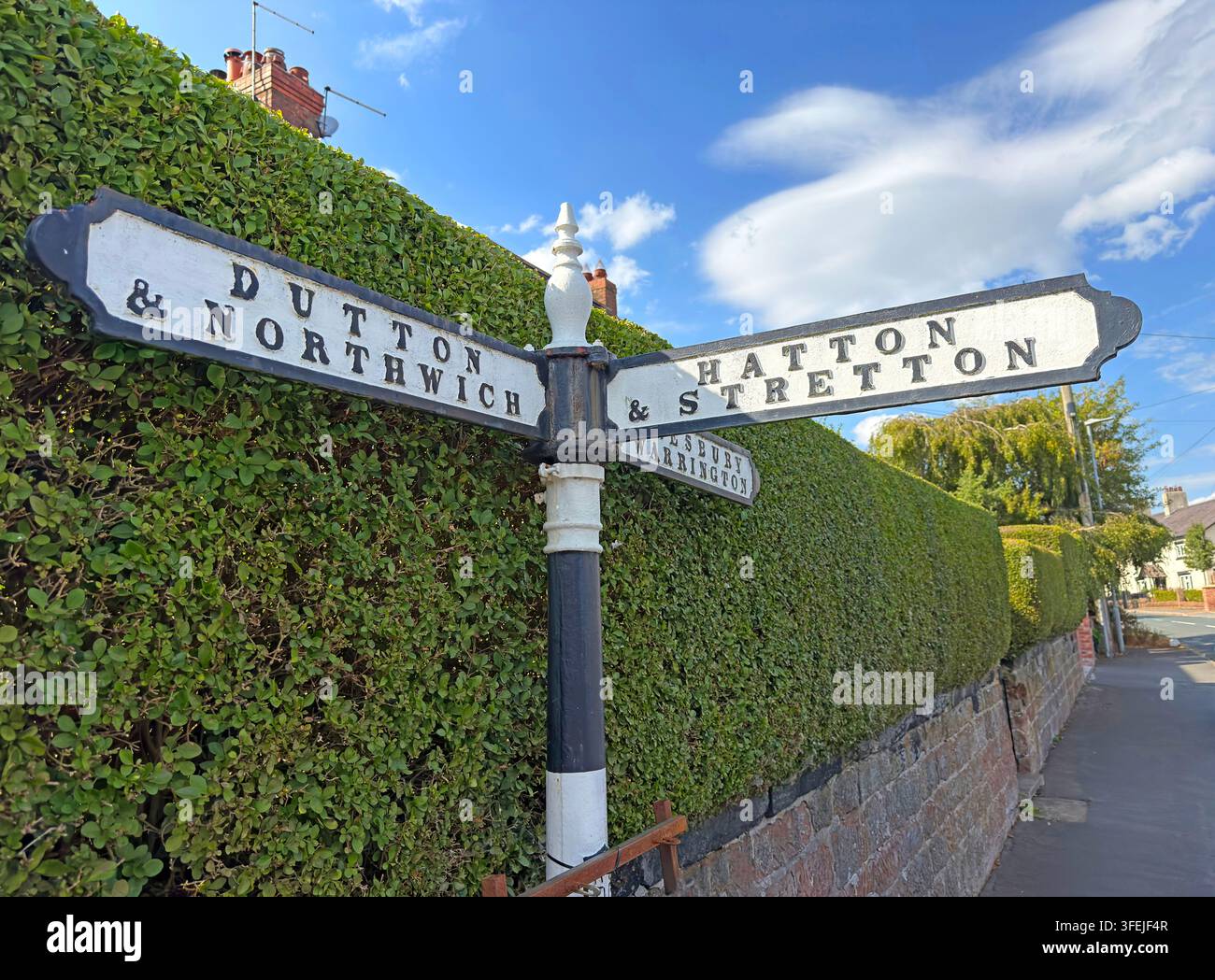
Image details
Contributor:
Tony SmithImage ID:
3FEJF4RFile size:
87.4 MB (4 MB Compressed download)Releases:
Model - no | Property - noDo I need a release?Dimensions:
6432 x 4749 px | 54.5 x 40.2 cm | 21.4 x 15.8 inches | 300dpiDate taken:
25 August 2026Location:
Cheshire, England, UKMore information:
. Traditional black-and-white fingerpost signs direct travellers towards Dutton, Northwich, Hatton, Stretton and Daresbury, preserving a distinctive form of rural British road signage. Traditional fingerposts are a distinctive feature of rural Britain, giving destinations on separate white arms mounted to a central pole. This example points towards Dutton, Northwich, Hatton, Stretton and Daresbury, linking villages and routes in north Cheshire around the Warrington and Northwich area. Many surviving fingerposts pre-date modern reflective road signs and have become valued pieces of streetscape heritage even when the roads themselves now carry contemporary traffic-management signage. Their typography, black-and-white finish and local place names make them useful evidence of how road navigation worked before satellite navigation and smartphones, while the named destinations map an older network of parish, market-town and cross-country routes. The arms preserve traditional place-name hierarchy without route numbers or digital information, relying on the traveller already understanding the local geography and choosing direction one junction at a time. Traditional fingerposts pre-date satellite navigation and express direction through the physical geometry of the junction: each arm literally points towards the next settlement. Names such as Dutton, Northwich, Hatton, Stretton and Daresbury place the sign firmly within the road network of rural Cheshire and preserve older local geography that can be obscured by numbered routes and bypasses. They can also reveal former journey patterns, when travellers moved through villages rather than following strategic roads. Weathering, repainting or replacement gradually changes such signs, so a clear contemporary view has genuine value for transport history and the visual record of the Cheshire landscape. Its black lettering and white arms follow the traditional visual grammar of rural direction signs.

