
HSBC UK bank branch at 19 High Street, Northwich, Cheshire, England, UK.
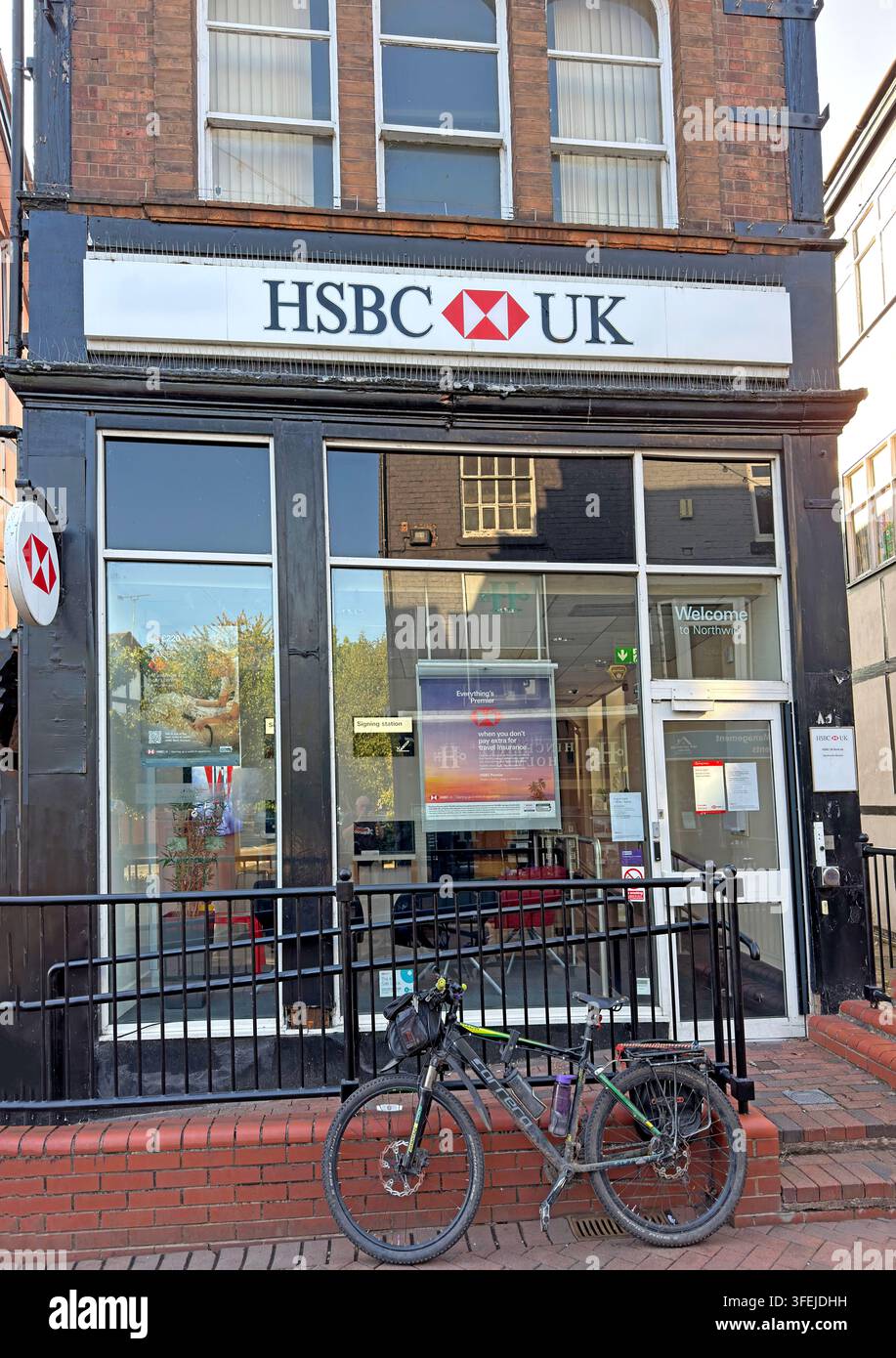
Image details
Contributor:
Tony SmithImage ID:
3FEJDHHFile size:
82.3 MB (3.6 MB Compressed download)Releases:
Model - no | Property - noDo I need a release?Dimensions:
4506 x 6387 px | 38.2 x 54.1 cm | 15 x 21.3 inches | 300dpiDate taken:
23 August 2026Location:
19 High Street, Northwich CW9 5BZ, Cheshire, England, UKMore information:
. The HSBC UK branch frontage in Northwich represents traditional high-street banking at a time when customers increasingly use mobile and online services and branch networks continue to evolve. HSBC's Northwich branch is part of a banking network that has been steadily reduced as routine transactions move to apps and online services. The familiar HSBC branding on a traditional town-centre branch contrasts with the wider closure of bank counters across Britain and the resulting debate about cash access, face-to-face advice and provision for customers who are digitally excluded. Northwich is a substantial Cheshire town serving a wide rural hinterland, so a surviving branch has significance beyond the immediate shopping street. Bicycle parking outside places the bank in an ordinary daily streetscape at a time when physical branch banking is contracting rapidly across Britain. Branch exteriors are becoming historically dateable because mergers, closures and rebrands can remove a banking name from a high street very quickly, even where the underlying building remains unchanged. HSBC's Northwich branch belongs to a banking network that has been shrinking as transactions move to apps, online banking and centralised service centres. High-street branches once combined cash handling, cheque deposits, lending discussions and business banking under one roof; many of those functions can now be completed remotely. Closures have nevertheless become contentious because not every customer is digitally confident and some businesses still need to deposit cash. A surviving branch at 19 High Street therefore records physical banking infrastructure at a point of rapid contraction. The corporate fascia, ATM facilities and building can all outlast individual service changes, making the branch relevant to stories about financial inclusion, bank restructuring, town-centre footfall and the disappearance of familiar institutional names from British high streets.

