
EasyJet aircraft and ground vehicles on the apron at Manchester Airport, England, UK.
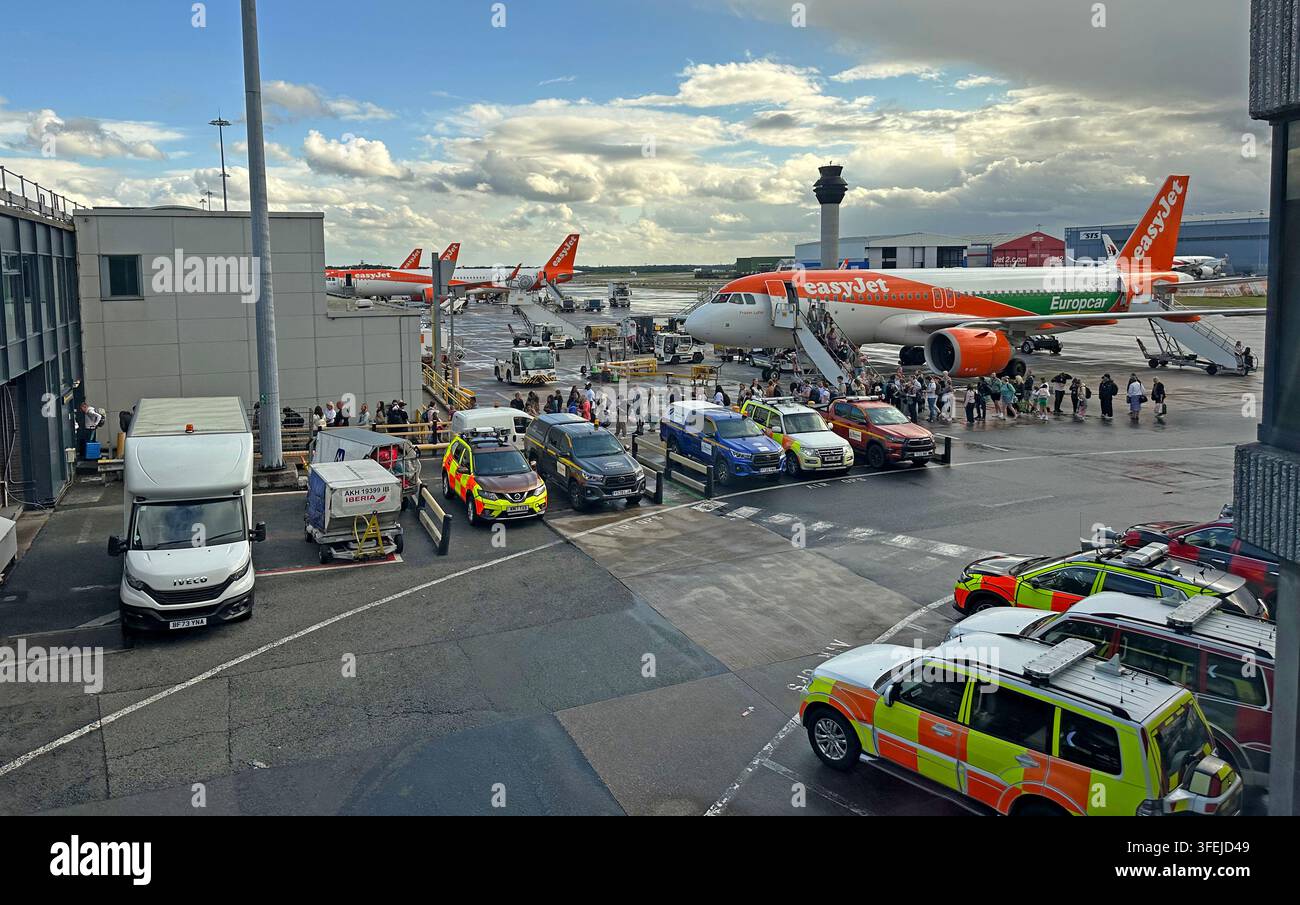
Image details
Contributor:
Tony SmithImage ID:
3FEJD49File size:
41.9 MB (1.9 MB Compressed download)Releases:
Model - no | Property - noDo I need a release?Dimensions:
4832 x 3032 px | 40.9 x 25.7 cm | 16.1 x 10.1 inches | 300dpiDate taken:
25 May 2025Location:
Manchester Airport, Greater Manchester, England, UKMore information:
. Several easyJet aircraft stand on the apron at Manchester Airport amid baggage vehicles, service equipment and airport operations, capturing the busy ground-handling environment of a major UK international airport. Manchester Airport is one of the UK's largest airports outside London and a major base for easyJet. The apron view shows the operational side of air travel: aircraft stands, baggage and ground-service vehicles, service roads and the tightly controlled space between terminal and runway. easyJet's orange-and-white Airbus fleet has become a defining visual feature of short-haul European aviation, reflecting the expansion of low-cost flying since the 1990s. Manchester's role as a regional hub gives passengers across northern England direct access to European leisure and business destinations without travelling through London, while also placing the airport at the centre of debates about tourism, jobs, airport expansion, emissions and the future of aviation. easyJet's concentrated orange branding makes the airline identifiable even at distance, allowing airline presence and route competition to be read directly from the working apron without passengers or terminal signage. Manchester Airport is one of the UK's busiest airports outside London and a major base for easyJet, whose orange-tailed Airbus aircraft are a familiar part of the apron. The apron is the working zone between terminal and runway where aircraft are parked, fuelled, catered, loaded, cleaned and prepared for the next sector. Ground vehicles, baggage equipment and tightly controlled stand markings reveal the labour and logistics hidden behind a passenger's relatively simple departure. A busy cluster of aircraft can therefore illustrate airline capacity, holiday travel and route competition, but also the infrastructure and operational choreography required to keep a major regional airport moving safely.

