
Bargain Books neon sign in Soho, London, part of the area's traditional adult-entertainment streetscape.
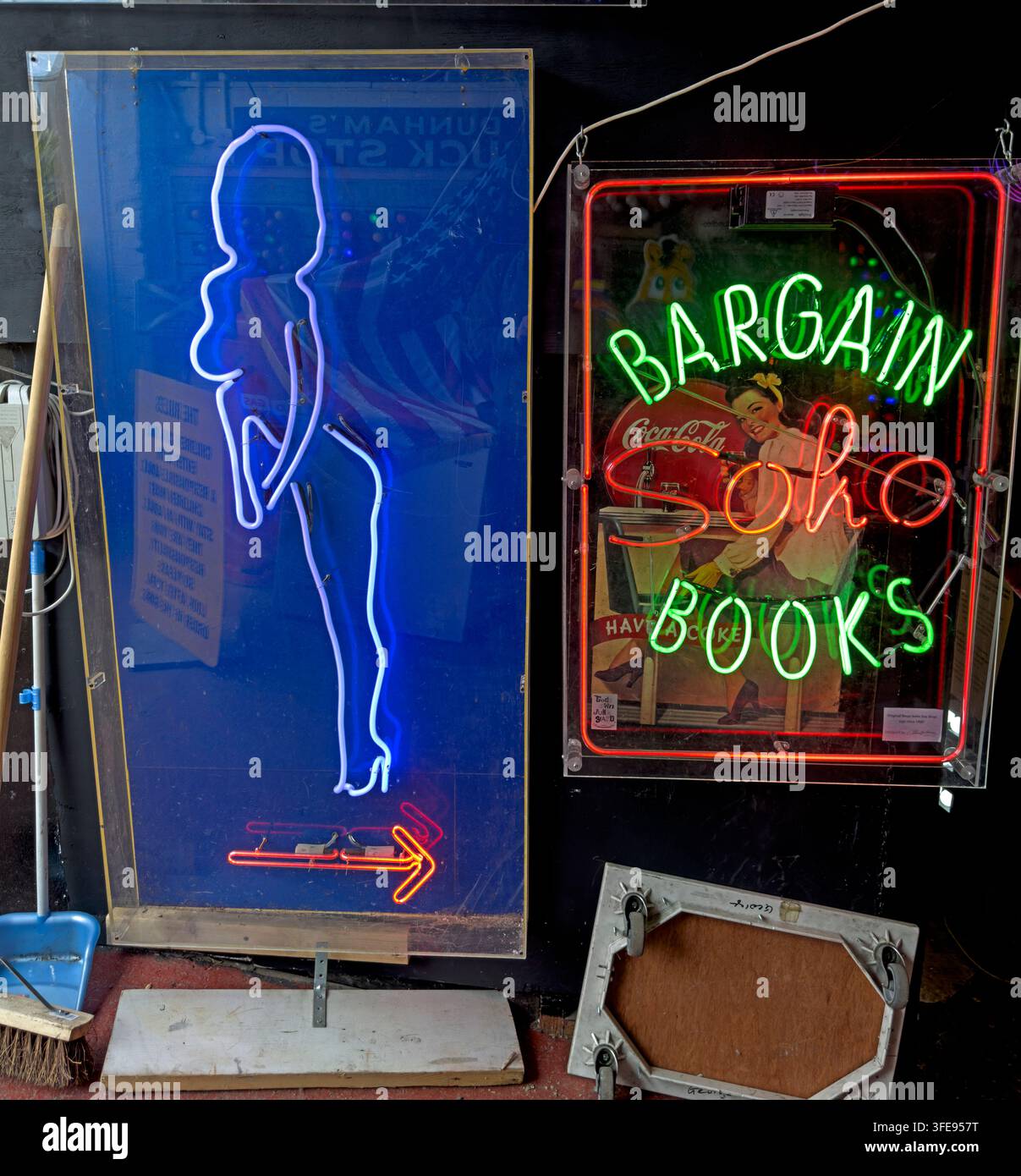
Image details
Contributor:
Tony SmithImage ID:
3FE957TFile size:
80.7 MB (2.4 MB Compressed download)Releases:
Model - no | Property - noDo I need a release?Dimensions:
5119 x 5512 px | 43.3 x 46.7 cm | 17.1 x 18.4 inches | 300dpiDate taken:
21 May 2023Location:
Soho, London, England, UKMore information:
. A compact neon Bargain Books sign and stylised female figure appear in a Soho window, a fragment of the district's long-established adult retail and neon-lit nightlife landscape. The 'Bargain Books' neon in Soho belongs to an older visual language of central London's adult-entertainment district: bright hand-built signs, crowded lettering and windows designed to compete for attention at night. Before internet pornography and online retail, adult magazines, books, films and novelties were sold through physical shops concentrated in areas such as Soho. From the 1980s tighter Westminster licensing and later redevelopment steadily reduced the number of such premises. The survival of ageing neon and unfashionable typography has become historically interesting in its own right, preserving traces of a pre-digital retail culture that once depended on anonymity, passing trade and the dense night-time economy of the West End. Because the sign is imperfect and visually dated, it conveys continuity rather than a newly themed recreation of old Soho, an important distinction as the area becomes increasingly polished and expensive. Cheap bookshops, adult book dealers and hand-painted bargain signs were once much more common in central Soho, where low-cost retail and entertainment sat beside restaurants, music venues and theatres. The word 'bargain' and relatively crude lettering suggest a business aimed at passing trade rather than the carefully curated visual identity now expected in prime West End retail. As rents rose and online bookselling transformed the market, small specialist and remainder bookshops became harder to sustain. The surviving sign is valuable precisely because it is mundane: it records the ordinary commercial texture around Soho's more famous clubs and landmarks. Alongside adult-entertainment neon, it helps show the district before redevelopment and premium hospitality erased many inexpensive, eccentric frontages.

