
Lymm Methodist Church on Eagle Brow after completion of a £700,000 accessibility and net-zero redevelopment in summer 2026.
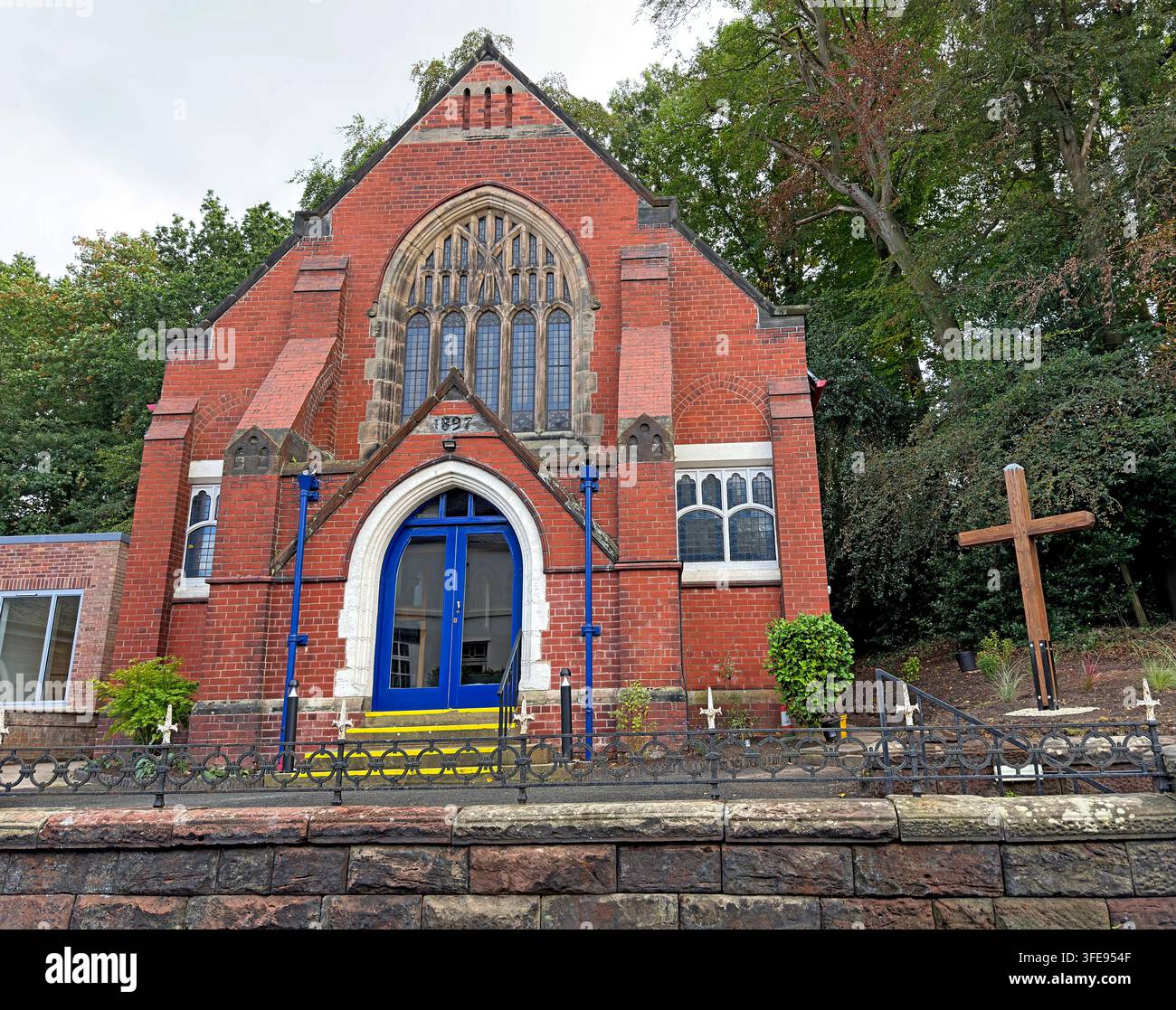
Image details
Contributor:
Tony SmithImage ID:
3FE954FFile size:
90.7 MB (6.4 MB Compressed download)Releases:
Model - no | Property - noDo I need a release?Dimensions:
6332 x 5005 px | 53.6 x 42.4 cm | 21.1 x 16.7 inches | 300dpiDate taken:
31 August 2026Location:
Lymm Methodist Church, Eagle Brow, Lymm, Cheshire, England, UK, WA13 0LPMore information:
Lymm Methodist Church on Eagle Brow, Lymm, Cheshire, photographed after completion of a major £700, 000 redevelopment in August 2026. The red-brick worship building dates from 1897-98 and was designed for the Primitive Methodists by architect James Diggle Mould, replacing an earlier chapel as the congregation expanded. The wider complex also includes an 1850 chapel and an 1865 schoolroom, later linked to the main church by a two-storey addition in 1968. Work on the latest redevelopment began in January 2026 and was intended to make the heavily used premises more accessible, flexible and energy efficient for both worship and community use. A new ground-floor entrance and lobby were created, together with a low-rise staircase and lift to improve access for wheelchair and pushchair users. New unisex and accessible toilets were installed, while an upstairs area was converted into a brighter open-plan lounge with kitchenette. The project also tackled the building's environmental performance. The church removed its gas boiler and installed electric air-to-air heating and air conditioning powered by air-source heat pumps, while flat roofs were insulated to modern standards. The church says the changes should reduce energy use by around 80%, with electricity sourced from renewable supplies, and future solar panels also planned. More than 400 people a week use the buildings for activities including Scouts, Brownies, Beavers, Alcoholics Anonymous, choir, yoga, Tai Chi and Pilates. The refurbished premises are also intended to support Citizens Advice outreach, concerts, exhibitions, author events and dance activities. The 2026 work therefore represents both conservation and adaptation of a historic Methodist site, retaining its nineteenth-century character while improving access, comfort, community use and progress towards net zero. The scheme helps secure the historic community building for continued worship and wider village use.

