
Straw bales in Cheshire in early autumn 2026, illustrating farming pressures after drought, poor grass growth and concerns over winter forage
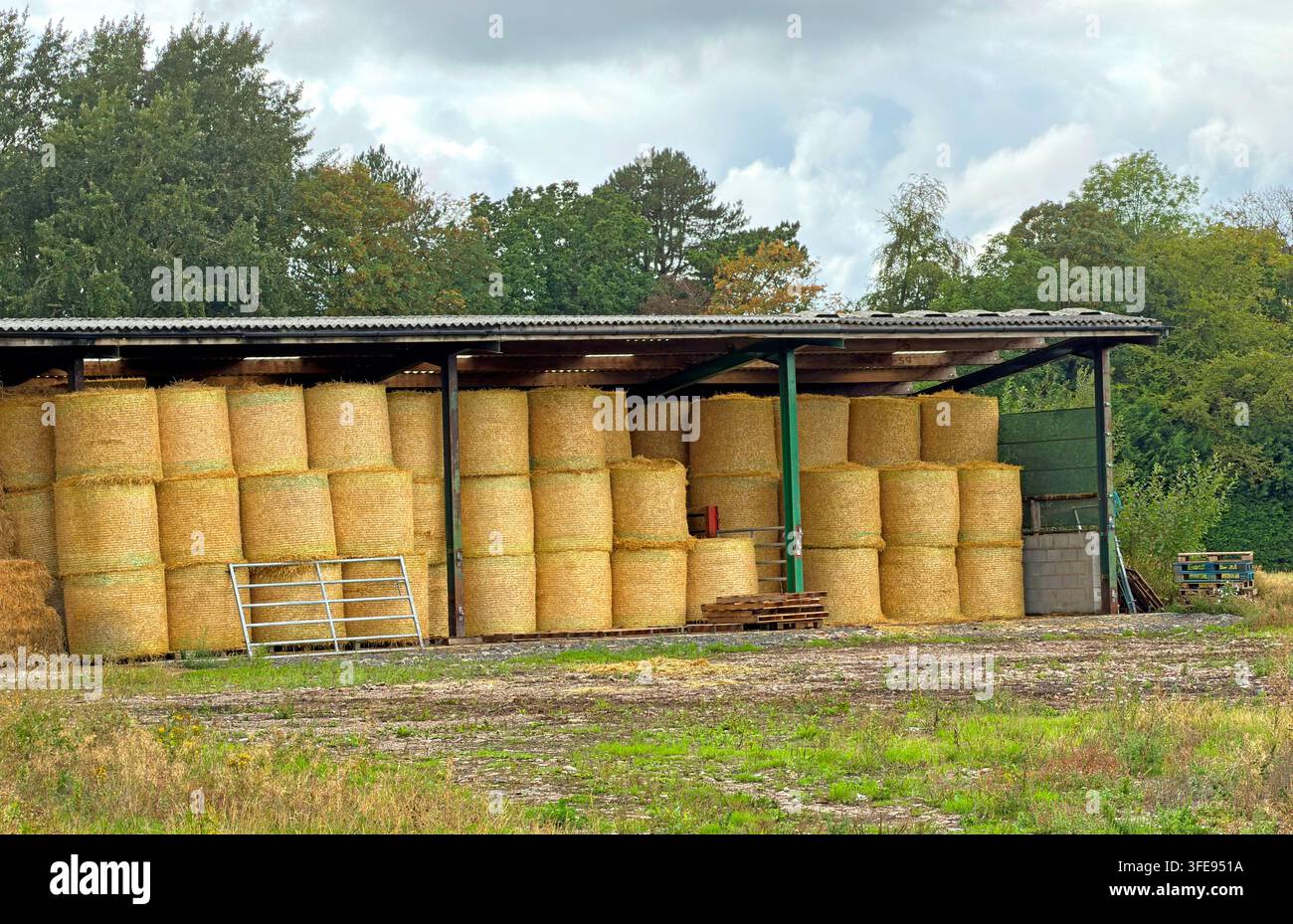
Image details
Contributor:
Tony SmithImage ID:
3FE951AFile size:
68.5 MB (4.1 MB Compressed download)Releases:
Model - no | Property - noDo I need a release?Dimensions:
6089 x 3930 px | 51.6 x 33.3 cm | 20.3 x 13.1 inches | 300dpiDate taken:
31 August 2026Location:
Cheshire, England, UKMore information:
Large round straw bales stacked beneath an open-sided agricultural storage barn in rural Cheshire, England, in early autumn 2026 after an exceptionally hot and dry summer created difficult conditions for British farming. The scene represents the practical importance of conserving straw, hay and other forage as livestock farmers prepare feed and bedding for cattle, sheep and other animals through autumn and winter. England experienced prolonged heat and drought during 2026, with July recorded as the driest July on record for England and all English counties classed by mid-August as either in drought or prolonged dry weather. The Environment Agency reported poor grass growth, reduced crop yields and pressure on winter livestock forage stocks, with some farmers forced to use winter reserves during the summer because pasture growth had been restricted by lack of rain. Early cereal harvesting also raised concerns about straw availability because shorter, drought-stressed crops can produce less straw. By early September rainfall had eased pressure, but official monitoring still warned that fodder for winter feeding remained a concern and that reservoir storage and groundwater levels were below normal in many areas. Defra introduced temporary 2026 farming-rule adjustments specifically to ease shortages of grazing, fodder, forage crops and bedding. Stored bales such as these therefore illustrate more than the normal agricultural cycle: they are part of farm resilience against increasingly variable weather, drought and heat. Climate change is expected to increase the frequency and severity of some heat and drought risks, adding pressure to livestock businesses already exposed to rising feed, energy and water costs. The image is relevant to coverage of British agriculture, livestock feeding, fodder and straw supplies, drought, farm resilience, food security, climate adaptation, rural economics and the effect of extreme summer weather on farming communities.

