
Farmfoods articulated delivery lorry serving a UK frozen-food retail store.
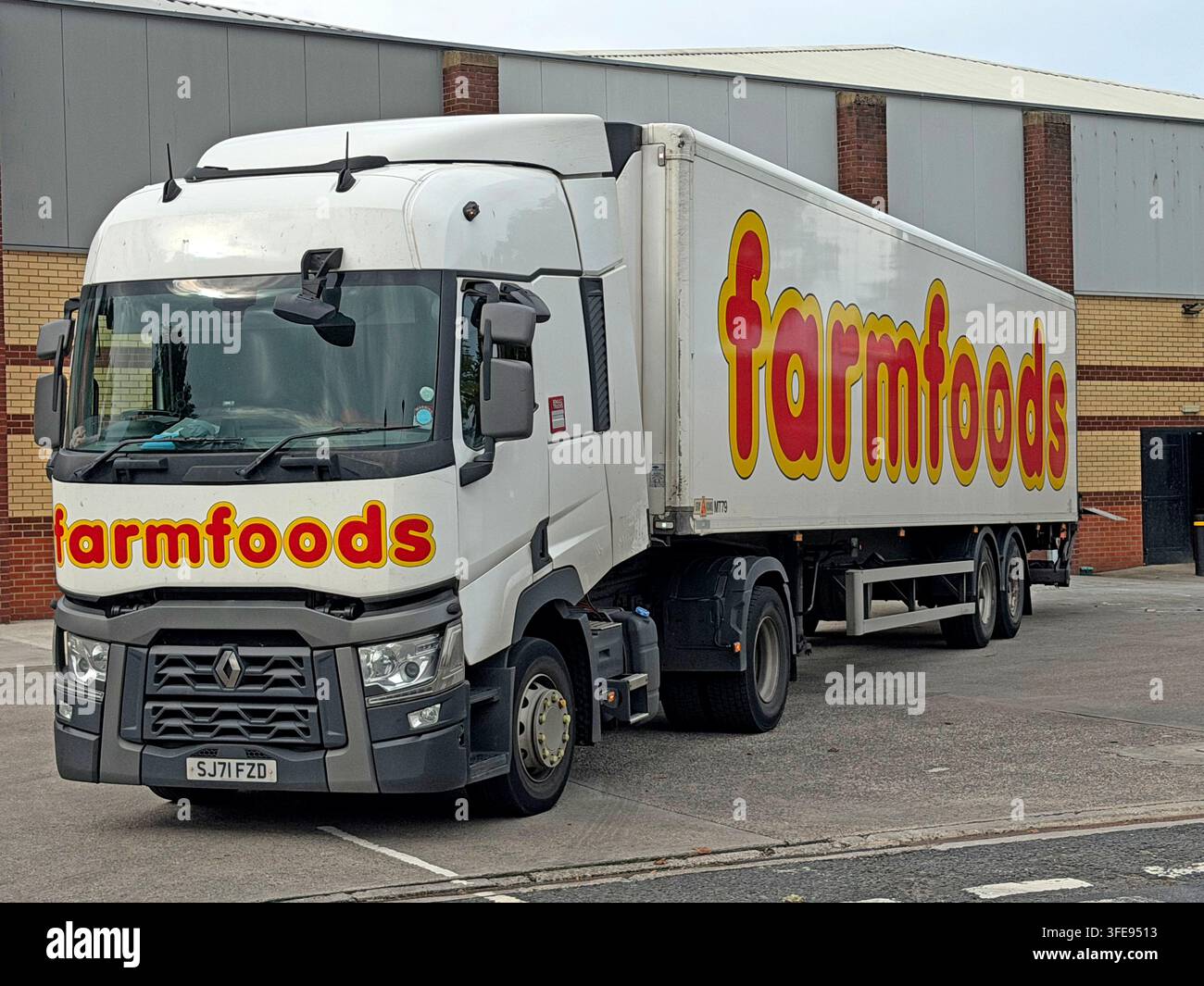
Image details
Contributor:
Tony SmithImage ID:
3FE9513File size:
56.5 MB (1.8 MB Compressed download)Releases:
Model - no | Property - noDo I need a release?Dimensions:
5132 x 3849 px | 43.5 x 32.6 cm | 17.1 x 12.8 inches | 300dpiDate taken:
30 August 2026Location:
England, UKMore information:
. A Farmfoods branded articulated lorry is parked at a retail site, showing the logistics and cold-chain distribution needed to supply a national frozen-food supermarket business. Farmfoods began in Scotland and the operating company dates from 1954. It built a national retail niche around frozen food, later expanding into groceries and household products while retaining a strong value position. A Farmfoods articulated delivery vehicle is the less visible logistics side of that business, moving temperature-controlled stock between distribution centres and stores. Frozen retail depends on an unbroken cold chain, so trailers, refrigeration, loading schedules and energy use are central to the model. The truck also represents the large distribution network behind apparently simple discount shopping and the continued importance of road freight to Britain's supermarket and food-retail system. The branded tractor unit and trailer also turn an otherwise generic logistics vehicle into evidence of a specific retailer's physical distribution footprint on British roads. Farmfoods began as a frozen-food specialist and built its store network around a format that depends heavily on reliable temperature-controlled distribution. Frozen products allow longer shelf life than chilled foods, but the cold chain must remain intact from warehouse to shop freezer, making refrigerated trailers and scheduled deliveries central to the business. A fully branded articulated lorry is therefore a moving part of the retail system rather than merely corporate advertising. It also shows how apparently local high-street or retail-park stores depend on regional logistics hubs, drivers, fuel, vehicle maintenance and timed unloading. The image is relevant to frozen-food retail, road freight, supermarket competition and supply-chain resilience, particularly when disruptions can quickly affect store availability.

