
DP Phones & Vape shop at 40 Horsemarket Street, Warrington, selling phones and vaping products.
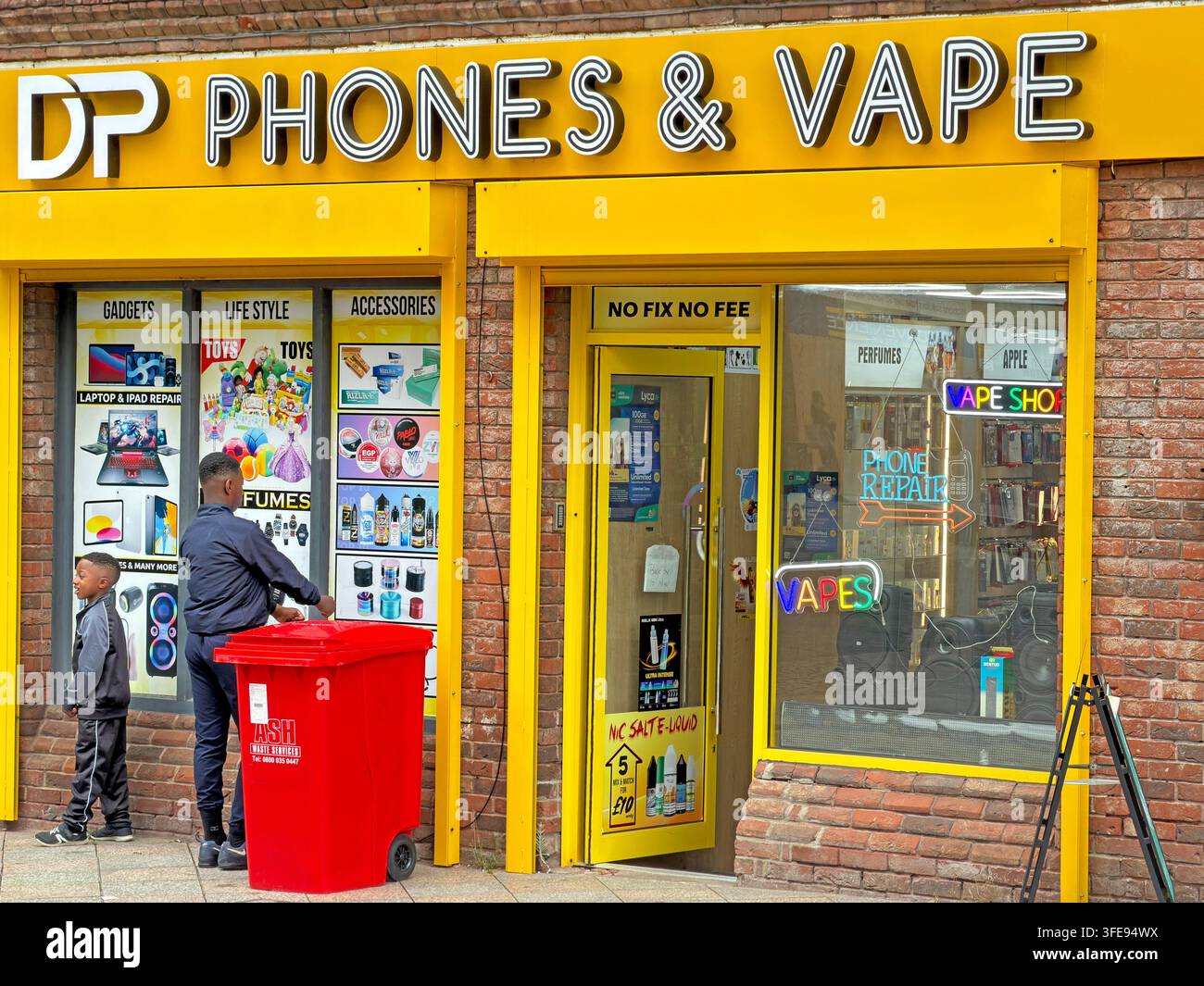
Image details
Contributor:
Tony SmithImage ID:
3FE94WXFile size:
86.8 MB (4 MB Compressed download)Releases:
Model - no | Property - noDo I need a release?Dimensions:
6361 x 4771 px | 53.9 x 40.4 cm | 21.2 x 15.9 inches | 300dpiDate taken:
30 August 2026Location:
40 Horsemarket Street, Warrington WA1 1AL, Cheshire, England, UKMore information:
. The yellow DP Phones & Vape frontage combines phone repairs and accessories with vape retail, a common hybrid business model on modern UK high streets. DP Phones & Vape combines mobile-phone repair and accessories with vaping products, two retail categories that often occupy small high-street units and depend on quick service rather than large floor space. 'No fix no fee' reflects the repair economy around cracked screens, batteries, charging faults and other problems that can extend the life of expensive smartphones. The vaping side of the business sits within a rapidly changing legal environment following the 2025 ban on single-use vapes and tighter 2026 controls on nicotine and vaping sales. The Horsemarket Street frontage therefore links two very contemporary consumer habits: dependence on personal electronics and the rise of specialist nicotine retail. Phone repairs also fit a circular-economy story because replacing a screen or battery can postpone the purchase and disposal of another resource-intensive electronic device. Combining phone repair with vaping is a characteristic small-shop strategy: two specialist, relatively high-margin services share one rent, one counter and the same passing trade. Mobile repairs depend on technical skill and spare parts rather than large showroom stock, while replacing a screen, charging port or battery can keep a device in use for longer and reduce electronic waste. Vaping adds a very different regulatory dimension involving age-restricted nicotine products and changing product rules. At 40 Horsemarket Street, the mixed fascia therefore captures the flexible economics of independent high-street retail, where one unit may combine repair, accessories and regulated consumables to remain viable. The combination also shows how independents diversify when a single specialist line may not generate enough footfall to support town-centre rent and staffing costs.

