
UK National Lottery retail display promoting Powerball and the £5 Red Hot 7s scratchcard with a £700,000 top prize.
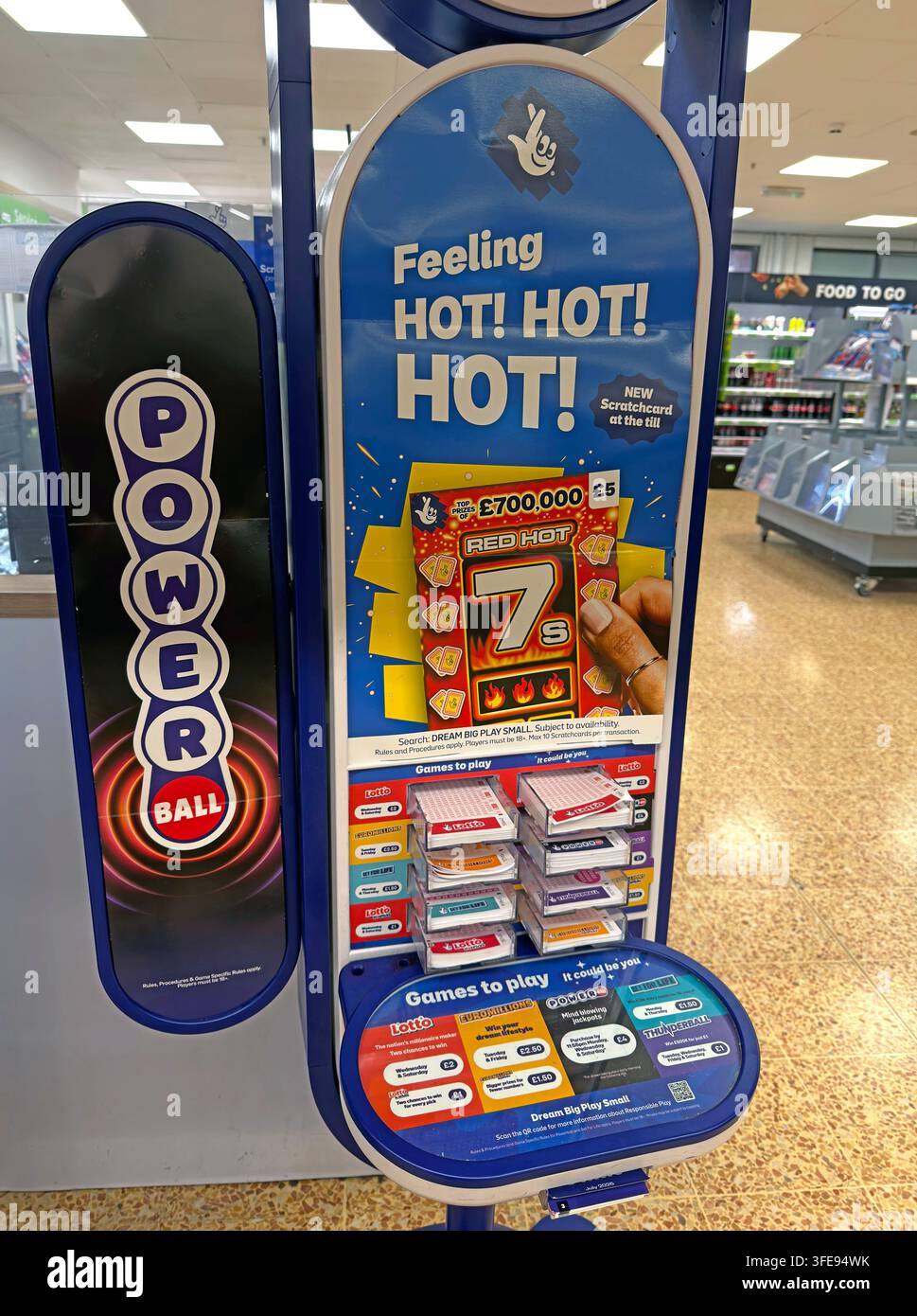
Image details
Contributor:
Tony SmithImage ID:
3FE94WKFile size:
89.4 MB (2.7 MB Compressed download)Releases:
Model - no | Property - noDo I need a release?Dimensions:
4828 x 6472 px | 40.9 x 54.8 cm | 16.1 x 21.6 inches | 300dpiDate taken:
30 August 2026Location:
England, UKMore information:
National Lottery retail display in a UK shop combining branding for the newly launched Powerball game with a prominent “Feeling HOT! HOT! HOT!” promotion for the £5 Red Hot 7s scratchcard. The brightly coloured point-of-sale unit shows the Powerball name vertically beside a scratchcard advert offering a £700, 000 top prize, illustrating how lottery products are marketed alongside everyday grocery and convenience-store shopping. Powerball entered the UK National Lottery in July 2026, the first time the famous US game had been offered outside the United States. UK players pay £4 per line and select five main numbers plus one Powerball, competing for the same rolling jackpot pool as US players. The launch gave British customers access to jackpots capable of reaching hundreds of millions or more and formed part of operator Allwyn’s wider overhaul of the National Lottery retail and digital offer. Alongside that major draw game, Red Hot 7s represents the instant-win side of lottery gambling. The £5 scratchcard launched in June 2026 with a £700, 000 top prize and uses familiar casino-style sevens, heat imagery and bright red-and-yellow graphics to attract attention at the point of sale. Scratchcards offer immediate results rather than requiring players to wait for a draw, making them a distinctive form of impulse gambling product sold through ordinary retail outlets. The photograph has wider editorial value for stories about gambling advertising, consumer spending, lottery reform, instant-win products, jackpot culture, responsible gambling and the visibility of betting opportunities in everyday shopping environments. It can also illustrate the changing National Lottery under Allwyn, the expansion of Powerball into Britain, retailer promotion, scratchcard marketing and debate around how prominently regulated gambling products should be displayed to consumers. It also records the increasingly sophisticated point-of-sale marketing used in modern lottery retail.

