
Asda supermarket shopper browses discounted short-dated food, reflecting cost-of-living pressures and efforts to cut food waste.
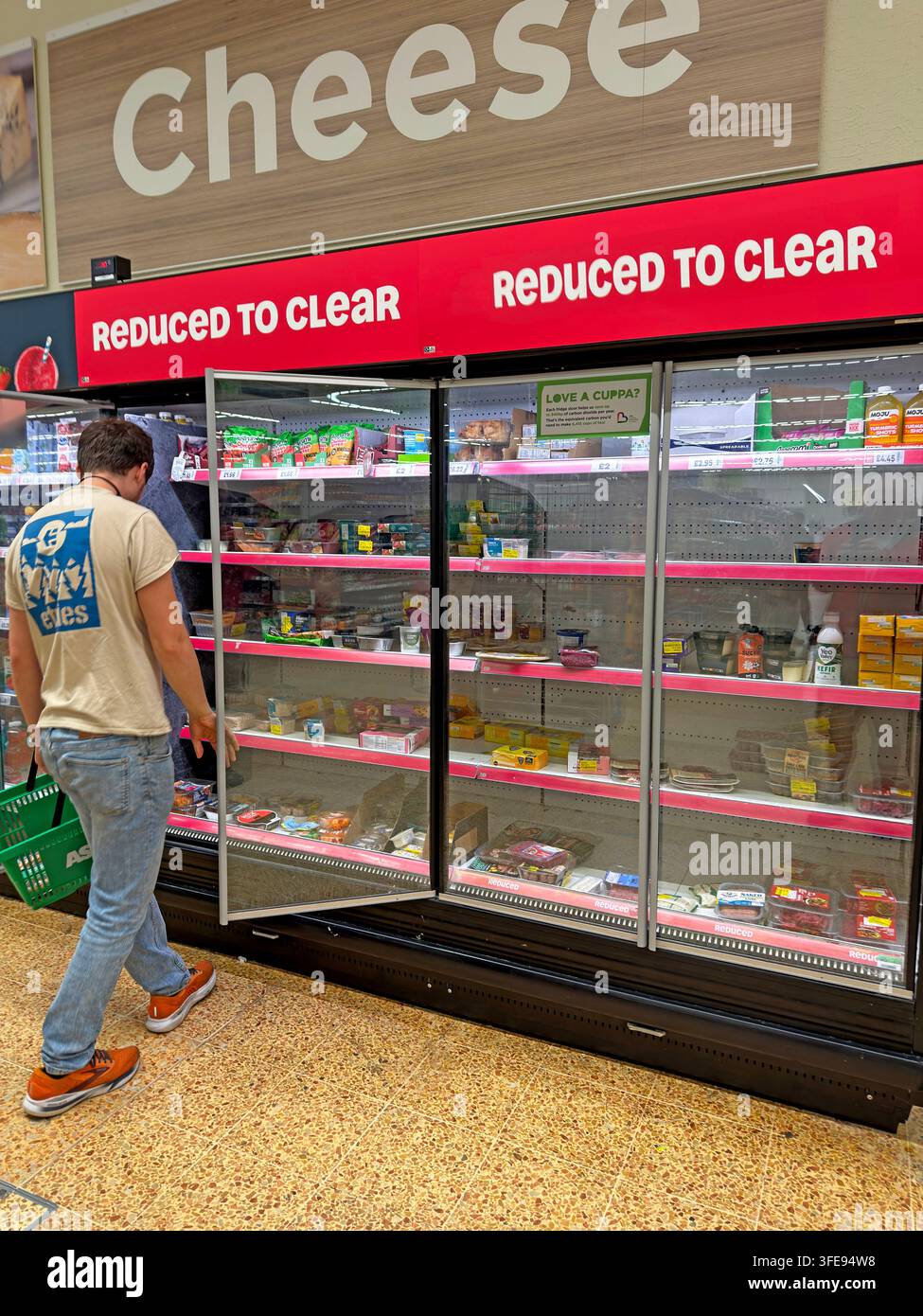
Image details
Contributor:
Tony SmithImage ID:
3FE94W8File size:
64.1 MB (2.9 MB Compressed download)Releases:
Model - no | Property - noDo I need a release?Dimensions:
4098 x 5464 px | 34.7 x 46.3 cm | 13.7 x 18.2 inches | 300dpiDate taken:
30 August 2026Location:
Asda supermarket, England, UKMore information:
Shopper examines refrigerated “Reduced to Clear” shelves in an Asda supermarket in England, with discounted chilled food offered close to its use-by or best-before date. The dedicated cabinet illustrates a familiar part of British supermarket shopping: price reductions on short-dated groceries designed to sell edible stock before it becomes waste while helping customers cut the cost of their food shop. Reduced-to-clear sections have become particularly relevant during pressure on household budgets. Shoppers facing high grocery bills may actively seek yellow-sticker and clearance products or plan meals around marked-down food. For supermarkets, discounting stock before expiry can recover some value that would otherwise be lost and reduce edible food requiring redistribution or disposal. Asda has used reduced-to-clear labelling for many years and describes markdowns on products approaching their date as benefiting both customers and food-waste reduction. The retailer also works with redistribution organisations and says reducing food waste across its operations and supply chain remains a strategic priority. The photograph has wider editorial value beyond a routine supermarket scene. It can illustrate food-price inflation, the cost-of-living squeeze, bargain hunting, household budgeting, supermarket pricing, changing consumer behaviour and food poverty, while also raising questions about waste, sustainability and how retailers manage perishable stock. Reduced food can make meat, dairy, ready meals and other chilled products more affordable, although availability depends on what remains unsold. The image captures the intersection of thrift and sustainability: a shopper looking for value while the supermarket attempts to prevent usable food becoming waste. It can support coverage of grocery inflation, supermarket competition, yellow-sticker culture, food waste reduction, discounted groceries, household finances and price-conscious British consumers.

