
Closed former Cancer Research UK charity shop at 19A Witton Street, Northwich, in 2026.
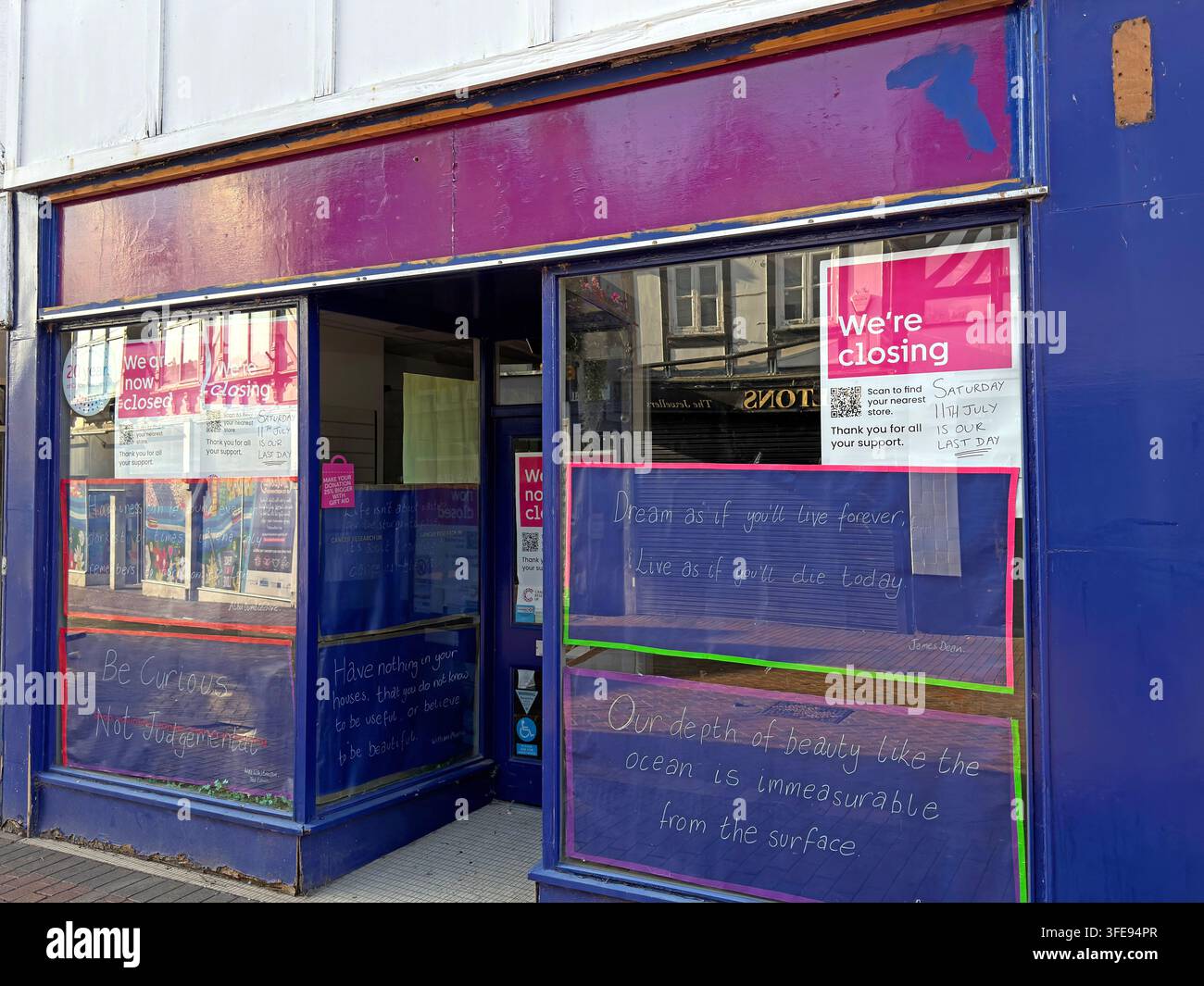
Image details
Contributor:
Tony SmithImage ID:
3FE94PRFile size:
64.2 MB (2.5 MB Compressed download)Releases:
Model - no | Property - noDo I need a release?Dimensions:
5470 x 4103 px | 46.3 x 34.7 cm | 18.2 x 13.7 inches | 300dpiDate taken:
23 August 2026Location:
19A Witton Street, Northwich CW9 5DE, Cheshire, England, UKMore information:
. The former Cancer Research UK shop on Witton Street is closed and stripped for departure. Cancer Research UK announced a major reshaping of its retail estate in October 2025 after rising costs, weaker footfall and competition from online resale made many shops financially unsustainable. The charity said it planned to close around 90 high-street shops by May 2026 and up to 100 more by April 2027, while expanding larger out-of-town superstores. It expected the smaller, more productive estate to increase the amount contributed to research over five years. The closed 19A Witton Street shop in Northwich is therefore part of a documented national change in charity retail, where even donation-based stores face rent, wage, utility and property costs and must justify their trading contribution. The closure strategy shows that charity status does not insulate a retailer from commercial reality: a shop must still cover rent, wages, energy and other costs before any surplus can support the charitable mission. Charity shops traditionally benefited from donated stock, volunteer labour and reduced business rates, but those advantages do not remove the fixed costs of rent, paid management, utilities, logistics and compliance. Cancer Research UK's decision to reduce its conventional shop estate reflects a wider retail shift towards larger destination stores, online resale and more selective use of expensive high-street property. For Northwich, the effect is concrete: a familiar charitable occupier disappears from Witton Street and leaves another unit requiring a new use. The closure also shows the tension within charity retail, where a shop can be popular locally yet still be judged against the net income it contributes to the cause. The stripped frontage is therefore relevant to cancer fundraising, volunteering, high-street vacancy and the changing economics of the British charity-shop model.

