
Grey food-waste recycling caddy in Warrington, part of England's Simpler Recycling reforms and debate over multiple household bins.
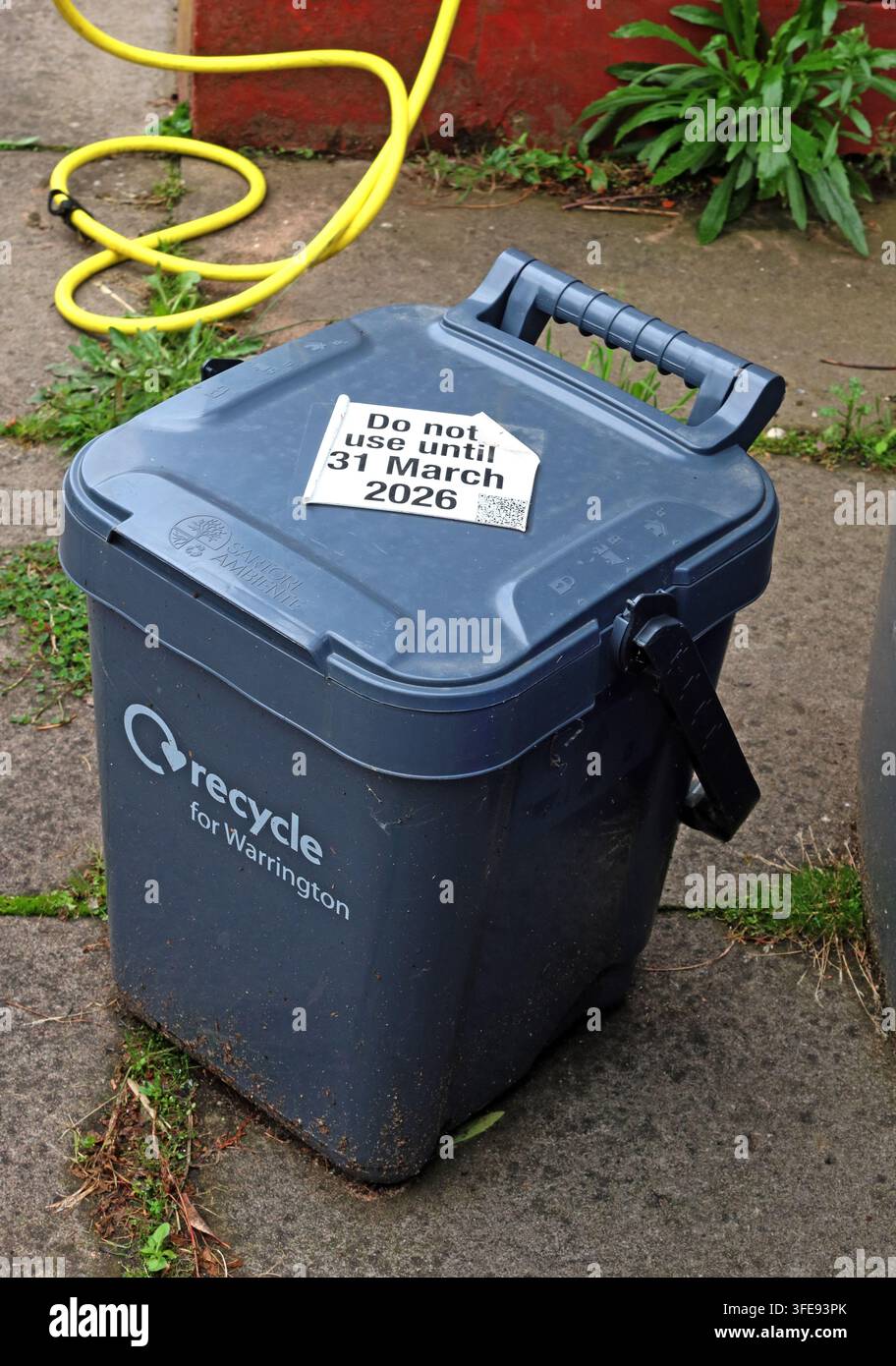
Image details
Contributor:
Tony SmithImage ID:
3FE93PKFile size:
54.2 MB (2.3 MB Compressed download)Releases:
Model - no | Property - noDo I need a release?Dimensions:
3648 x 5196 px | 30.9 x 44 cm | 12.2 x 17.3 inches | 300dpiDate taken:
31 August 2026Location:
Warrington, Cheshire, England, UKMore information:
A 23-litre outdoor food-waste recycling caddy issued by Warrington Borough Council ahead of the borough's new weekly household food-waste collection service, which began on 31 March 2026. A label on the lid tells residents not to use the container until that date, showing the practical household rollout of England's Simpler Recycling reforms. Warrington households received a 5-litre indoor kitchen caddy, liners and the larger lockable outdoor caddy, with food waste collected every week while black-bin collections remained fortnightly. The council said food waste accounted for around 40% of the weight of general waste locally. Collected material is sent for anaerobic digestion, producing biogas for energy and nutrient-rich fertiliser for agriculture rather than being disposed of with residual rubbish. The reform also highlights a familiar debate about the growing number of bins, boxes and caddies outside British homes. Different colours and collection systems have historically varied between councils, contributing to confusion about what can be recycled. Government's Simpler Recycling policy is intended to reduce that postcode lottery by requiring the same core materials to be collected across England, although councils still retain flexibility over container type and colour. The default model allows separate streams for residual waste, food waste, paper and card, and other dry recyclables. Whether extra containers themselves improve recycling behaviour depends heavily on clear communication, convenient collections and residents understanding what belongs where. WRAP says consistency and effective communications can reduce confusion, contamination and improve participation. The Warrington caddy therefore illustrates both environmental ambition and the everyday behavioural challenge behind recycling policy: asking millions of households to sort waste differently, remember collection rules and make another container part of domestic life

