
Co-op Funeralcare “Letters to Heaven” memorial post box at 63 London Road, Stockton Heath.
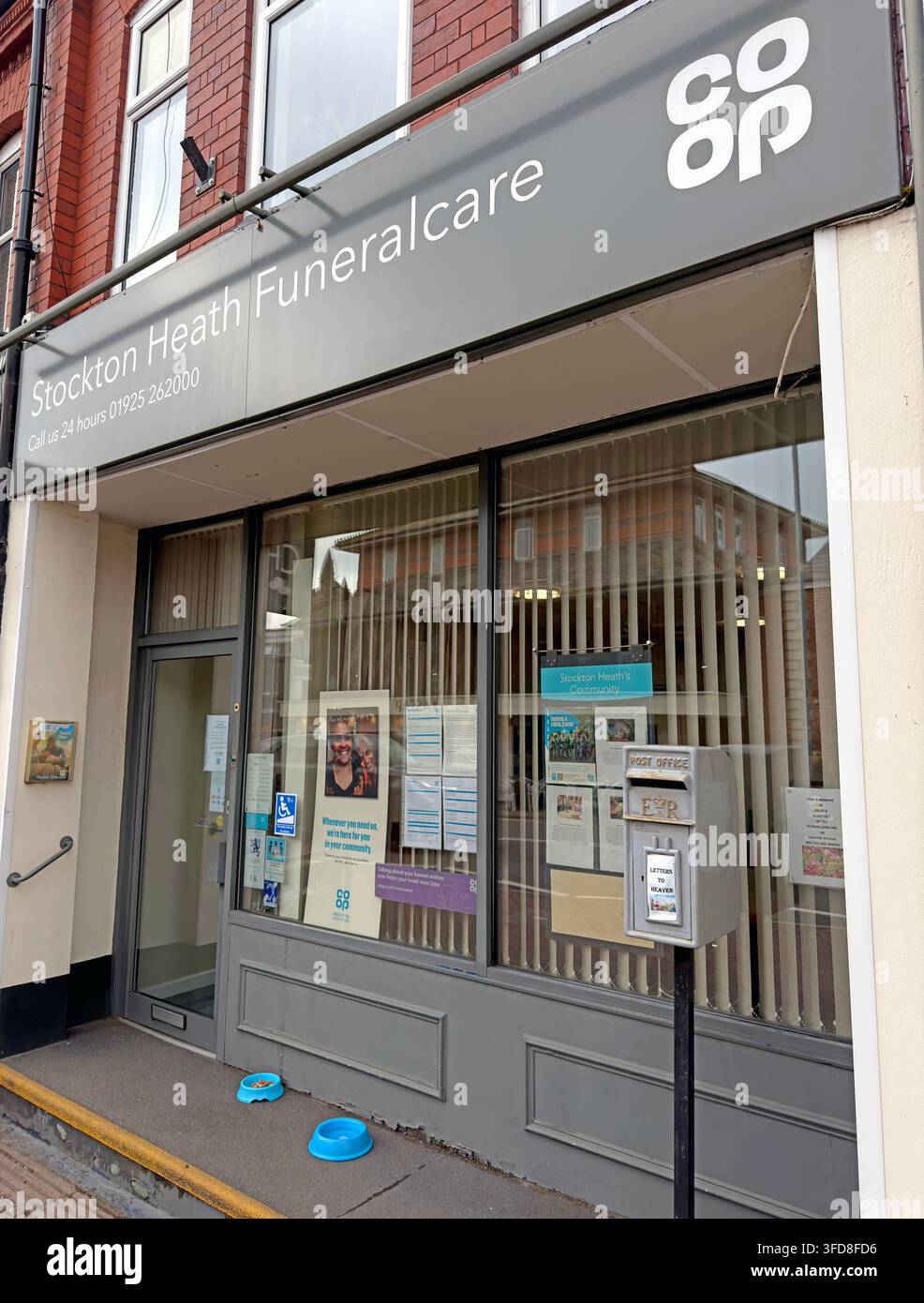
Image details
Contributor:
Tony SmithImage ID:
3FD8FD6File size:
105.4 MB (2.9 MB Compressed download)Releases:
Model - no | Property - noDo I need a release?Dimensions:
5289 x 6968 px | 44.8 x 59 cm | 17.6 x 23.2 inches | 300dpiDate taken:
28 August 2026Location:
Co-op Funeralcare, 63 London Road, Stockton Heath, Warrington, WA4 6SG, EnglandMore information:
. Co-op Funeralcare “Letters to Heaven” memorial post box at 63 London Road, Stockton Heath. The small grey memorial box is mounted outside the funeral home and invites written messages to deceased loved ones, a contemporary remembrance ritual presented in an everyday high-street setting. Funeral businesses increasingly use visible remembrance services and informal memorial practices alongside traditional arrangements. Co-op Funeralcare operates the Stockton Heath home at 63 London Road, WA4 6SG. A ‘Letters to Heaven’ post box is intended as a symbolic place where people can leave written messages to someone who has died, reflecting contemporary approaches to grief, remembrance and bereavement support. Such imagery can support editorial coverage of funeral services, death literacy, community memorials, grief rituals and the changing ways families remember relatives and friends. The location is Co-op Funeralcare, 63 London Road, Stockton Heath, Warrington, WA4 6SG, England. This geographical detail helps distinguish the subject from similar businesses, buildings or scenes elsewhere and gives the photograph stronger value for local, regional and comparative editorial use. Commercial and civic landscapes can change quickly, so apparently routine photographs of signs, shopfronts, machines and transport infrastructure often acquire additional documentary value when companies rebrand, premises close or policies change. The scene can be read at several levels: as a record of the immediate subject, as evidence of changing consumer or public behaviour, and as a small piece of the wider social and economic history visible in everyday places. For picture researchers, the combination of legible wording and clear environmental context broadens the potential use beyond a simple location shot, allowing the image to support business, heritage, lifestyle and public-policy coverage. This makes the photograph a useful piece of contemporary editorial documentation.

