
Bilingual English and Welsh “No Fly-Tipping / Dim Tipio” CCTV warning sign.
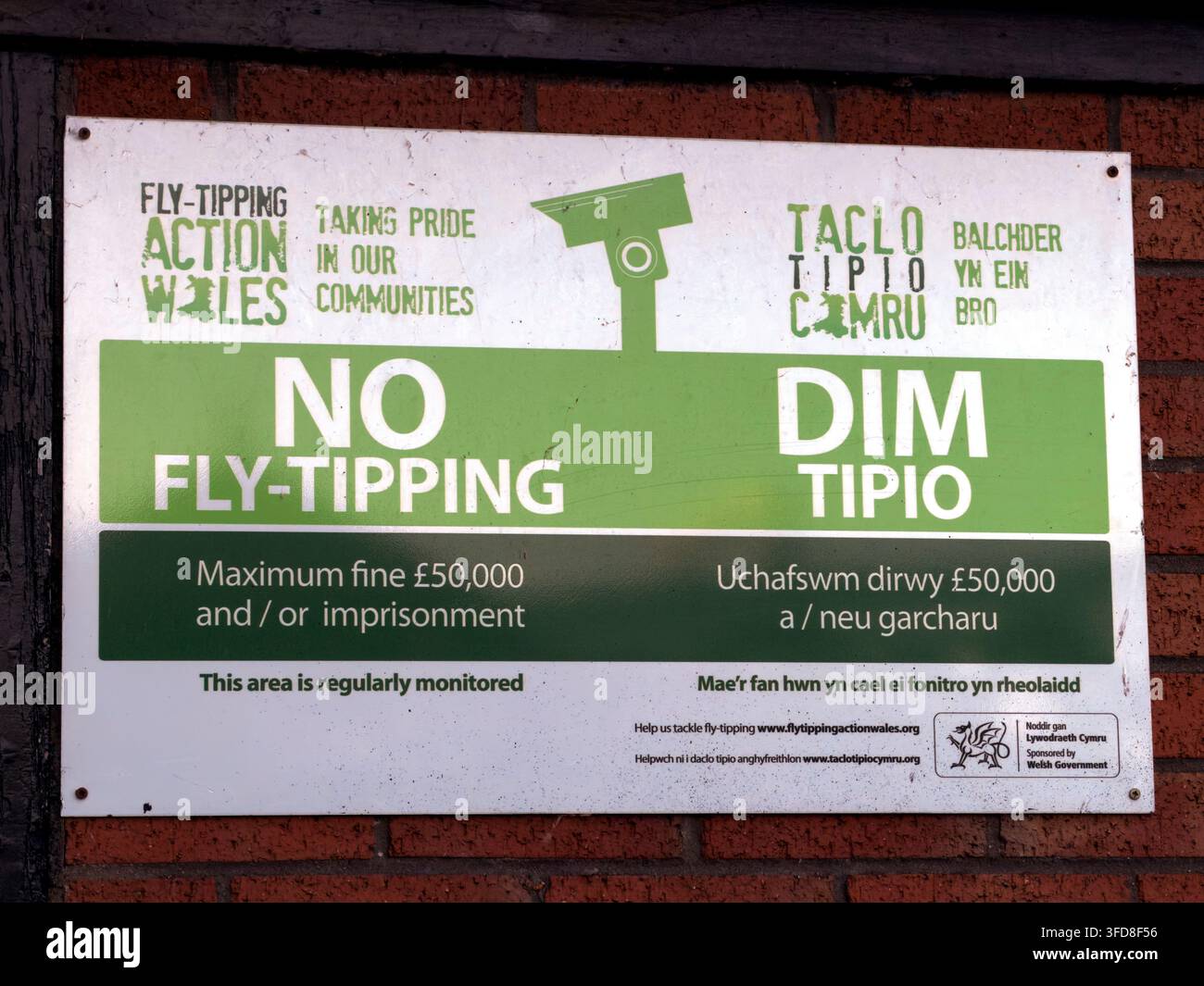
Image details
Contributor:
Tony SmithImage ID:
3FD8F56File size:
85.9 MB (2.7 MB Compressed download)Releases:
Model - no | Property - noDo I need a release?Dimensions:
6326 x 4745 px | 53.6 x 40.2 cm | 21.1 x 15.8 inches | 300dpiDate taken:
23 August 2026Location:
Northwich, Cheshire, EnglandMore information:
. Bilingual English and Welsh “No Fly-Tipping / Dim Tipio” CCTV warning sign. The sign warns of a maximum fine or imprisonment and states that the area is regularly monitored, using both English and Welsh wording in a direct enforcement message. A bilingual ‘No Fly-Tipping / Dim Tipio’ warning sign uses English and Welsh alongside the threat of CCTV monitoring and penalties. Fly-tipping is the illegal deposit of waste and is a persistent problem for councils, landowners and communities because dumped material can be costly to remove and may include hazardous waste. The sign is useful as a direct visual shorthand for environmental enforcement, illegal dumping, surveillance, waste crime and local-authority responsibilities. Its bilingual wording also adds a Welsh-language public-information dimension even though the photograph was made in Northwich. The location is Northwich, Cheshire, England. This geographical detail helps distinguish the subject from similar businesses, buildings or scenes elsewhere and gives the photograph stronger value for local, regional and comparative editorial use. The image therefore has value not only for current news features but also for retrospective comparisons of how streets, services, brands and public expectations evolve over time. Details that might seem mundane at the moment of photography can later help date a streetscape or explain how a service was delivered, which is one reason straightforward editorial documentation remains useful to archives and publishers. As an editorial stock image, it also records the typography, branding, materials and street-level visual language of its period, details that can become historically valuable as shops, products and public infrastructure are altered or replaced. This makes the photograph a useful piece of contemporary editorial documentation. It preserves a clear, searchable record of the subject and its setting for future editorial comparison.

