
Historic tiled “GARAGE” frontage and stained-glass bay window on the former Bridge Inn, Castle Street, Northwich.
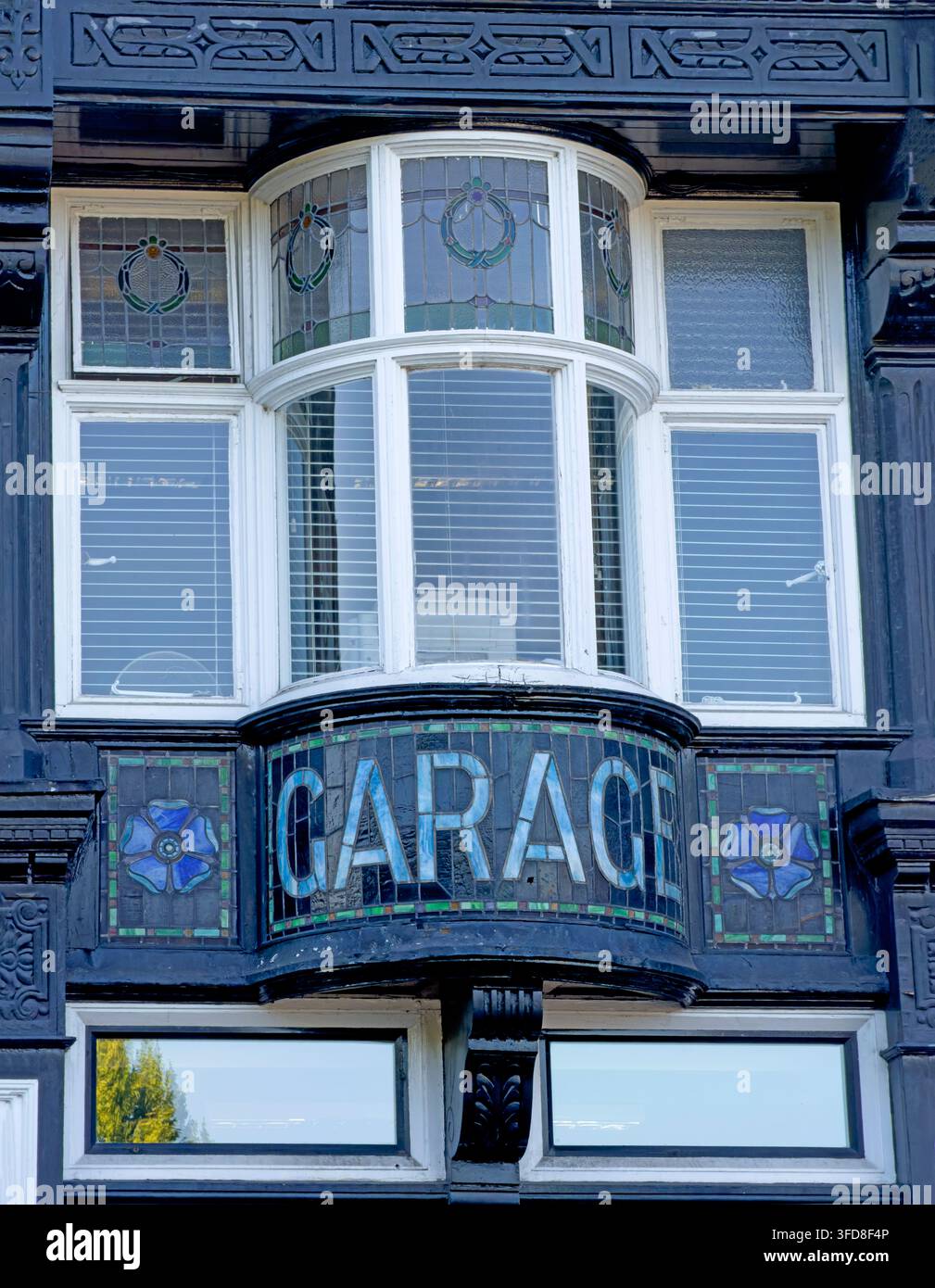
Image details
Contributor:
Tony SmithImage ID:
3FD8F4PFile size:
101.8 MB (3.2 MB Compressed download)Releases:
Model - no | Property - noDo I need a release?Dimensions:
5257 x 6771 px | 44.5 x 57.3 cm | 17.5 x 22.6 inches | 300dpiDate taken:
23 August 2026Location:
Former Bridge Inn, 4–6 Castle Street, Northwich, Cheshire, EnglandMore information:
. Historic tiled “GARAGE” frontage and stained-glass bay window on the former Bridge Inn, Castle Street, Northwich. The unusual blue tiled word GARAGE below an ornate bay window records the period when public houses and hotels adapted to the arrival of the motor car by providing fuel, repairs or garaging for travellers. Northwich is a Cheshire market town whose centre has been repeatedly reshaped by salt-industry subsidence, redevelopment and changing retail patterns. Witton Street remains one of its principal shopping streets, combining older commercial buildings with national chains, banks, salons, convenience shops and leisure businesses. The photograph is useful as a record of the British high street at a time when online shopping, banking closures, rising operating costs, changing consumer habits and town-centre regeneration continue to alter the mix of uses found in traditional retail streets. The location is Former Bridge Inn, 4–6 Castle Street, Northwich, Cheshire, England. This geographical detail helps distinguish the subject from similar businesses, buildings or scenes elsewhere and gives the photograph stronger value for local, regional and comparative editorial use. The photograph is particularly useful where a story needs an identifiable real-world example rather than an abstract illustration, because the surrounding details place the subject in an ordinary British or European setting. Commercial and civic landscapes can change quickly, so apparently routine photographs of signs, shopfronts, machines and transport infrastructure often acquire additional documentary value when companies rebrand, premises close or policies change. The scene can be read at several levels: as a record of the immediate subject, as evidence of changing consumer or public behaviour, and as a small piece of the wider social and economic history visible in everyday places. This makes the photograph a useful piece of contemporary editorial documentation.

