
Canal-boat lifestyle scene with fishing and washing beside a moored narrowboat.
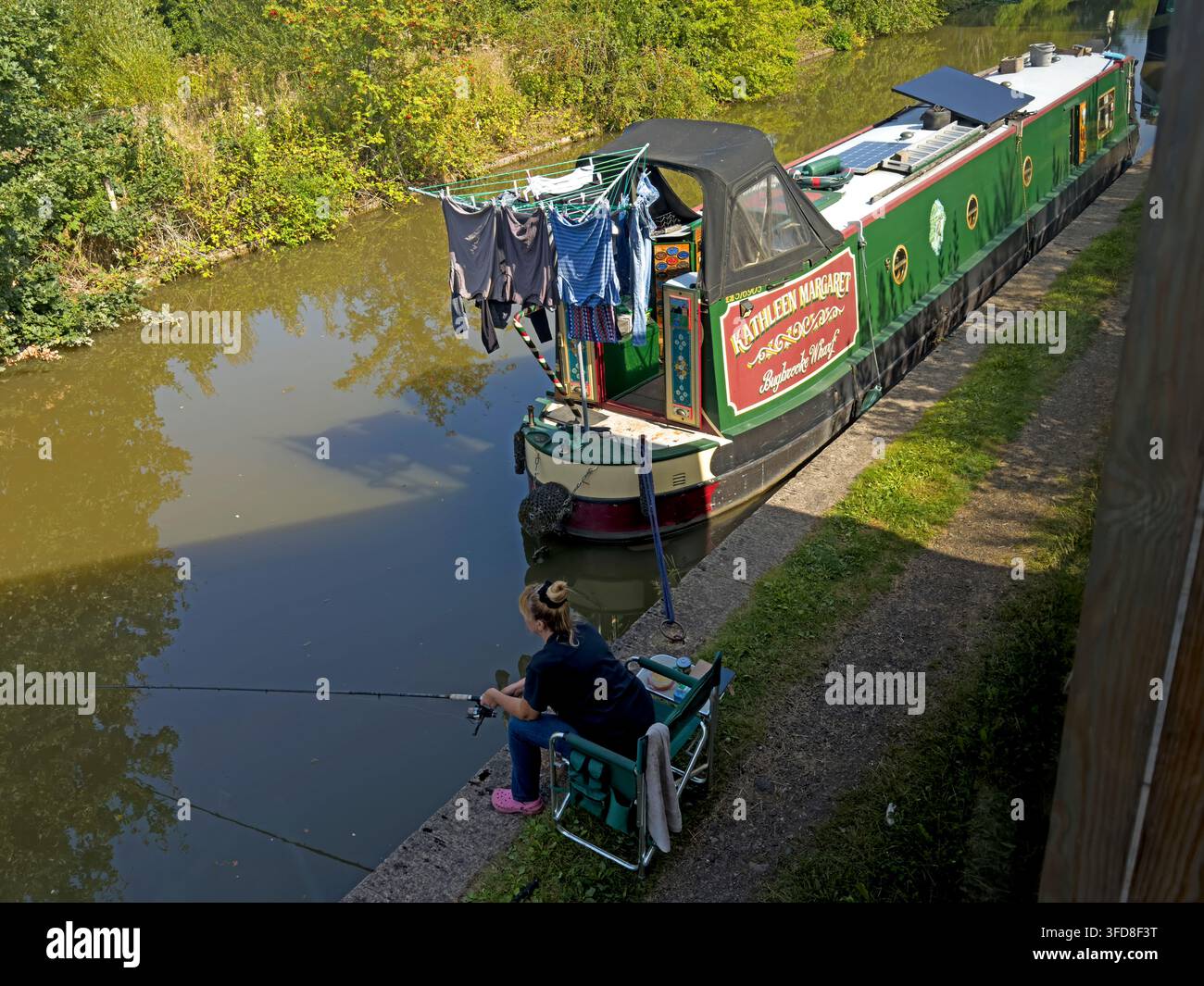
Image details
Contributor:
Tony SmithImage ID:
3FD8F3TFile size:
68.8 MB (3.3 MB Compressed download)Releases:
Model - no | Property - noDo I need a release?Dimensions:
5660 x 4246 px | 47.9 x 35.9 cm | 18.9 x 14.2 inches | 300dpiDate taken:
23 August 2026Location:
Bugbrooke Wharf area, Northamptonshire, EnglandMore information:
. Canal-boat lifestyle scene with fishing and washing beside a moored narrowboat. A person fishes beside the water while washing hangs from the moored craft, emphasising the ordinary domestic routines of boat life rather than a purely tourist view. Residential and leisure boats create a distinctive waterside lifestyle on Britain’s canals and navigable rivers. Everyday activities such as fishing, drying washing, maintaining a boat and using the towpath sit alongside the romantic image of narrowboat travel. The scene provides a useful human-scale record of life on inland waterways, touching on mooring, floating homes, tourism, self-contained living and the practical routines required by boat owners. It can also support wider stories about housing alternatives, waterways conservation and the communities that form around long-term moorings. The location is Bugbrooke Wharf area, Northamptonshire, England. This geographical detail helps distinguish the subject from similar businesses, buildings or scenes elsewhere and gives the photograph stronger value for local, regional and comparative editorial use. The scene can be read at several levels: as a record of the immediate subject, as evidence of changing consumer or public behaviour, and as a small piece of the wider social and economic history visible in everyday places. For picture researchers, the combination of legible wording and clear environmental context broadens the potential use beyond a simple location shot, allowing the image to support business, heritage, lifestyle and public-policy coverage. There is also a strong sense of contemporary place: practical objects, signage and architecture are shown as they actually appear in use, without removing the clutter that makes a documentary photograph informative. The image therefore has value not only for current news features but also for retrospective comparisons of how streets, services, brands and public expectations evolve over time.

