
Historic Ingram Thompson & Sons Ltd salt manufacturers registered-office plaque from Northwich.
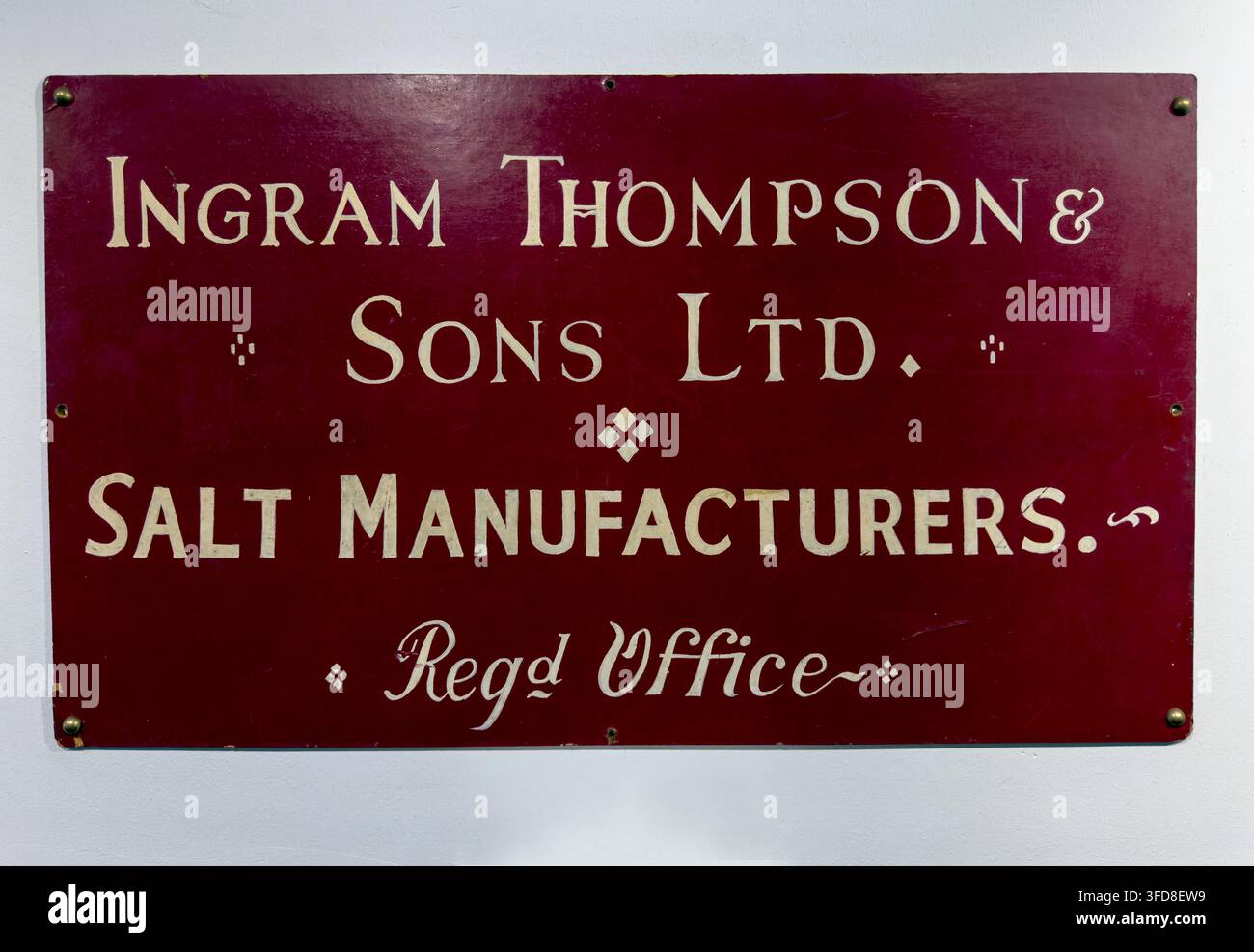
Image details
Contributor:
Tony SmithImage ID:
3FD8EW9File size:
96.6 MB (1.9 MB Compressed download)Releases:
Model - no | Property - noDo I need a release?Dimensions:
6992 x 4829 px | 59.2 x 40.9 cm | 23.3 x 16.1 inches | 300dpiDate taken:
23 August 2026Location:
Northwich, Cheshire, EnglandMore information:
. Historic Ingram Thompson & Sons Ltd salt manufacturers registered-office plaque from Northwich. The maroon enamel-style company plaque preserves the formal business wording of a Northwich salt manufacturer, linking corporate identity directly to the town’s dominant historic industry. Northwich’s identity is inseparable from salt, brine, brick and terracotta manufacture. The Thompson family were prominent local industrialists: Jabez Thompson ran the Northwich brick and tile works and developed production of high-quality terracotta, while related Thompson enterprises were involved in salt manufacture and shipping. Surviving bricks, plaques, crates and trade signs are valuable pieces of commercial archaeology, preserving company names and products that once circulated through Cheshire and beyond. Such objects connect everyday material culture with Victorian industry, transport and the growth of Northwich. The location is Northwich, Cheshire, England. This geographical detail helps distinguish the subject from similar businesses, buildings or scenes elsewhere and gives the photograph stronger value for local, regional and comparative editorial use. For picture researchers, the combination of legible wording and clear environmental context broadens the potential use beyond a simple location shot, allowing the image to support business, heritage, lifestyle and public-policy coverage. There is also a strong sense of contemporary place: practical objects, signage and architecture are shown as they actually appear in use, without removing the clutter that makes a documentary photograph informative. The image therefore has value not only for current news features but also for retrospective comparisons of how streets, services, brands and public expectations evolve over time. This makes the photograph a useful piece of contemporary editorial documentation. It preserves a clear, searchable record of the subject and its setting for future editorial comparison.

