
Electronic departure board above Manchester Piccadilly platforms 13 and 14.
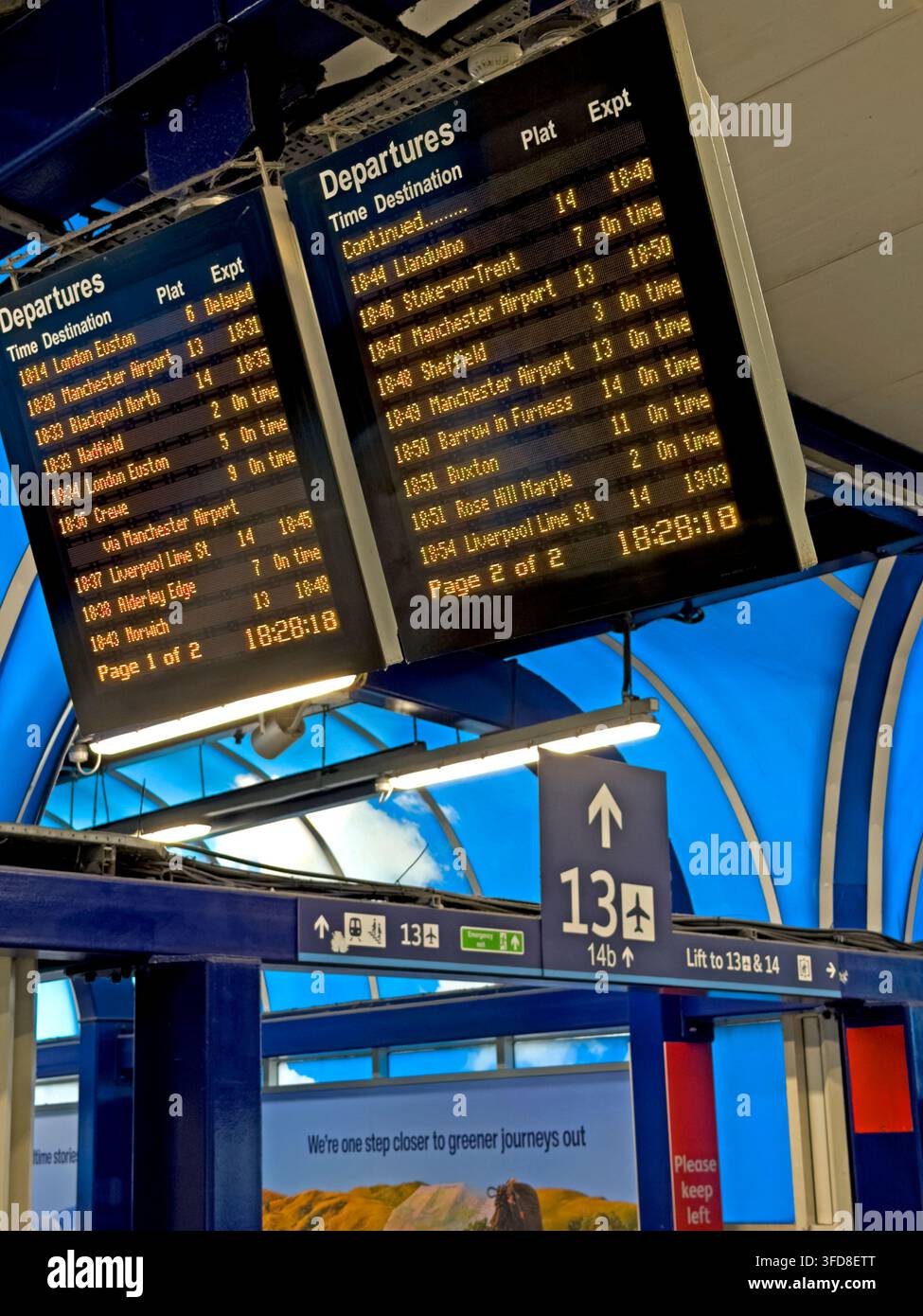
Image details
Contributor:
Tony SmithImage ID:
3FD8ETTFile size:
52.2 MB (1.5 MB Compressed download)Releases:
Model - no | Property - noDo I need a release?Dimensions:
3699 x 4932 px | 31.3 x 41.8 cm | 12.3 x 16.4 inches | 300dpiDate taken:
22 August 2026Location:
Manchester Piccadilly station, Manchester, M1 2PB, EnglandMore information:
. Electronic departure board above Manchester Piccadilly platforms 13 and 14. The amber-on-black electronic board lists departures above the approach to the through platforms, combining passenger information technology with one of Manchester railway’s most constrained locations. Manchester Piccadilly’s present platforms 13 and 14 evolved from the island platform opened in 1882 for the South Junction route. They are the station’s only through platforms and form part of the Castlefield Corridor, the intensively used two-track railway between Piccadilly and Deansgate. Network Rail has described the corridor as a major pinch-point, with local, regional and inter-city services sharing constrained infrastructure. The platforms are particularly useful editorially for illustrating rail capacity, passenger crowding, timetable resilience, airport connectivity and long-running arguments over investment in Manchester’s railway network. The location is Manchester Piccadilly station, Manchester, M1 2PB, England. This geographical detail helps distinguish the subject from similar businesses, buildings or scenes elsewhere and gives the photograph stronger value for local, regional and comparative editorial use. Commercial and civic landscapes can change quickly, so apparently routine photographs of signs, shopfronts, machines and transport infrastructure often acquire additional documentary value when companies rebrand, premises close or policies change. The scene can be read at several levels: as a record of the immediate subject, as evidence of changing consumer or public behaviour, and as a small piece of the wider social and economic history visible in everyday places. For picture researchers, the combination of legible wording and clear environmental context broadens the potential use beyond a simple location shot, allowing the image to support business, heritage, lifestyle and public-policy coverage.

