
DB Cargo Class 67 diesel locomotive 67008 at Manchester Piccadilly on a Transport for Wales train.
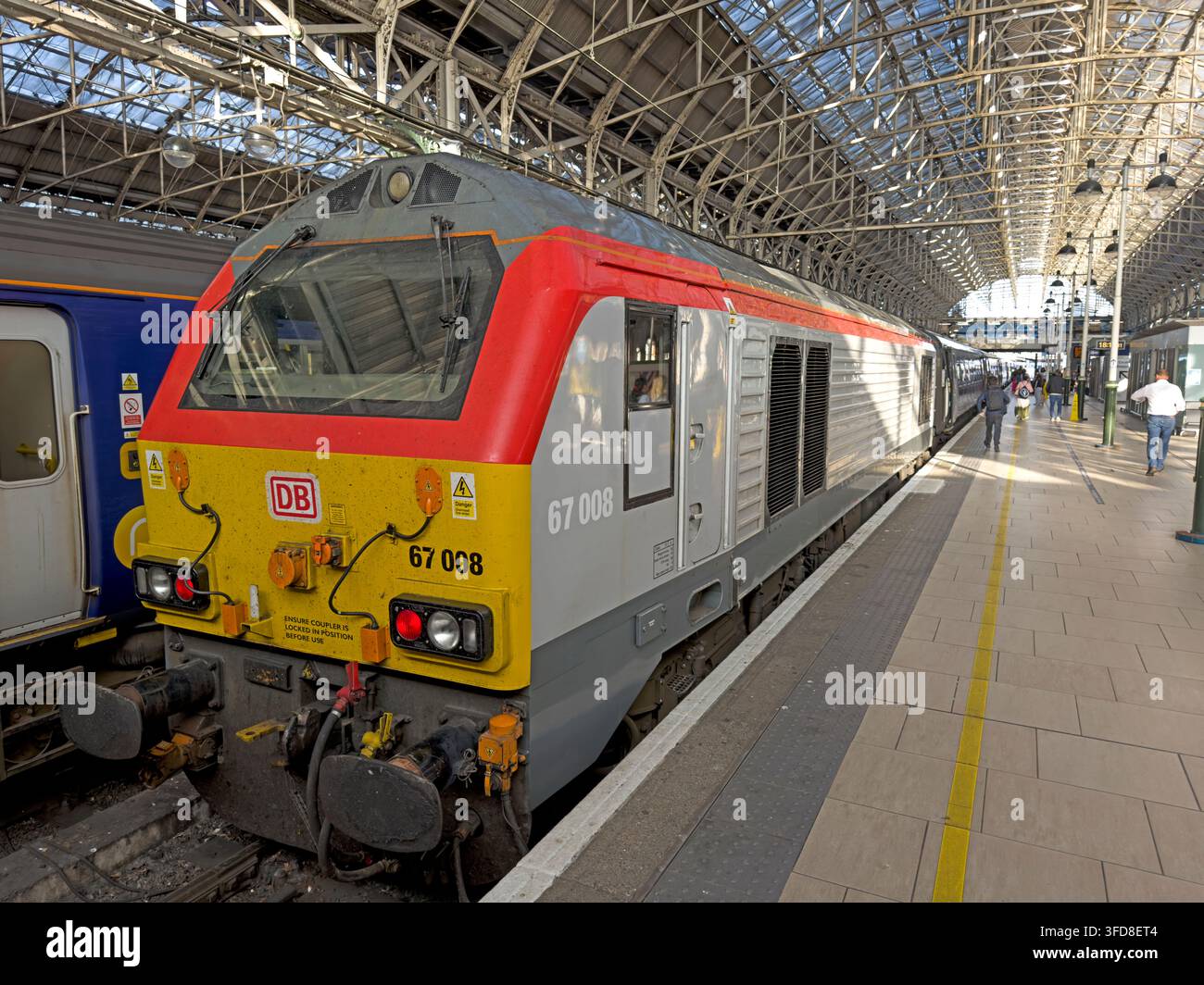
Image details
Contributor:
Tony SmithImage ID:
3FD8ET4File size:
107.1 MB (3.6 MB Compressed download)Releases:
Model - no | Property - noDo I need a release?Dimensions:
7064 x 5298 px | 59.8 x 44.9 cm | 23.5 x 17.7 inches | 300dpiDate taken:
22 August 2026Location:
Manchester Piccadilly station, Manchester, M1 2PB, EnglandMore information:
. DB Cargo Class 67 diesel locomotive 67008 at Manchester Piccadilly on a Transport for Wales train. The grey and red locomotive stands at the platform coupled to passenger stock, providing a distinctive example of locomotive-hauled operation within a modern inter-urban passenger service. Manchester Piccadilly’s present platforms 13 and 14 evolved from the island platform opened in 1882 for the South Junction route. They are the station’s only through platforms and form part of the Castlefield Corridor, the intensively used two-track railway between Piccadilly and Deansgate. Network Rail has described the corridor as a major pinch-point, with local, regional and inter-city services sharing constrained infrastructure. The platforms are particularly useful editorially for illustrating rail capacity, passenger crowding, timetable resilience, airport connectivity and long-running arguments over investment in Manchester’s railway network. The location is Manchester Piccadilly station, Manchester, M1 2PB, England. This geographical detail helps distinguish the subject from similar businesses, buildings or scenes elsewhere and gives the photograph stronger value for local, regional and comparative editorial use. There is also a strong sense of contemporary place: practical objects, signage and architecture are shown as they actually appear in use, without removing the clutter that makes a documentary photograph informative. The image therefore has value not only for current news features but also for retrospective comparisons of how streets, services, brands and public expectations evolve over time. Details that might seem mundane at the moment of photography can later help date a streetscape or explain how a service was delivered, which is one reason straightforward editorial documentation remains useful to archives and publishers. This makes the photograph a useful piece of contemporary editorial documentation.

