
Interior of a westbound Bee Network Metrolink tram leaving Ashton-under-Lyne, Greater Manchester.
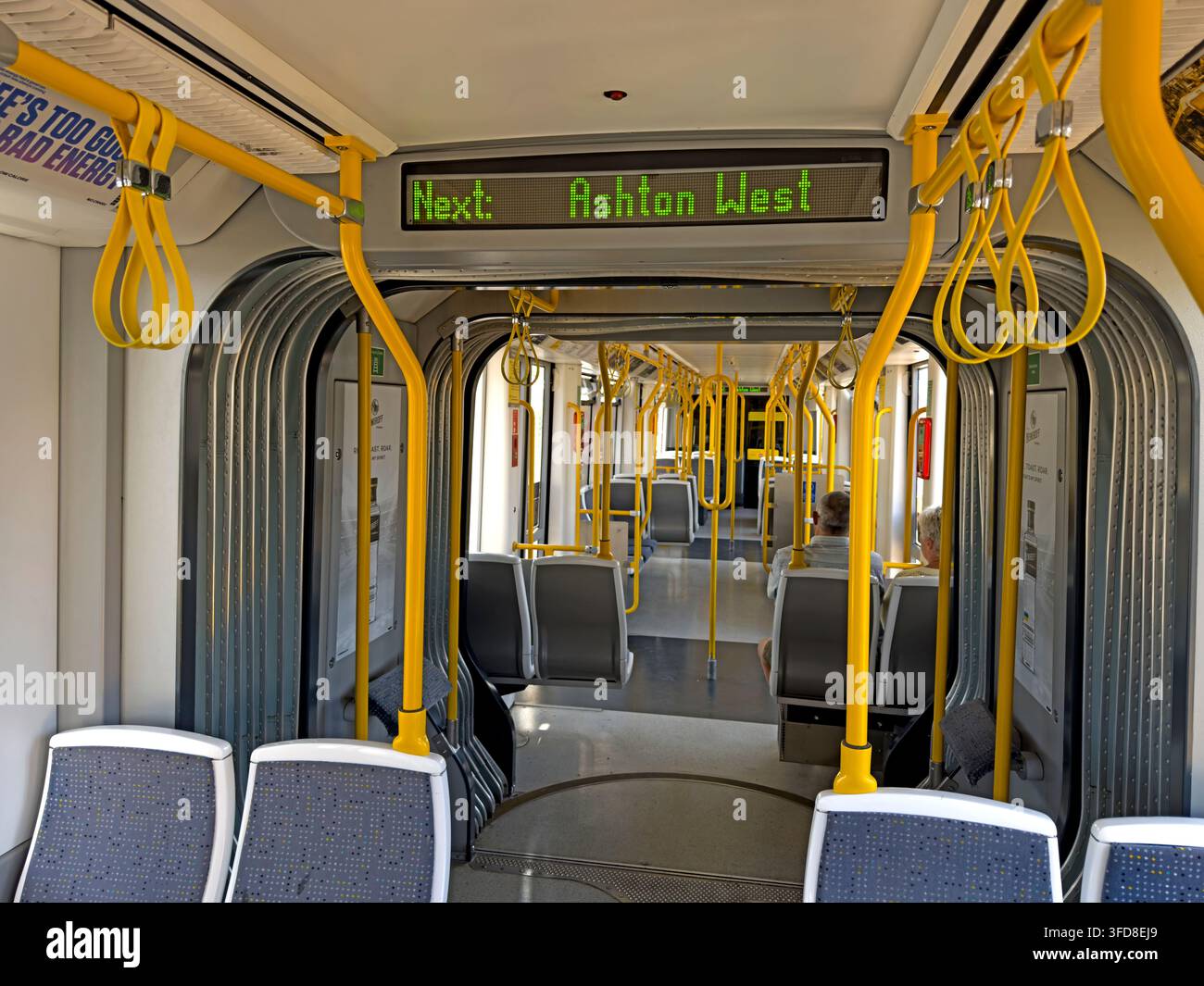
Image details
Contributor:
Tony SmithImage ID:
3FD8EJ9File size:
87.8 MB (2.4 MB Compressed download)Releases:
Model - no | Property - noDo I need a release?Dimensions:
6398 x 4799 px | 54.2 x 40.6 cm | 21.3 x 16 inches | 300dpiDate taken:
22 August 2026Location:
Manchester Metrolink, Ashton-under-Lyne, Tameside, Greater Manchester, EnglandMore information:
. Interior of a westbound Bee Network Metrolink tram leaving Ashton-under-Lyne, Greater Manchester. The mostly empty modern tram interior shows yellow handrails and an electronic display announcing the next stop, Ashton West, as the service heads towards Manchester. Greater Manchester’s Metrolink route to Ashton-under-Lyne forms part of the city-region’s integrated public transport network, now increasingly presented under Bee Network branding. Ashton has a much older tram history stretching back to horse and later electric street tramways, while the modern Metrolink extension restored rail-based urban transit to the town. The interior view, with yellow grab rails, passenger seating and electronic next-stop display, provides a recognisable contemporary image of accessible urban public transport, useful for stories about franchising, modal shift, commuting, local connectivity and public investment. The location is Manchester Metrolink, Ashton-under-Lyne, Tameside, Greater Manchester, England. This geographical detail helps distinguish the subject from similar businesses, buildings or scenes elsewhere and gives the photograph stronger value for local, regional and comparative editorial use. The scene can be read at several levels: as a record of the immediate subject, as evidence of changing consumer or public behaviour, and as a small piece of the wider social and economic history visible in everyday places. For picture researchers, the combination of legible wording and clear environmental context broadens the potential use beyond a simple location shot, allowing the image to support business, heritage, lifestyle and public-policy coverage. There is also a strong sense of contemporary place: practical objects, signage and architecture are shown as they actually appear in use, without removing the clutter that makes a documentary photograph informative. This makes the photograph a useful piece of contemporary editorial documentation.

