
Collection of Soviet-made wristwatches including Petrodvorets/Raketa designs from the USSR era.
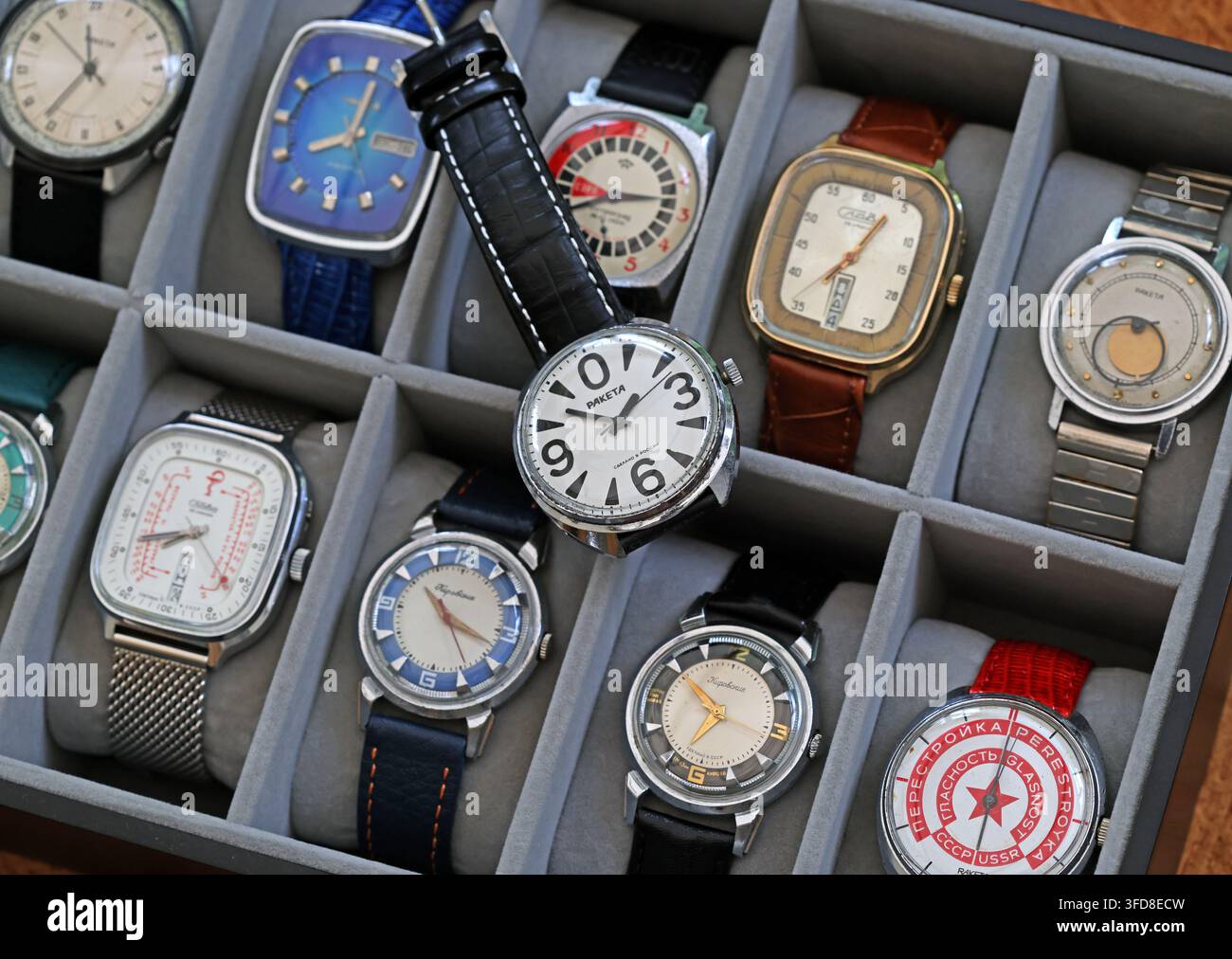
Image details
Contributor:
Tony SmithImage ID:
3FD8ECWFile size:
102 MB (3 MB Compressed download)Releases:
Model - no | Property - noDo I need a release?Dimensions:
7088 x 5032 px | 60 x 42.6 cm | 23.6 x 16.8 inches | 300dpiDate taken:
29 August 2026Location:
United KingdomMore information:
. Collection of Soviet-made wristwatches including Petrodvorets/Raketa designs from the USSR era. Several square, round and tonneau-shaped watches sit in a compartmented display tray, emphasising the variety of Soviet design rather than a single luxury-brand aesthetic. Mechanical wristwatches made in the Soviet Union are now collected for their industrial design, unusual movements, military and scientific associations and distinctly Cold War-era branding. Factories around Moscow, Leningrad and other Soviet cities produced large volumes under names including Raketa, Slava and other state-controlled marques. Many watches were designed for a domestic mass market rather than luxury consumption, yet surviving examples have become historical objects in their own right. A mixed display can illustrate horology, Soviet manufacturing, design history, collecting, vintage fashion and the material culture of the USSR. For picture researchers, the combination of legible wording and clear environmental context broadens the potential use beyond a simple location shot, allowing the image to support business, heritage, lifestyle and public-policy coverage. There is also a strong sense of contemporary place: practical objects, signage and architecture are shown as they actually appear in use, without removing the clutter that makes a documentary photograph informative. The image therefore has value not only for current news features but also for retrospective comparisons of how streets, services, brands and public expectations evolve over time. Details that might seem mundane at the moment of photography can later help date a streetscape or explain how a service was delivered, which is one reason straightforward editorial documentation remains useful to archives and publishers. This makes the photograph a useful piece of contemporary editorial documentation. It preserves a clear, searchable record of the subject and its setting for future editorial comparison.

