
Salford Charities 2gether shop in Eccles town centre, Greater Manchester.
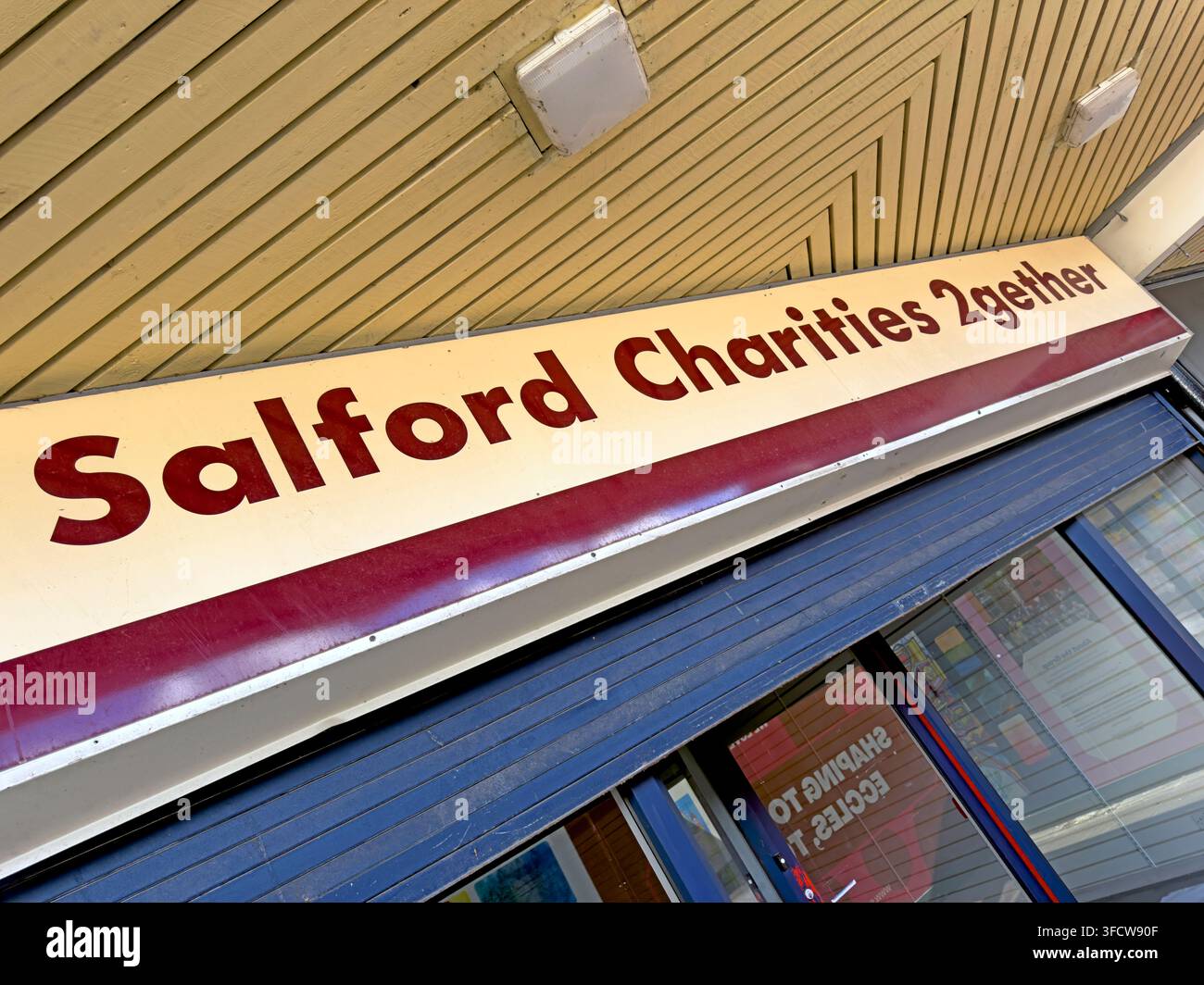
Image details
Contributor:
Tony SmithImage ID:
3FCW90FFile size:
107.1 MB (3.1 MB Compressed download)Releases:
Model - no | Property - noDo I need a release?Dimensions:
7064 x 5298 px | 59.8 x 44.9 cm | 23.5 x 17.7 inches | 300dpiDate taken:
19 August 2026Location:
Eccles, Salford, Greater Manchester, EnglandMore information:
. Salford Charities 2gether shop in Eccles town centre, Greater Manchester. The modest blue-fronted charity outlet sits within the Eccles retail environment, documenting a community-focused use of town-centre space. Charity shops are a familiar part of British town centres, combining fundraising with reuse, low-cost retail and volunteer involvement. In shopping centres and high streets they also occupy units that might otherwise stand empty, helping maintain footfall while diverting clothing, books and household goods from waste. A local Salford charity outlet provides useful editorial material for stories about the voluntary sector, cost-of-living pressures, second-hand shopping, community support, circular economy, retail vacancies and the role of small charities in neighbourhood centres. The location is Eccles, Salford, Greater Manchester, England. This geographical detail helps distinguish the subject from similar businesses, buildings or scenes elsewhere and gives the photograph stronger value for local, regional and comparative editorial use. The photograph is particularly useful where a story needs an identifiable real-world example rather than an abstract illustration, because the surrounding details place the subject in an ordinary British or European setting. Commercial and civic landscapes can change quickly, so apparently routine photographs of signs, shopfronts, machines and transport infrastructure often acquire additional documentary value when companies rebrand, premises close or policies change. The scene can be read at several levels: as a record of the immediate subject, as evidence of changing consumer or public behaviour, and as a small piece of the wider social and economic history visible in everyday places. This makes the photograph a useful piece of contemporary editorial documentation. It preserves a clear, searchable record of the subject and its setting for future editorial comparison.

