
Yellow “Trotters Independent Trading Co” novelty van in Ashton-under-Lyne - from Only Fools and Horses
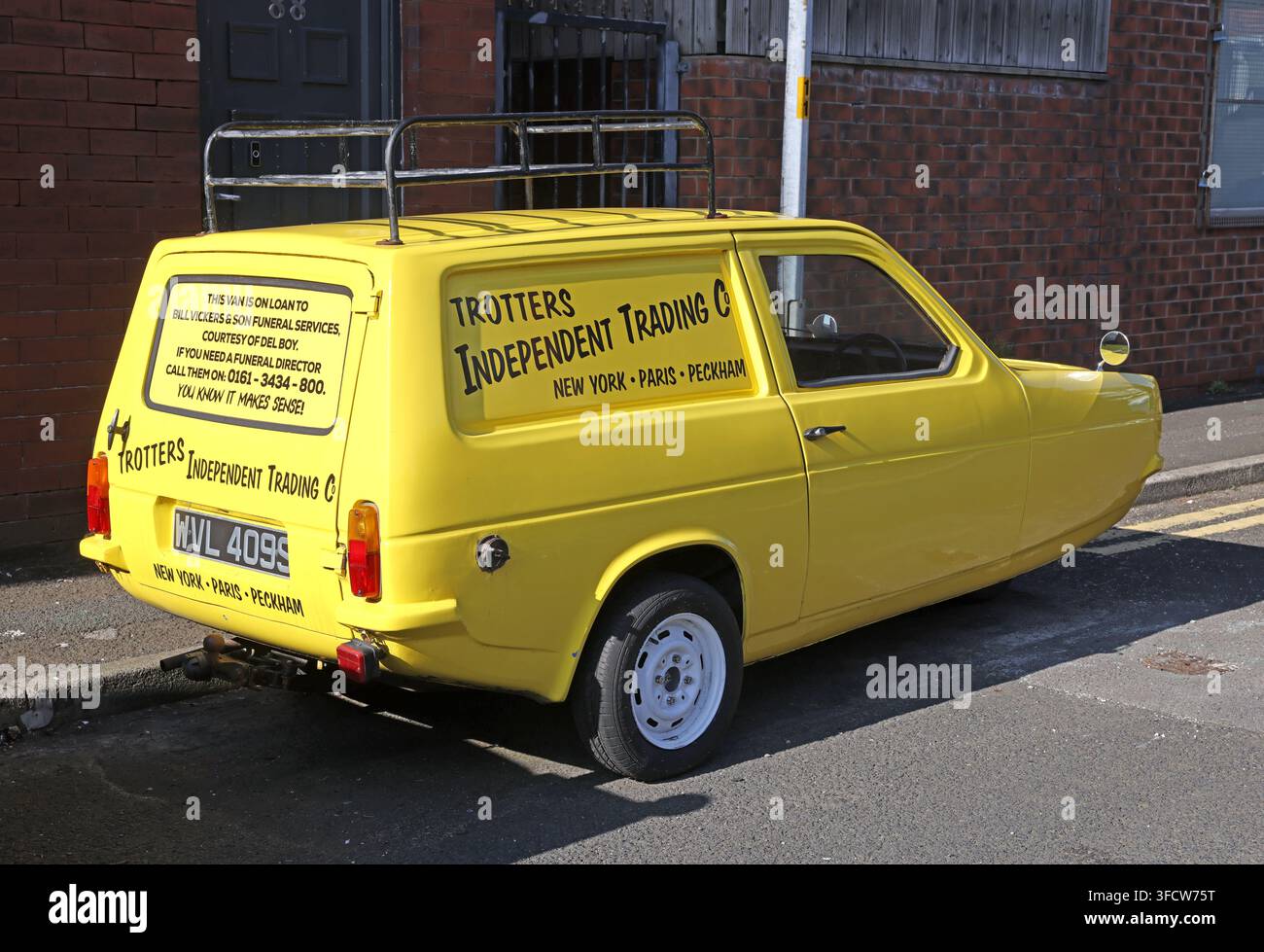
Image details
Contributor:
Tony SmithImage ID:
3FCW75TFile size:
124.9 MB (4.2 MB Compressed download)Releases:
Model - no | Property - noDo I need a release?Dimensions:
7988 x 5464 px | 67.6 x 46.3 cm | 26.6 x 18.2 inches | 300dpiDate taken:
22 August 2026Location:
Ashton-under-Lyne, Tameside, Greater Manchester, EnglandMore information:
. Yellow “Trotters Independent Trading Co” novelty van in Ashton-under-Lyne. The bright yellow three-wheeler carries Trotters Independent Trading Co-style lettering, deliberately evoking the famous van associated with Del Boy in the British sitcom Only Fools and Horses. Ashton-under-Lyne is one of the principal town centres of Tameside in eastern Greater Manchester. Its streets retain a dense mix of Victorian and twentieth-century commercial buildings, banks, markets, small independents and vacant or altered shopfronts. Like many traditional English centres it has faced competition from out-of-town retail, online shopping and changing leisure patterns. Photographs of individual premises and tired streetscapes provide useful evidence for stories about regeneration, vacancy, adaptive reuse, local enterprise, business rates and the uneven fortunes of post-industrial town centres. The location is Ashton-under-Lyne, Tameside, Greater Manchester, England. This geographical detail helps distinguish the subject from similar businesses, buildings or scenes elsewhere and gives the photograph stronger value for local, regional and comparative editorial use. Details that might seem mundane at the moment of photography can later help date a streetscape or explain how a service was delivered, which is one reason straightforward editorial documentation remains useful to archives and publishers. As an editorial stock image, it also records the typography, branding, materials and street-level visual language of its period, details that can become historically valuable as shops, products and public infrastructure are altered or replaced. The photograph is particularly useful where a story needs an identifiable real-world example rather than an abstract illustration, because the surrounding details place the subject in an ordinary British or European setting. This makes the photograph a useful piece of contemporary editorial documentation.

