
Tameside Hippodrome theatre exterior in Ashton-under-Lyne.
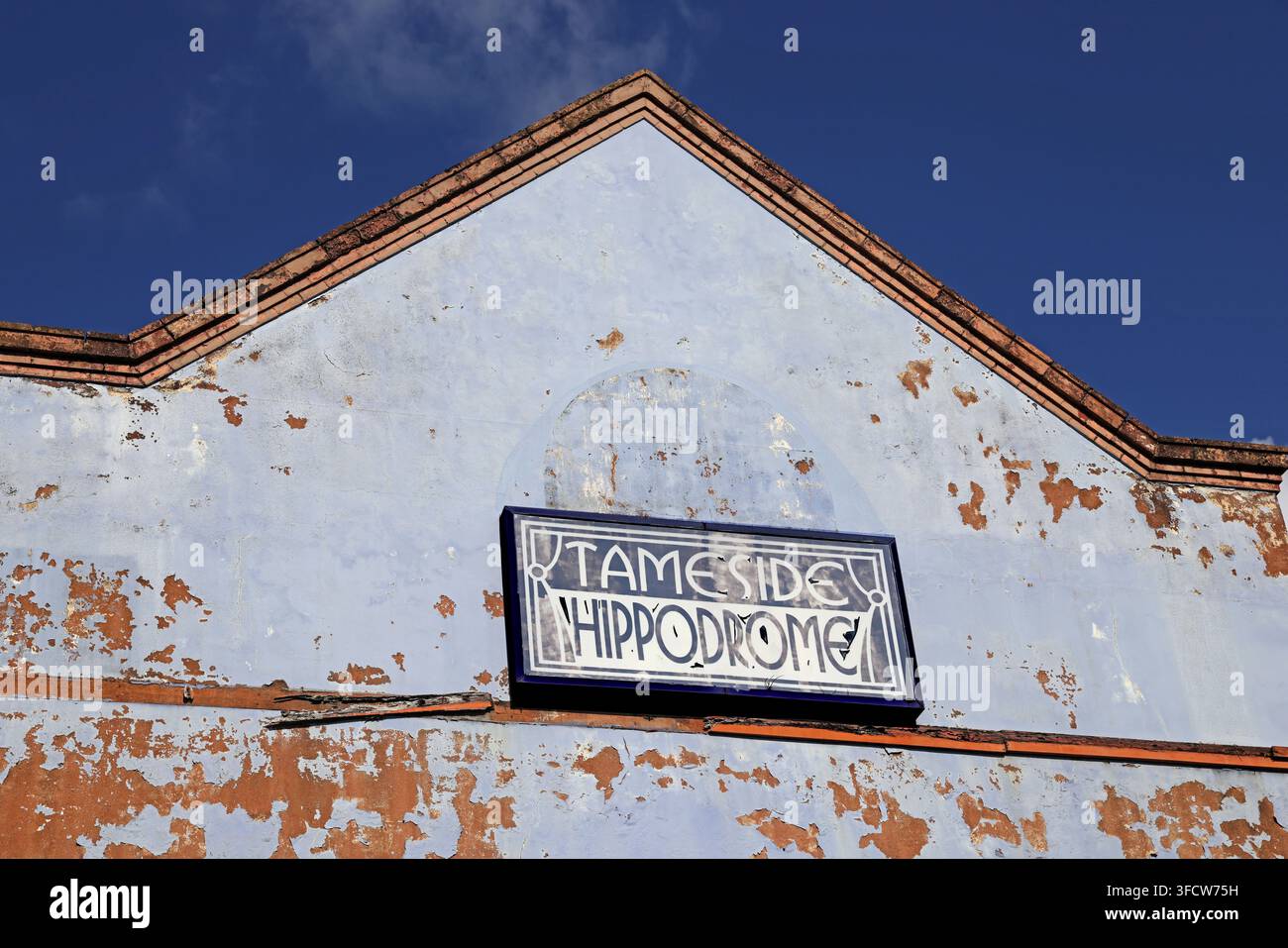
Image details
Contributor:
Tony SmithImage ID:
3FCW75HFile size:
128.1 MB (5.1 MB Compressed download)Releases:
Model - no | Property - noDo I need a release?Dimensions:
8192 x 5464 px | 69.4 x 46.3 cm | 27.3 x 18.2 inches | 300dpiDate taken:
22 August 2026Location:
Tameside Hippodrome, Ashton-under-Lyne, Greater Manchester, EnglandMore information:
. Tameside Hippodrome theatre exterior in Ashton-under-Lyne. The weathered gable and Hippodrome sign are framed against a clear blue sky, emphasising the building’s recognisable identity despite its long period of uncertainty. Tameside Hippodrome is a prominent theatre building in Ashton-under-Lyne with a long entertainment history. The venue evolved through theatre, cinema and later council-run performance use before closing, leaving its large frontage as a conspicuous reminder of the challenges involved in maintaining historic cultural buildings. Images of the exterior are useful for local heritage and regeneration stories because theatres can be both important civic assets and difficult buildings to finance, restore and operate. The site also documents changing patterns of popular entertainment in a town shaped by industrial growth. The location is Tameside Hippodrome, Ashton-under-Lyne, Greater Manchester, England. This geographical detail helps distinguish the subject from similar businesses, buildings or scenes elsewhere and gives the photograph stronger value for local, regional and comparative editorial use. There is also a strong sense of contemporary place: practical objects, signage and architecture are shown as they actually appear in use, without removing the clutter that makes a documentary photograph informative. The image therefore has value not only for current news features but also for retrospective comparisons of how streets, services, brands and public expectations evolve over time. Details that might seem mundane at the moment of photography can later help date a streetscape or explain how a service was delivered, which is one reason straightforward editorial documentation remains useful to archives and publishers. This makes the photograph a useful piece of contemporary editorial documentation. It preserves a clear, searchable record of the subject and its setting for future editorial comparison.

