
Close detail of “ANGEL HOTEL” glazed-tile lettering on the former pub in Ashton-under-Lyne.
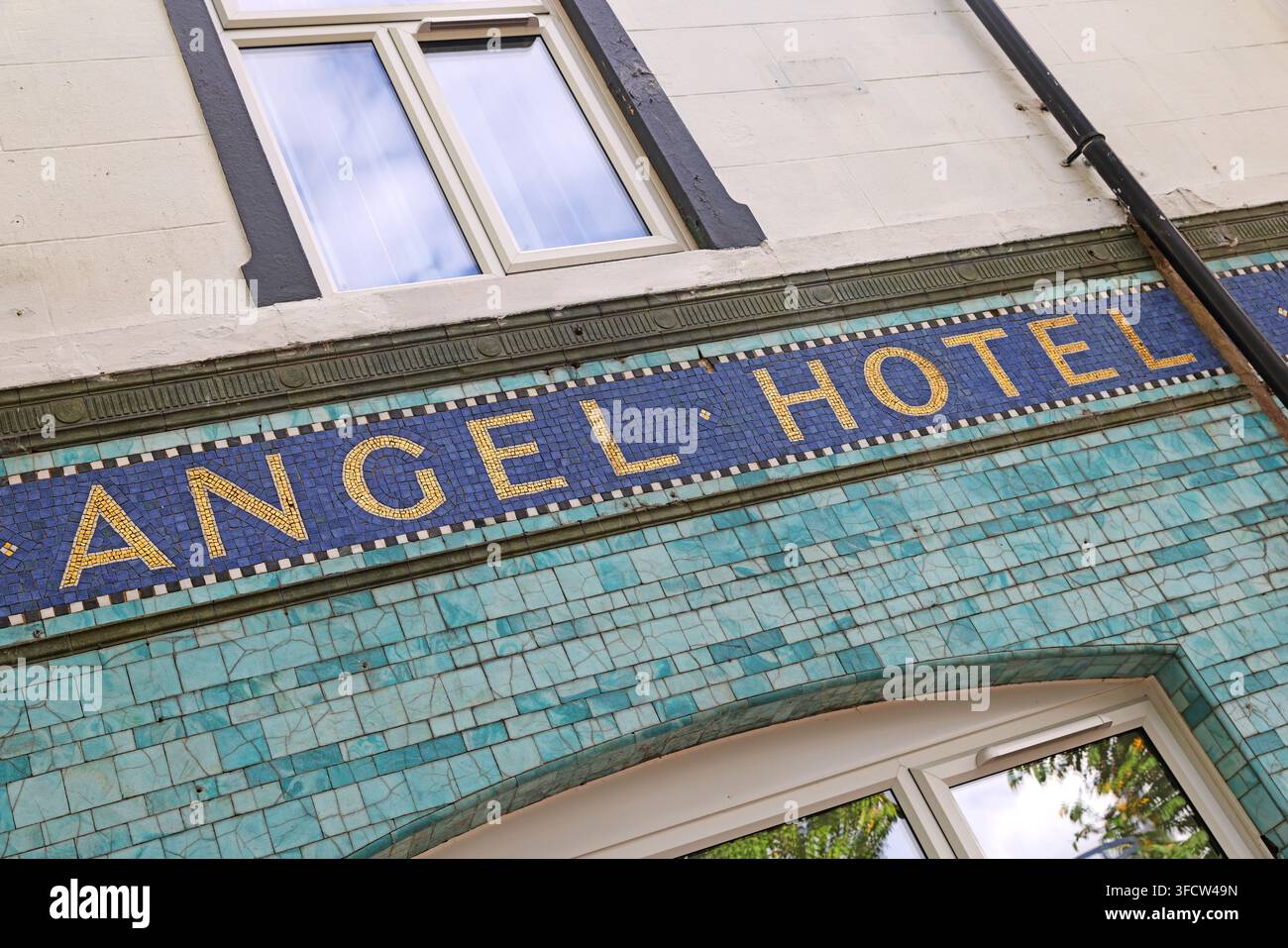
Image details
Contributor:
Tony SmithImage ID:
3FCW49NFile size:
128.1 MB (5.8 MB Compressed download)Releases:
Model - no | Property - noDo I need a release?Dimensions:
8192 x 5464 px | 69.4 x 46.3 cm | 27.3 x 18.2 inches | 300dpiDate taken:
22 August 2026Location:
Former Angel Hotel, Ashton-under-Lyne, Tameside, Greater Manchester, EnglandMore information:
. Close detail of “ANGEL HOTEL” glazed-tile lettering on the former pub in Ashton-under-Lyne. The image isolates the ANGEL HOTEL name above turquoise patterned tiles, documenting the building’s former function through a permanent architectural sign rather than a modern fascia. The former Angel Hotel in Ashton-under-Lyne retains an unusually rich glazed-tile exterior carrying historic Shaw’s Ales branding. Such faience and tilework was designed to be both decorative and commercial, giving brewery-owned pubs a durable identity that survived repainting and changes of tenant. The building is a particularly useful piece of streetscape evidence because the historic hospitality use and brewery advertising remain legible even when the premises themselves change function. It connects local brewing history, architectural ceramics, pub heritage and contemporary questions about preserving distinctive town-centre fabric. The location is Former Angel Hotel, Ashton-under-Lyne, Tameside, Greater Manchester, England. This geographical detail helps distinguish the subject from similar businesses, buildings or scenes elsewhere and gives the photograph stronger value for local, regional and comparative editorial use. The photograph is particularly useful where a story needs an identifiable real-world example rather than an abstract illustration, because the surrounding details place the subject in an ordinary British or European setting. Commercial and civic landscapes can change quickly, so apparently routine photographs of signs, shopfronts, machines and transport infrastructure often acquire additional documentary value when companies rebrand, premises close or policies change. The scene can be read at several levels: as a record of the immediate subject, as evidence of changing consumer or public behaviour, and as a small piece of the wider social and economic history visible in everyday places.

