
Interior of the historic Refuge Assurance building, now Kimpton Clocktower Hotel, Manchester.
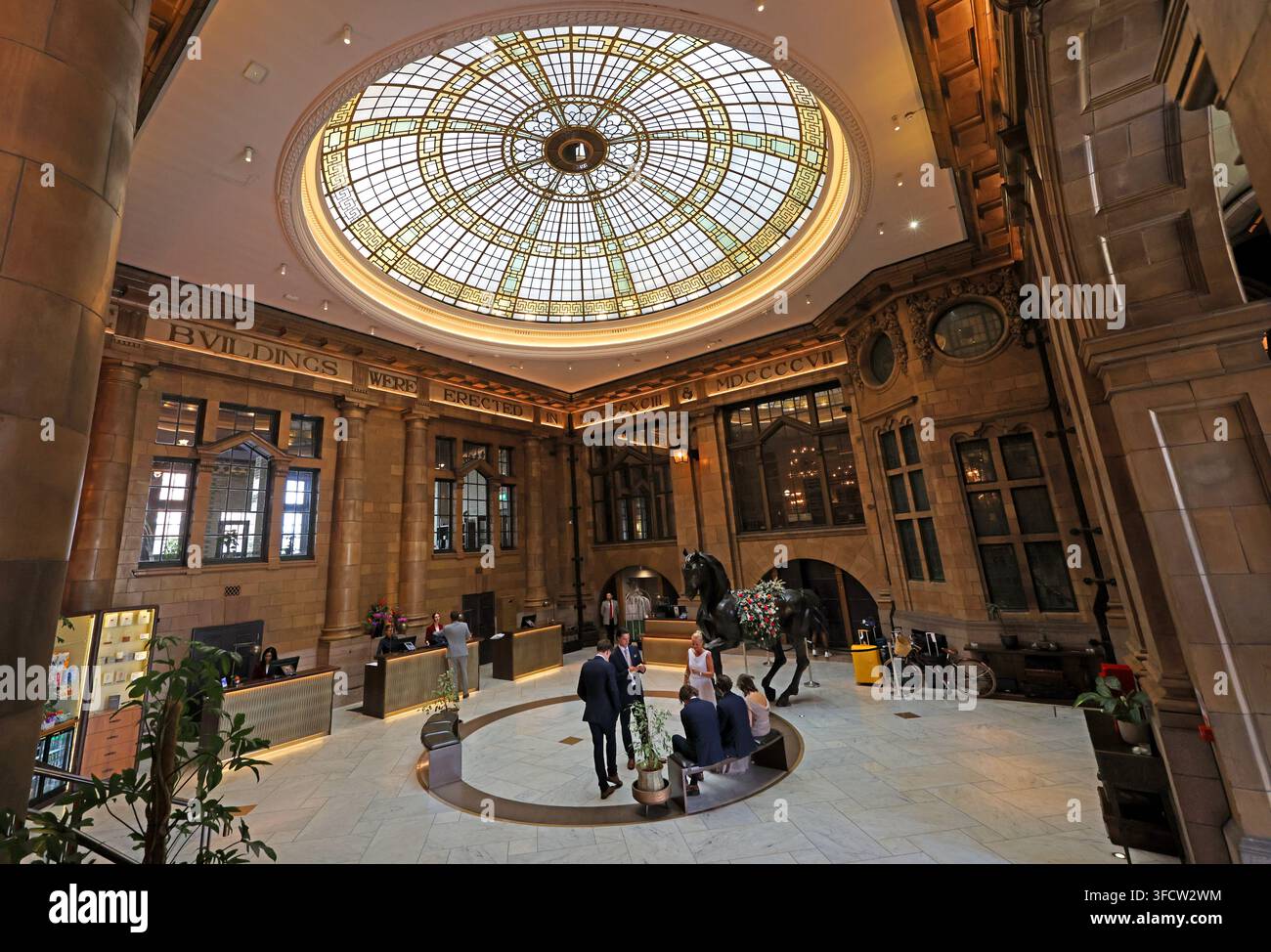
Image details
Contributor:
Tony SmithImage ID:
3FCW2WMFile size:
95.3 MB (4.3 MB Compressed download)Releases:
Model - no | Property - noDo I need a release?Dimensions:
7000 x 4760 px | 59.3 x 40.3 cm | 23.3 x 15.9 inches | 300dpiDate taken:
22 August 2026Location:
Kimpton Clocktower Hotel, Oxford Street, Manchester, M60 7HA, EnglandMore information:
. Interior of the historic Refuge Assurance building, now Kimpton Clocktower Hotel, Manchester. The soaring interior combines ornate stone and timber detailing with a large circular glazed ceiling feature and contemporary hotel use, demonstrating the scale and grandeur of the former insurance headquarters. The Kimpton Clocktower Hotel occupies one of Manchester’s grandest late-Victorian commercial buildings on Oxford Street. Originally associated with the Refuge Assurance Company, the complex is celebrated for its red brick, terracotta, tower and richly detailed interiors. The Refuge bar and restaurant now occupies part of the ground-floor public space, combining hospitality with the building’s insurance-company heritage. Interior photographs of the great hall, winter garden and dining spaces are useful for architecture, adaptive reuse, tourism, hotel design and the conservation of prestigious commercial buildings. The location is Kimpton Clocktower Hotel, Oxford Street, Manchester, M60 7HA, England. This geographical detail helps distinguish the subject from similar businesses, buildings or scenes elsewhere and gives the photograph stronger value for local, regional and comparative editorial use. Details that might seem mundane at the moment of photography can later help date a streetscape or explain how a service was delivered, which is one reason straightforward editorial documentation remains useful to archives and publishers. As an editorial stock image, it also records the typography, branding, materials and street-level visual language of its period, details that can become historically valuable as shops, products and public infrastructure are altered or replaced. The photograph is particularly useful where a story needs an identifiable real-world example rather than an abstract illustration, because the surrounding details place the subject in an ordinary British or European setting.

