
Brixton Brewery tap room beer board advertising craft lager, IPA, ale and cider in Brixton, London
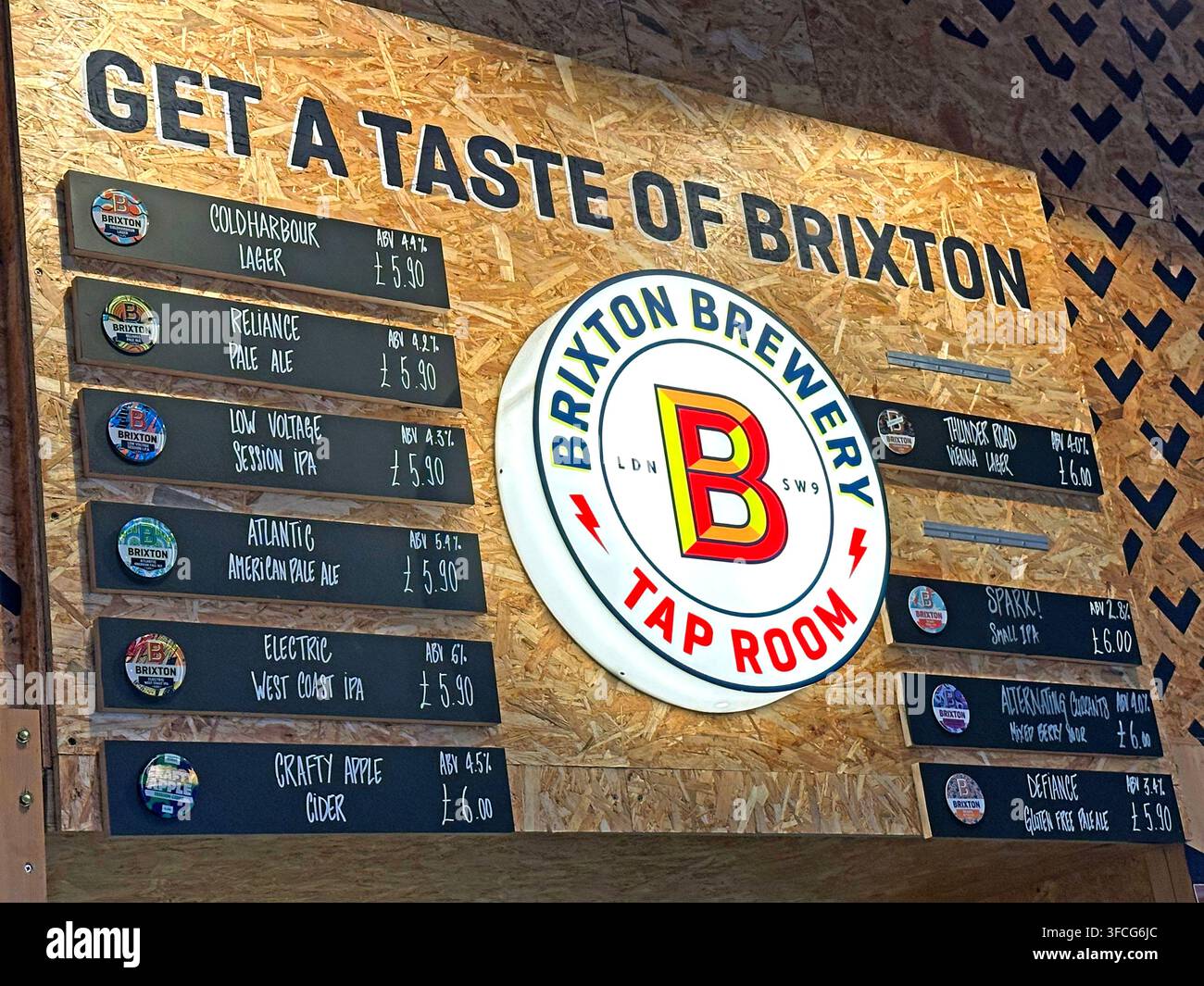
Image details
Contributor:
Tony SmithImage ID:
3FCG6JCFile size:
42.1 MB (1.9 MB Compressed download)Releases:
Model - no | Property - noDo I need a release?Dimensions:
4432 x 3324 px | 37.5 x 28.1 cm | 14.8 x 11.1 inches | 300dpiDate taken:
23 August 2025Location:
Brixton, London Borough of Lambeth, Greater London, England, UKMore information:
. The photograph records a Brixton Brewery tap-room beer board inviting customers to 'Get a Taste of Brixton', with a changing choice of lager, pale ale, IPA, cider and other draught drinks. Brixton became closely associated with the modern London craft-beer revival, in which small breweries used local identity, distinctive can artwork, tap rooms and limited batches to compete with national lager brands. Brixton Brewery was founded in the 2010s and grew from a neighbourhood operation into a widely distributed name; Heineken first invested in the company and later took full ownership, a route followed by several successful British craft brands as major brewers sought a share of the premium and independent-style beer market. The board is therefore a snapshot of both pub culture and the commercial evolution of craft brewing. It also reflects Brixton's wider reputation for food, music, nightlife and multicultural street life, where place branding is an important part of the visitor economy. The wider editorial value comes from the way one everyday view can connect local identity with national trends. Relevant search and editorial concepts include local history, documentary photography, current affairs, public realm, architecture, community, social change, economic context, regional identity, Britain, 2026. Useful descriptive vocabulary for archive discovery includes Brixton, Brewery, tap, room, craft, beer, lager, IPA, cider, ale, London, Lambeth, brewery, brewing, pints, bar, menu, independent, hospitality, nightlife, brand. The image may be useful to picture editors seeking authentic North West or British context for features on community life, economic change, heritage, services and the evolving built environment. As a visual record it preserves ordinary details that formal reports often omit, including the condition, presentation and day-to-day setting of the subject at the time of photography.

