
Ofgem website displayed in Welsh on a tablet, showing bilingual public information from Great Britain’s energy regulator.
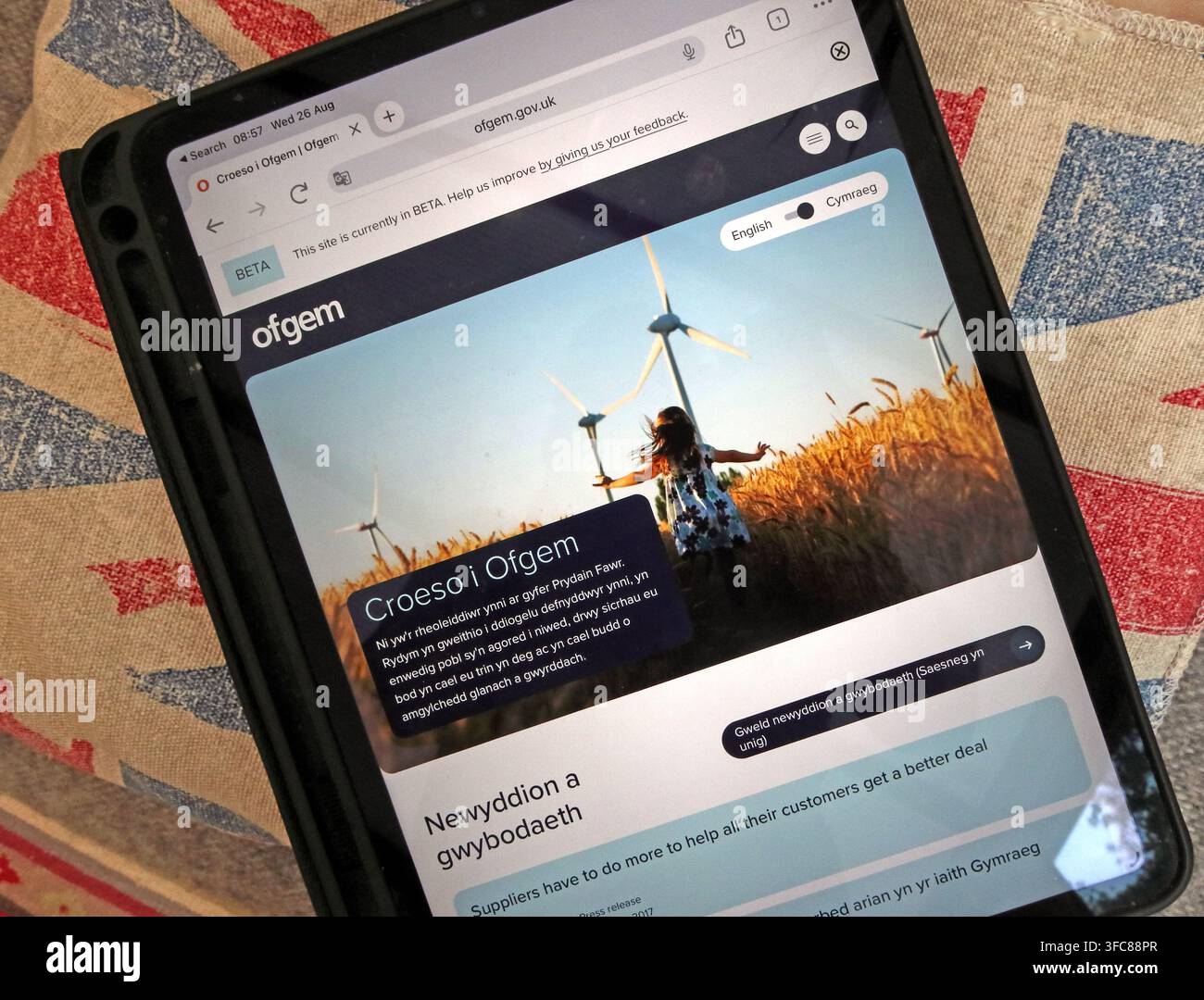
Image details
Contributor:
Tony SmithImage ID:
3FC88PRFile size:
50 MB (2 MB Compressed download)Releases:
Model - no | Property - noDo I need a release?Dimensions:
4788 x 3648 px | 40.5 x 30.9 cm | 16 x 12.2 inches | 300dpiDate taken:
26 August 2026Location:
Wales, UKMore information:
. Welsh-language ofgem website displayed on a tablet provides a direct contemporary illustration of household energy regulation and billing in Great Britain. On 26 August 2026 Ofgem announced that the energy price cap would rise by 4% for the quarter from 1 October to 31 December. For a typical dual-fuel household paying by Direct Debit, the illustrative annual figure increases from £1, 663 to £1, 723, a rise of about £60 if the quarterly rates were sustained for a year. Ofgem said higher wholesale gas prices linked to continuing conflict in the Middle East were the dominant driver. Around 22 million households on default tariffs are covered by the cap, while customers on fixed deals are not directly affected by the quarterly change. The cap limits unit rates and standing charges rather than setting a maximum total bill, so actual spending still depends on consumption. In Wales, Ofgem’s consumer information is also available in Welsh, reflecting bilingual public-service obligations and giving publishers a useful visual for stories specifically about Welsh households. The wider context remains the cost-of-living squeeze, fuel poverty, smart meters, energy debt, standing charges, tariff choice and the transition toward lower-carbon heating and electricity. The photograph also fixes the appearance of the place in the mid-2020s, preserving details that may later disappear through redevelopment, rebranding or changes in regulation. It is suitable for editorial use on social history, local identity, consumer behaviour and the way everyday streets respond to wider economic forces. It additionally captures ordinary material culture of 2026, including the graphic design, technology, clothing or infrastructure through which broader trends become visible at street level. For archive users, the frame is a useful factual record of how Welsh-language Ofgem website displayed on a tablet appeared before later redevelopment, replacement or rebranding altered the scene.

