
Smartphone showing an Octopus Energy meter-reading screen beside a domestic electricity meter after the October 2026 cap rise.
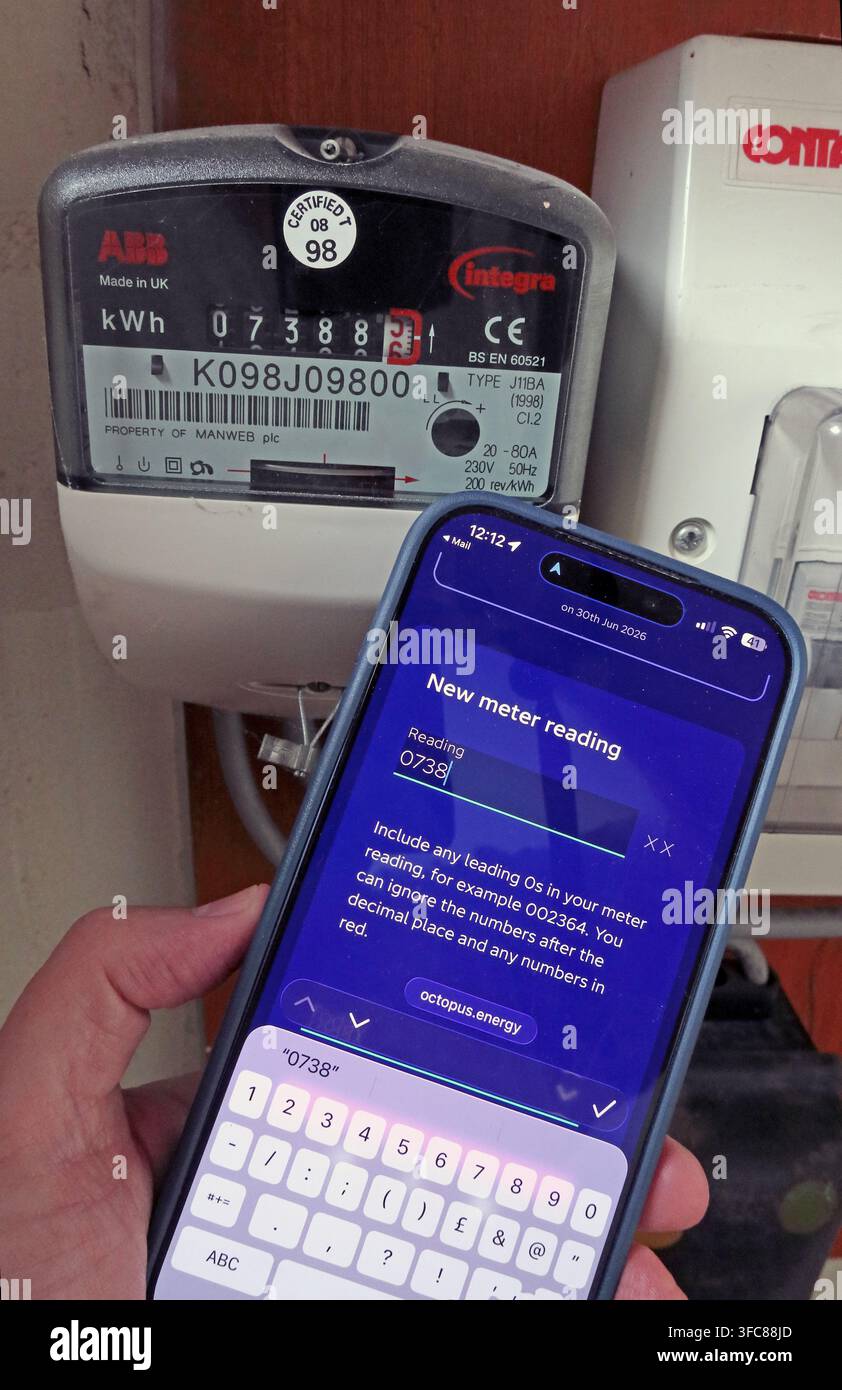
Image details
Contributor:
Tony SmithImage ID:
3FC88JDFile size:
52.4 MB (1.6 MB Compressed download)Releases:
Model - no | Property - noDo I need a release?Dimensions:
3445 x 5316 px | 29.2 x 45 cm | 11.5 x 17.7 inches | 300dpiDate taken:
26 August 2026Location:
England, UKMore information:
. Octopus energy app beside a domestic smart electricity meter provides a direct contemporary illustration of household energy regulation and billing in Great Britain. The price-cap announcement illustrates the continuing link between British household finances and international gas markets. Ofgem’s October-to-December 2026 cap is 4% higher than the preceding quarter, with the typical direct-debit dual-fuel benchmark at £1, 723. The regulator said volatile wholesale gas prices, particularly following conflict in the Middle East, outweighed some government relief on electricity VAT. About 35% of households were on fixed tariffs and therefore insulated from this specific quarterly increase, while people on default variable tariffs remained exposed. Suppliers are required to support customers who say they cannot pay, including discussing repayment plans and other assistance. In Wales, Ofgem’s consumer information is also available in Welsh, reflecting bilingual public-service obligations and giving publishers a useful visual for stories specifically about Welsh households. The wider context remains the cost-of-living squeeze, fuel poverty, smart meters, energy debt, standing charges, tariff choice and the transition toward lower-carbon heating and electricity. Taken as editorial evidence, the image connects an everyday scene with larger questions about how people travel, shop, celebrate, work and use shared space. It can support both current news coverage and longer-term archive projects examining the Britain of the mid-2020s. Because the photograph is tied to a specific date, it can later be compared with subsequent changes in signage, ownership, regulation, public use or the surrounding streetscape. It additionally captures ordinary material culture of 2026, including the graphic design, technology, clothing or infrastructure through which broader trends become visible at street level. Useful for dated UK editorial coverage.

