
Colourful entrance to Reliance Arcade on Electric Lane in Brixton, south London, England, UK.
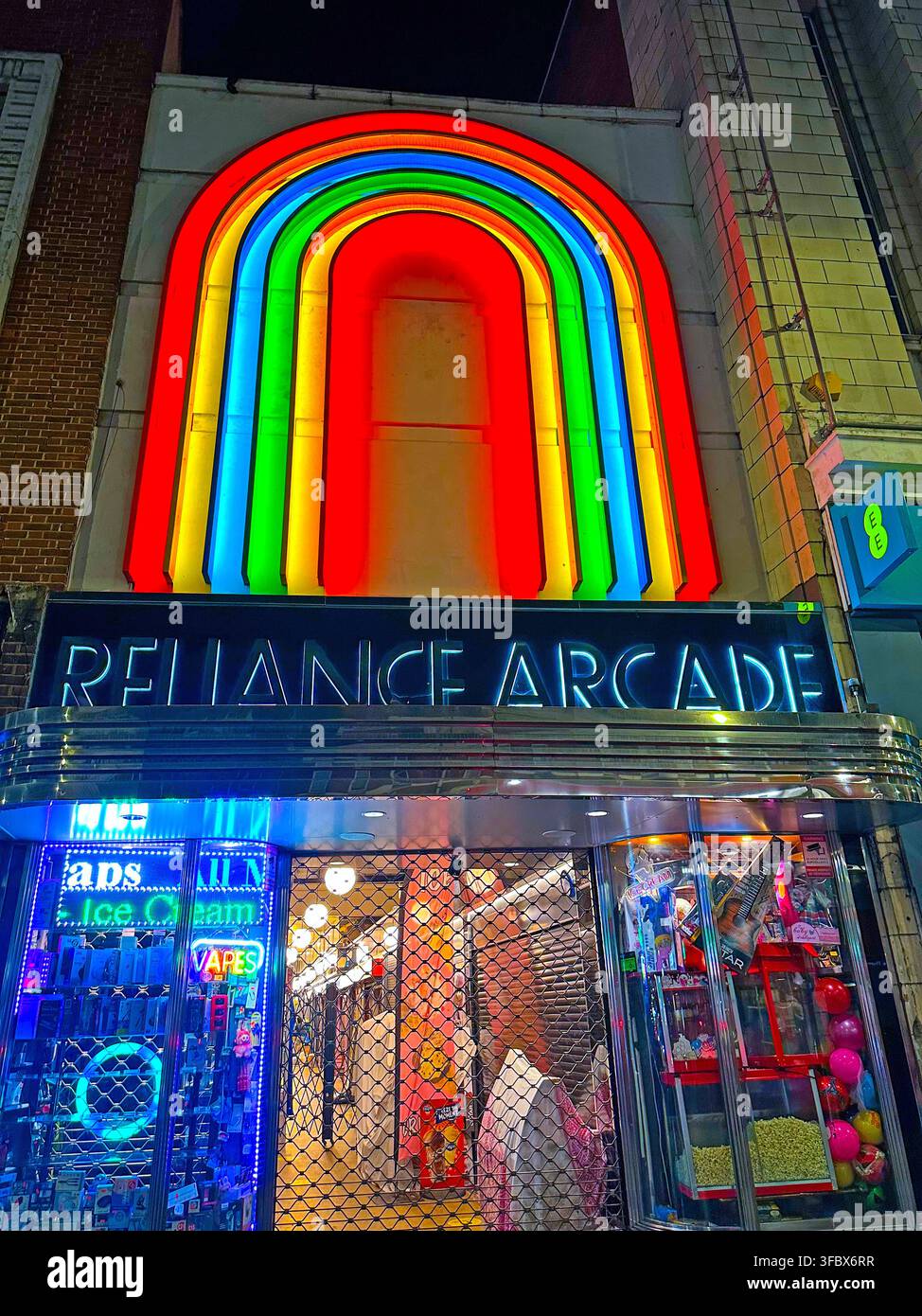
Image details
Contributor:
Tony SmithImage ID:
3FBX6RRFile size:
44.1 MB (2.5 MB Compressed download)Releases:
Model - no | Property - noDo I need a release?Dimensions:
3399 x 4532 px | 28.8 x 38.4 cm | 11.3 x 15.1 inches | 300dpiDate taken:
23 August 2025Location:
Reliance Arcade, Electric Lane, Brixton, London SW9, England, UKMore information:
. The vivid rainbow-framed entrance to Reliance Arcade on Electric Lane forms one of the most recognisable gateways into Brixton’s network of covered markets and independent shops in south London. The narrow arcade is part of the historic retail fabric around Brixton Market, where small traders, food businesses and specialist shops sit beside the busier high street. Its colourful frontage and illuminated name create a strong visual identity while also reflecting the continuing role of covered arcades in supporting independent retail in an area that has experienced major social, cultural and commercial change. Brixton is widely associated with Caribbean and other migrant communities, music, nightlife and a distinctive local street culture, and the market area remains central to that identity. In recent decades the district has also become a focus for debate about regeneration, rising commercial rents, gentrification and the balance between longstanding local businesses and newer leisure-led development. Reliance Arcade therefore works as both a practical shopping route and a piece of surviving retail heritage. Reliance Arcade links Brixton’s independent retail, covered-market tradition and multicultural trading history with current debates about high-street regeneration, affordability and small-business survival. Reliance Arcade is one of several passages that stitch together Brixton’s market quarter, where relatively small units have historically enabled food, fashion and specialist traders to operate at a scale very different from chain retail. Its survival matters to debates about who benefits from regeneration and whether distinctive local commerce can remain affordable as surrounding property values rise. The arcade’s small-scale frontage is therefore commercially important as well as visually distinctive, offering a type of affordable retail space that can disappear when historic market areas are comprehensively redeveloped.

