
Interior of Brixton Brewery tap room in London, with customers drinking craft beer and ales.
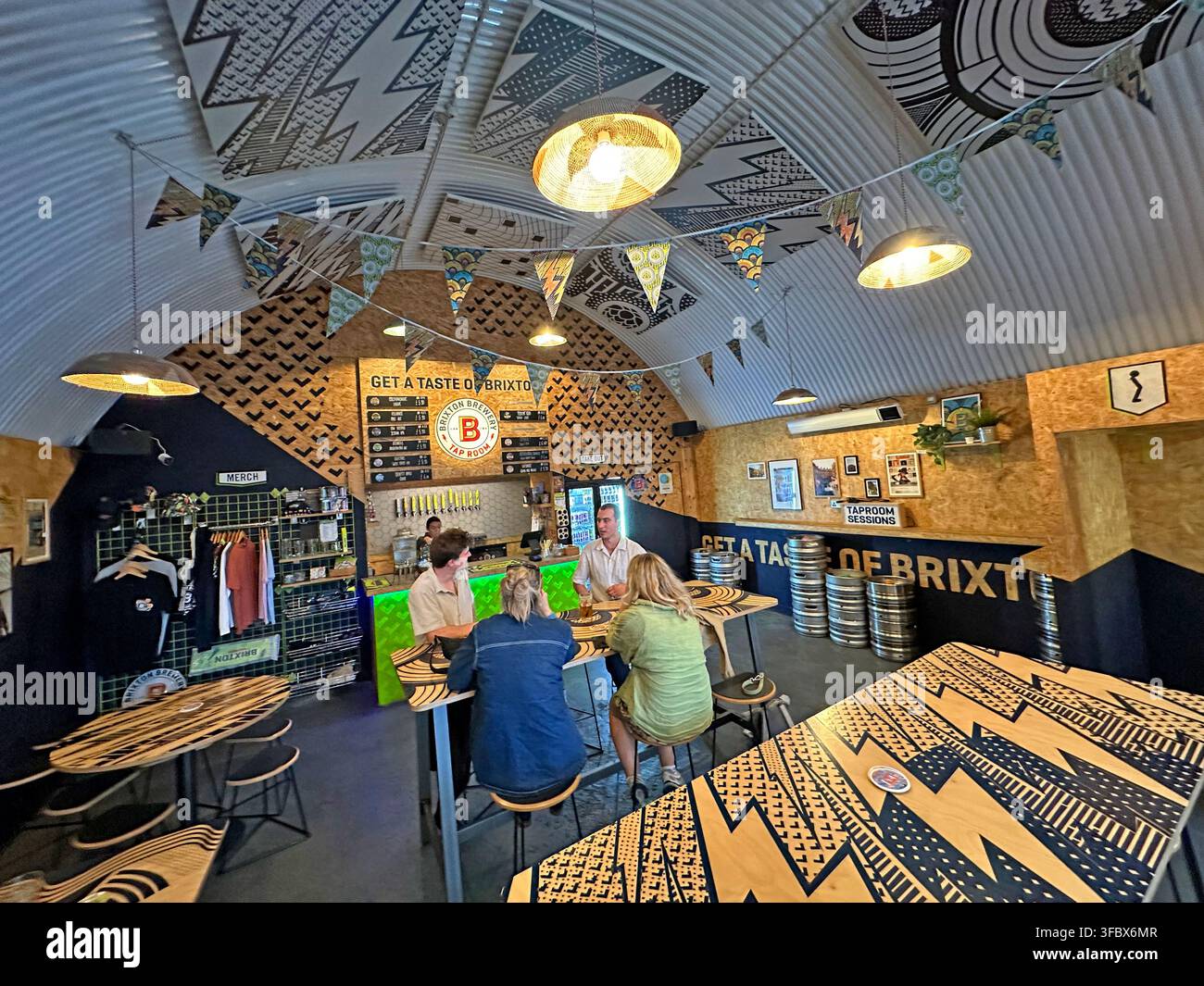
Image details
Contributor:
Tony SmithImage ID:
3FBX6MRFile size:
38.4 MB (2 MB Compressed download)Releases:
Model - no | Property - noDo I need a release?Dimensions:
4232 x 3174 px | 35.8 x 26.9 cm | 14.1 x 10.6 inches | 300dpiDate taken:
23 August 2025Location:
Brixton Brewery tap room, Brixton, London, England, UKMore information:
. Customers sit and drink inside the Brixton Brewery tap room, surrounded by bold brewery branding, beer taps and the informal interior associated with Britain’s modern craft-beer scene. Brixton Brewery was established in south London and built its identity around the neighbourhood, using local place names and imagery across its beers and marketing. The tap-room format allows drinkers to consume beer close to the brewery brand and production story, a model that has become common among independent and craft brewers as they seek a direct relationship with customers. The scene also reflects wider changes in British pub and drinking culture, with specialist beer bars, brewery taprooms and rotating keg or cask selections competing alongside traditional pubs. Craft beer has expanded the range of styles familiar to UK consumers, including pale ales, IPAs, lagers, stouts and seasonal brews, while organisations such as CAMRA continue to promote beer quality and pub culture. Brixton’s reputation for nightlife, food and independent businesses gives the venue an additional neighbourhood context. Brixton Brewery sits within the growth of London craft brewing, tap-room culture and neighbourhood branding, where independent beer businesses compete through distinctive local identity, direct sales and hospitality. Brixton Brewery’s visual identity draws heavily on the neighbourhood it came from, turning local place references into part of the product story rather than treating the beer as geographically anonymous. Taprooms also give breweries a higher-margin direct sales channel and an immediate testing ground for new recipes, while helping to create destination visits around brewing rather than simply supplying pubs and supermarkets. The interior also documents the visual language of contemporary craft beer, where exposed materials, bold graphics and visible brand references are used to distinguish the venue from a conventional pub.

