
Wide panoramic view inside a restored manual salt evaporation pan at Lion Salt Works, Marston, Northwich, Cheshire, England, UK
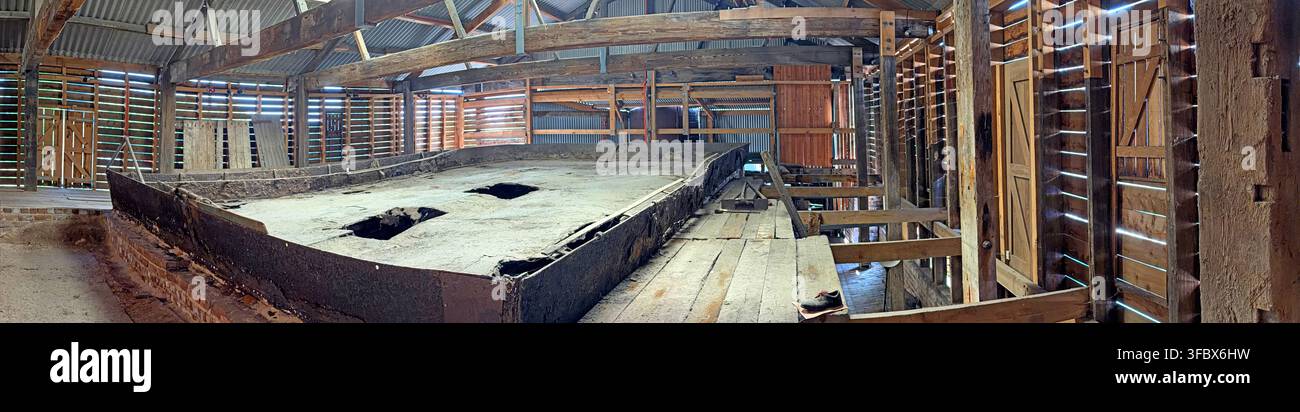
Image details
Contributor:
Tony SmithImage ID:
3FBX6HWFile size:
135.1 MB (6.2 MB Compressed download)Releases:
Model - no | Property - noDo I need a release?Dimensions:
13792 x 3424 px | 116.8 x 29 cm | 46 x 11.4 inches | 300dpiDate taken:
23 August 2026Location:
Lion Salt Works, Ollershaw Lane, Marston, Northwich CW9 6ES, Cheshire, England, UKMore information:
Historic manual open salt pan inside the restored Lion Salt Works at Marston near Northwich, Cheshire, England. The surviving iron evaporation pan and timber pan-house structure preserve the traditional open-pan process once central to Cheshire’s salt industry. Natural brine was pumped from underground deposits into large shallow pans and heated from furnaces below. As the water evaporated, salt crystals formed and workers raked them towards the sides, lifted the wet salt out and transferred it for draining, drying, crushing, storage and packing. Lion Salt Works was established by the Thompson family in the 1890s and developed into a complete inland brine works with pan houses, stove houses, brine tank, pump house, chimney, workshops and stores. Production continued until 1986, when the loss of important export markets brought commercial salt making on the site to an end. Its survival is exceptional: Historic England describes Lion Salt Works as the last surviving inland open-pan salt works in England and the only remaining natural-brine pumping open-pan salt works in Europe. Wider industrial-history sources identify it as one of only five surviving inland open-pan salt works complexes worldwide. The site is a Scheduled Monument and several buildings are Grade II listed. After a major conservation and restoration programme, Lion Salt Works reopened as a museum in 2015, interpreting the geology, labour and industrial processes that made the Northwich district internationally associated with salt. This panoramic interior view records the huge rectangular salt pan, timber walkways, wooden structural framing, roof vents and working environment of a technology that changed little for generations. It provides visual evidence of manual salt production, industrial archaeology, historic food manufacture, Cheshire brine extraction and the preservation of a rare industrial process once widespread around Northwich and the Weaver Valley

