
Passengers check in large and irregular baggage in Terminal 2 at Manchester Airport, England, UK.
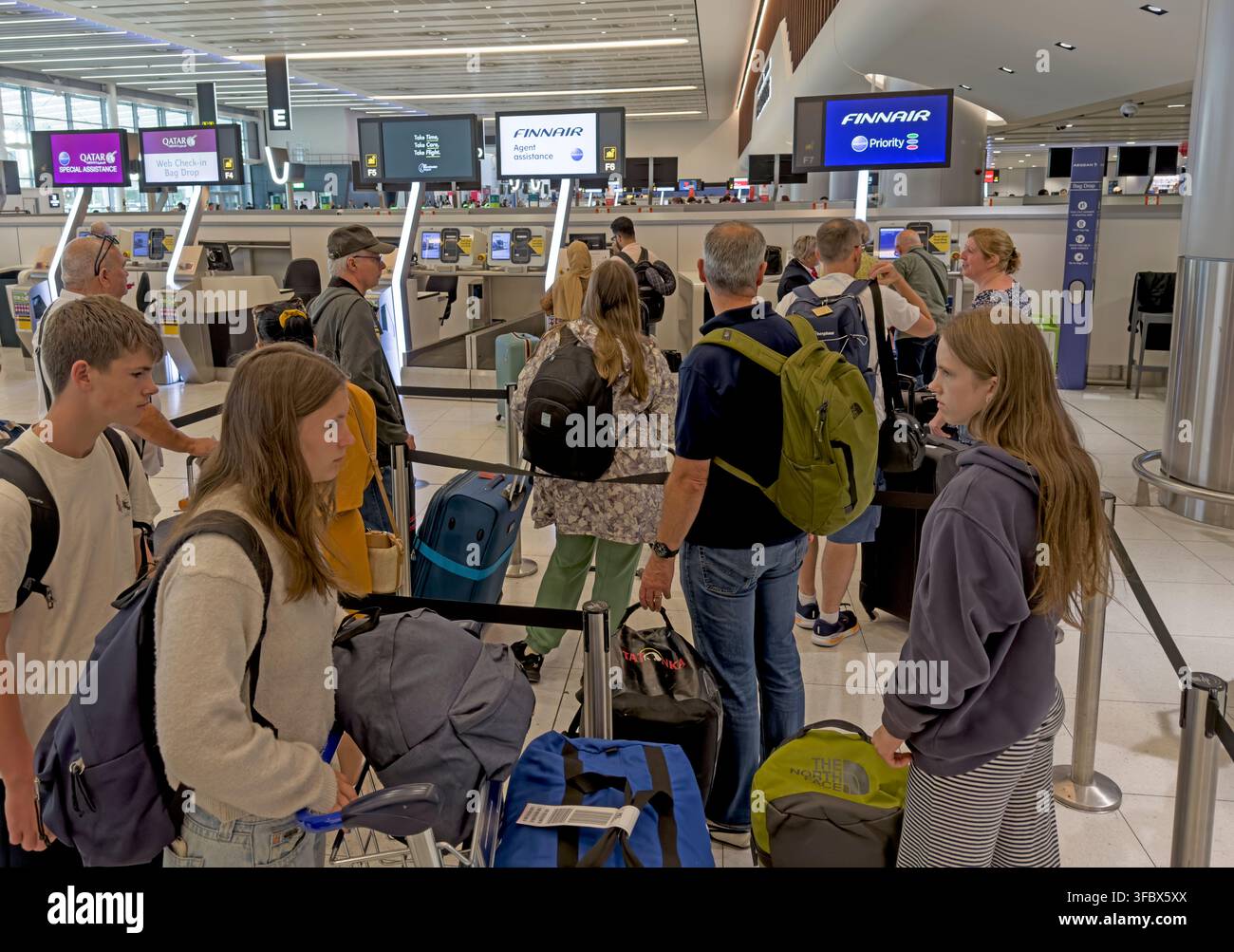
Image details
Contributor:
Tony SmithImage ID:
3FBX5XXFile size:
77 MB (2.3 MB Compressed download)Releases:
Model - no | Property - noDo I need a release?Dimensions:
6188 x 4349 px | 52.4 x 36.8 cm | 20.6 x 14.5 inches | 300dpiDate taken:
1 August 2026Location:
Terminal 2, Manchester Airport, Greater Manchester, England, UKMore information:
. Passengers queue with large suitcases and irregular baggage in the check-in area of Terminal 2 at Manchester Airport, showing the practical start of an international journey before luggage is accepted into the airport baggage system. Oversize and non-standard items can require separate handling because they may not fit conventional belts or automated screening equipment, adding an extra stage to the departure process. The Finnair area reflects Manchester’s role as a regional gateway connected to European hubs and onward long-haul destinations. Terminal 2 has been extensively redeveloped as part of a major airport transformation programme, with enlarged check-in, security, departure and baggage facilities intended to handle high passenger volumes. Busy periods expose the operational pressures on terminals as airlines, ground handlers, security staff and airport systems process thousands of travellers within limited time windows. Queues around check-in desks are therefore a visible measure of both travel demand and the complexity of passenger processing. Large and irregular baggage creates extra handling demands at check-in, while the queue shows the passenger pressures that can build inside Manchester Airport Terminal 2 during busy holiday departure periods. Irregular baggage may include sports equipment, pushchairs, mobility items or unusually shaped cases, each of which can need manual handling and separate screening. That extra process is a reminder that automated airports still rely heavily on staff judgement and physical intervention when passenger belongings fall outside the standard size and weight assumptions of conveyor systems. Queues around these desks can therefore reflect the diversity of baggage rather than simply insufficient staffing, especially on routes carrying holidaymakers and connecting passengers. Oversize-bag desks are therefore a distinct pressure point in terminal operations, especially during family and leisure travel peaks.

