
Busy bank-holiday check-in and bag-drop area in Terminal 2 at Manchester Airport, England, UK.
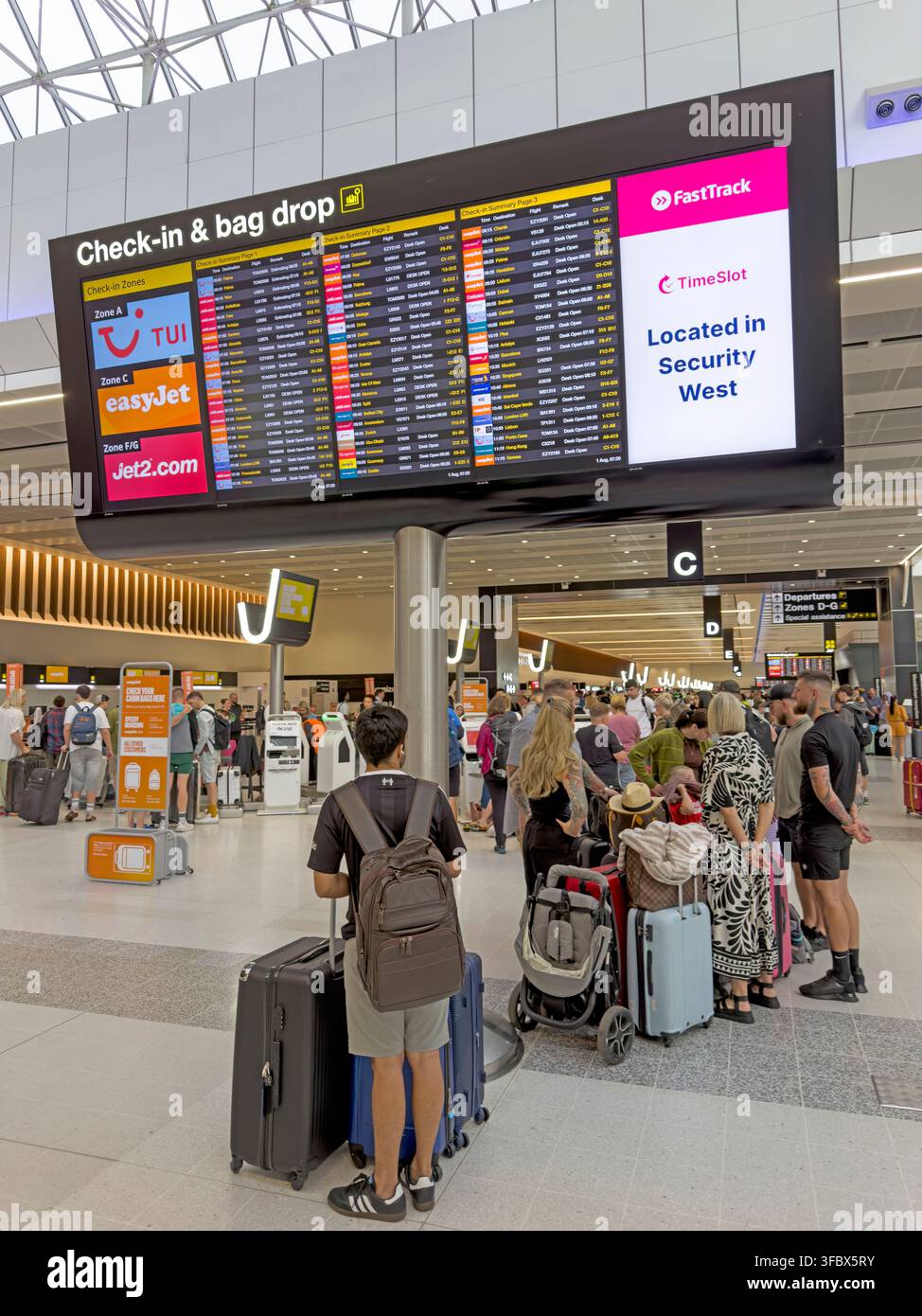
Image details
Contributor:
Tony SmithImage ID:
3FBX5RYFile size:
107.1 MB (2.9 MB Compressed download)Releases:
Model - no | Property - noDo I need a release?Dimensions:
5298 x 7064 px | 44.9 x 59.8 cm | 17.7 x 23.5 inches | 300dpiDate taken:
1 August 2026Location:
Terminal 2, Manchester Airport, Greater Manchester, England, UKMore information:
. A busy bank-holiday scene inside Manchester Airport Terminal 2 shows passengers gathering around airline check-in and bag-drop areas used by major leisure carriers including TUI, easyJet and Jet2.com. Peak weekends place intense pressure on airport infrastructure because large numbers of travellers arrive within similar morning and evening departure waves, particularly during school holidays and popular summer travel periods. Check-in halls concentrate many stages of the journey into one space: document checks, baggage acceptance, self-service kiosks, staffed assistance and the movement of passengers towards security. Manchester Airport is a major leisure gateway for northern England, with a large proportion of traffic linked to European beach destinations, package holidays and city breaks. The crowds and luggage visible here demonstrate how quickly terminal capacity can be tested when demand surges, and why airports invest heavily in queue management, automated bag drop and redesigned passenger flows. Terminal 2 has undergone major redevelopment to increase capacity and modernise facilities. Bank-holiday peaks concentrate leisure passengers into short departure windows, testing airline bag-drop capacity, security flows and the enlarged Terminal 2 infrastructure built to handle Manchester’s international demand. Bank-holiday peaks can be sharper than normal weekday demand because leisure passengers often travel in family groups with more checked luggage and arrive around similar charter or low-cost departure waves. For airports, the challenge is not only total annual passenger numbers but having enough desks, security capacity, staff and baggage equipment for short periods of concentrated demand. The visible mix of airline brands also demonstrates how one terminal must support different check-in processes and service models while presenting passengers with a coherent airport environment.

