
Flyer for The Fall at The Haçienda, Manchester, during its Christmas 1983 music season, 16 December 1983.
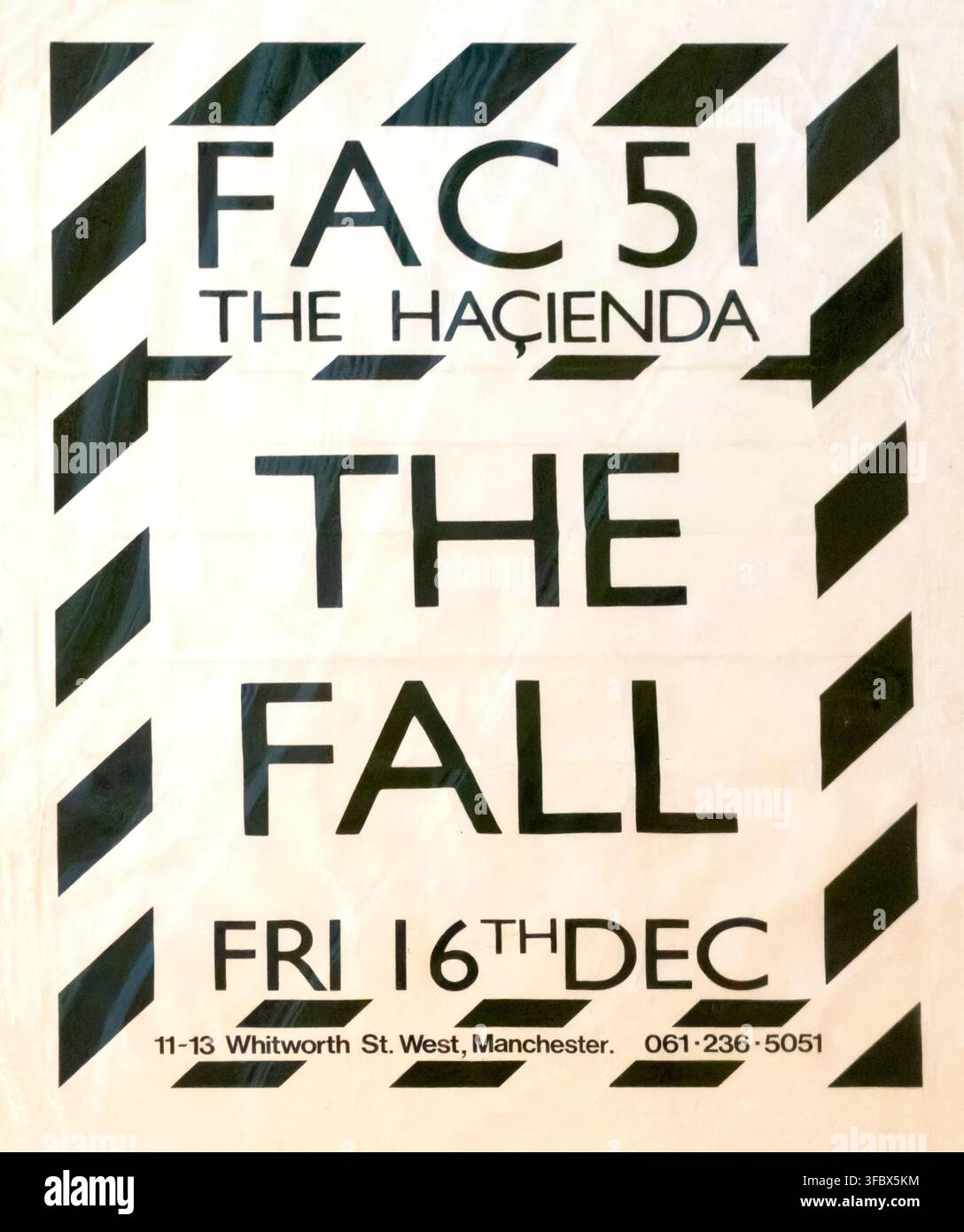
Image details
Contributor:
Tony SmithImage ID:
3FBX5KMFile size:
68 MB (1.7 MB Compressed download)Releases:
Model - no | Property - noDo I need a release?Dimensions:
4460 x 5329 px | 37.8 x 45.1 cm | 14.9 x 17.8 inches | 300dpiDate taken:
22 August 2026Location:
The Haçienda, Whitworth Street West, Manchester, England, UKMore information:
. A period flyer promotes The Fall at The Haçienda in Manchester on Friday 16 December 1983 as part of the club’s Christmas music programme. Led by Mark E Smith, The Fall became one of the most distinctive and enduring bands to emerge from Greater Manchester’s post-punk scene, known for repetitive, abrasive music, frequently changing line-ups and Smith’s unmistakable vocal delivery. By late 1983 the group already had an established reputation through records, radio sessions and intensive live performance, while remaining defiantly outside mainstream pop. The venue, Factory Records’ FAC 51 The Haçienda on Whitworth Street West, was still evolving from an ambitious and financially difficult live-music club into the dance venue that would later become internationally famous. Concerts by groups such as The Fall demonstrate the breadth of its programme before the acid-house era transformed Manchester nightlife. The simple flyer is a surviving piece of ephemeral graphic design created to publicise a single night rather than endure as an archive object. Today material like this is valued by collectors and historians because it links bands, venues and specific dates within the city’s music story. The December 1983 date links Mark E Smith and The Fall directly with the Haçienda and Factory-era Manchester, documenting the overlap between the city’s uncompromising post-punk bands and its emerging club culture. December 1983 sits in a particularly productive period for The Fall, whose work around this time combined angular guitar music with Mark E Smith’s dense social observation and deliberately anti-pop stance. A Haçienda date therefore links two Manchester institutions with very different trajectories: a band built around continuity of attitude and a venue that would later be reinvented by dance culture. That intersection of venue and artist history gives a small printed flyer documentary value far beyond its original purpose of filling one night’s audience.

