
Anti-fascist and Notting Hill Carnival resistance posters displayed together in London, England, UK.
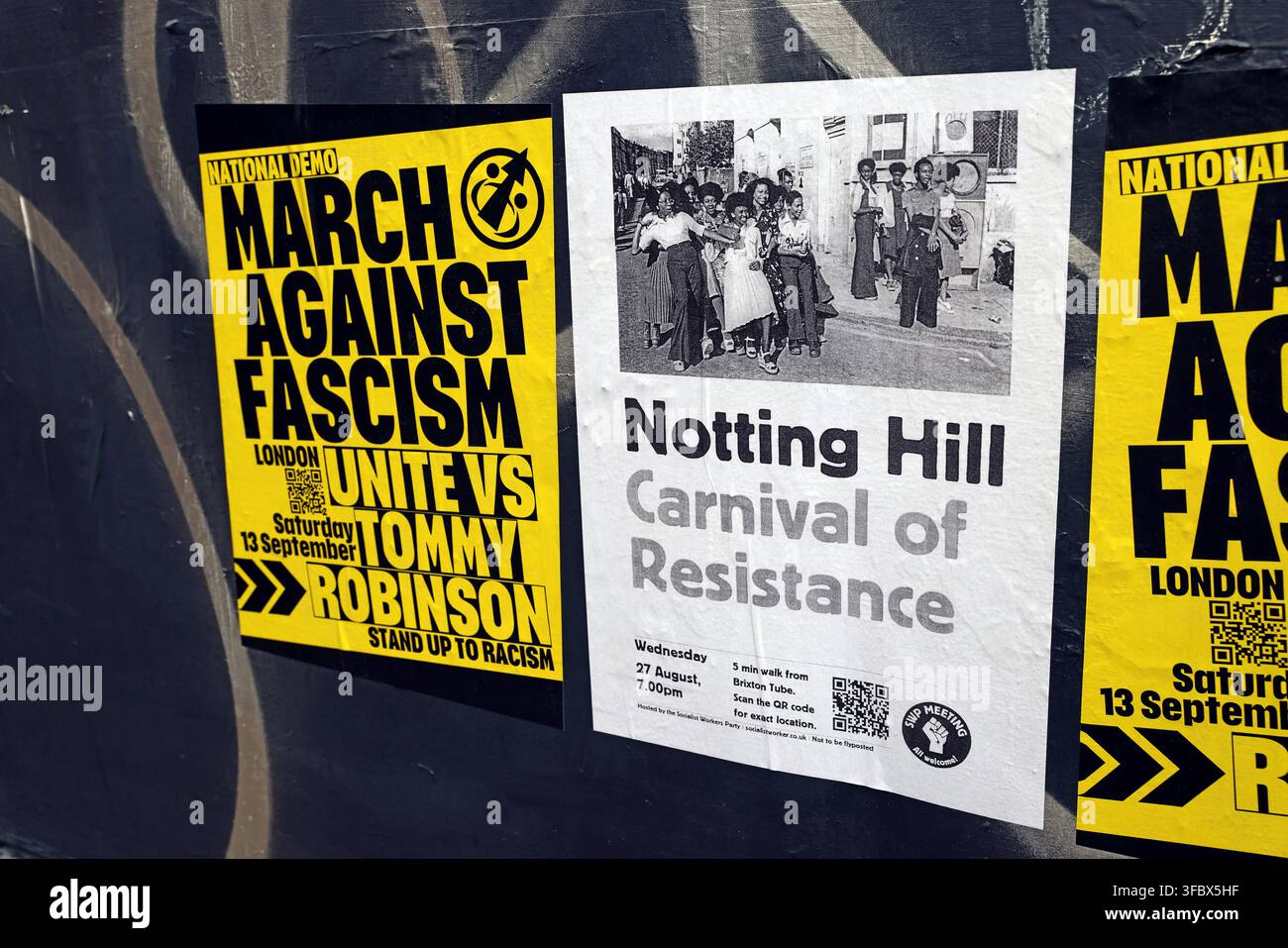
Image details
Contributor:
Tony SmithImage ID:
3FBX5HFFile size:
98.7 MB (3.7 MB Compressed download)Releases:
Model - no | Property - noDo I need a release?Dimensions:
7190 x 4796 px | 60.9 x 40.6 cm | 24 x 16 inches | 300dpiDate taken:
23 August 2025Location:
London, England, UKMore information:
. A group of campaign posters in London includes anti-fascist material alongside a “Notting Hill Carnival of Resistance” notice, bringing together themes of street protest, community organising and opposition to the far right. Political posters remain a direct form of public communication, designed to advertise marches, meetings and collective action in places where passers-by can encounter them outside conventional media channels. Anti-fascist campaigns in Britain have historically involved trade unions, community organisations, anti-racist groups and political activists, with tactics ranging from public demonstrations to leafleting and cultural events. Notting Hill carries particular significance in this context because the area’s carnival developed from Caribbean community traditions and has long been associated with multicultural identity, anti-racism and contested debates about policing, public space and belonging. The juxtaposition of the different posters therefore connects contemporary mobilisation with a much longer history of cultural and political organising in London. As physical ephemera, such notices are usually temporary, making photographs important records of how campaigns present themselves in the street. The posters bring together anti-fascist mobilisation and a message describing Notting Hill Carnival as resistance, reflecting how campaign groups used street print to connect race, community, culture and political protest. The physical clustering of campaign posters is itself significant because competing messages share limited public surfaces and depend on bold typography to be noticed quickly. Temporary street posters preserve campaign slogans, alliances and event framing that can disappear quickly after demonstrations or political actions. Side-by-side placement shows grassroots campaign design using stark headlines and limited colours to compete for attention.

