
Road sign directing visitors to Tameside Magistrates’ Court in Ashton-under-Lyne, Greater Manchester.
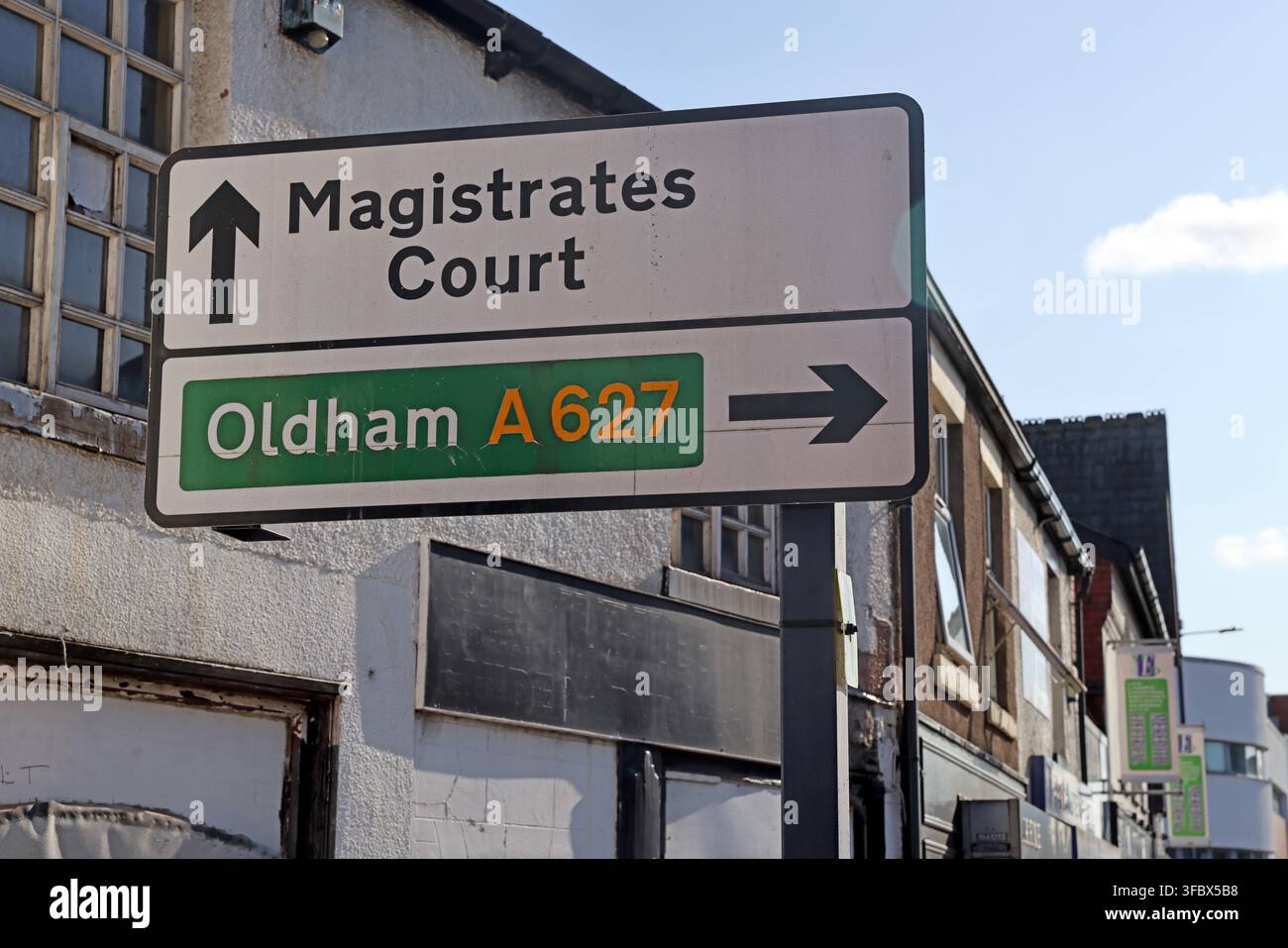
Image details
Contributor:
Tony SmithImage ID:
3FBX5B8File size:
128.1 MB (3.2 MB Compressed download)Releases:
Model - no | Property - noDo I need a release?Dimensions:
8192 x 5464 px | 69.4 x 46.3 cm | 27.3 x 18.2 inches | 300dpiDate taken:
22 August 2026Location:
Ashton-under-Lyne, Tameside, Greater Manchester, England, UKMore information:
. A road sign in Ashton-under-Lyne directs drivers and pedestrians towards Tameside Magistrates’ Court, placing the justice system within the ordinary street network of a busy Greater Manchester town. Clear wayfinding is particularly important for court users because hearings are time-specific and involve defendants, witnesses, solicitors, police officers, probation staff and members of the public who may not regularly visit the building. Magistrates’ courts deal with the majority of criminal cases in England and Wales, including summary offences and first hearings for more serious matters, so local accessibility has a direct effect on how people experience the justice system. Court backlogs and waiting times have become a continuing national issue, drawing attention not only to judges and legal professionals but also to the physical estate, staffing, listing systems and administrative capacity required to keep cases moving. The sign also references the A627, linking the courthouse to the wider road network around Ashton-under-Lyne. The directional sign makes Tameside Magistrates’ Court part of the everyday urban wayfinding system used by defendants, witnesses, solicitors, staff and members of the public. The court sign is part of the civic infrastructure that helps people reach time-critical hearings from Ashton-under-Lyne’s road network. Wayfinding also has an equality dimension because unfamiliar court users may be under stress, have limited time or face mobility and accessibility issues. Clear external signage reduces the chance of missed hearings and complements digital information, reminding planners that access to public services still depends on understandable physical environments. Its position beside the A627 route shows how access to justice depends partly on clear physical navigation through a busy town-centre road network. For time-critical hearings, clear street signage can reduce late arrivals and missed appearances.

