
Oblique street view of the historic Wilton's Music Hall entrance in Graces Alley, Tower Hamlets, East London, England, UK.
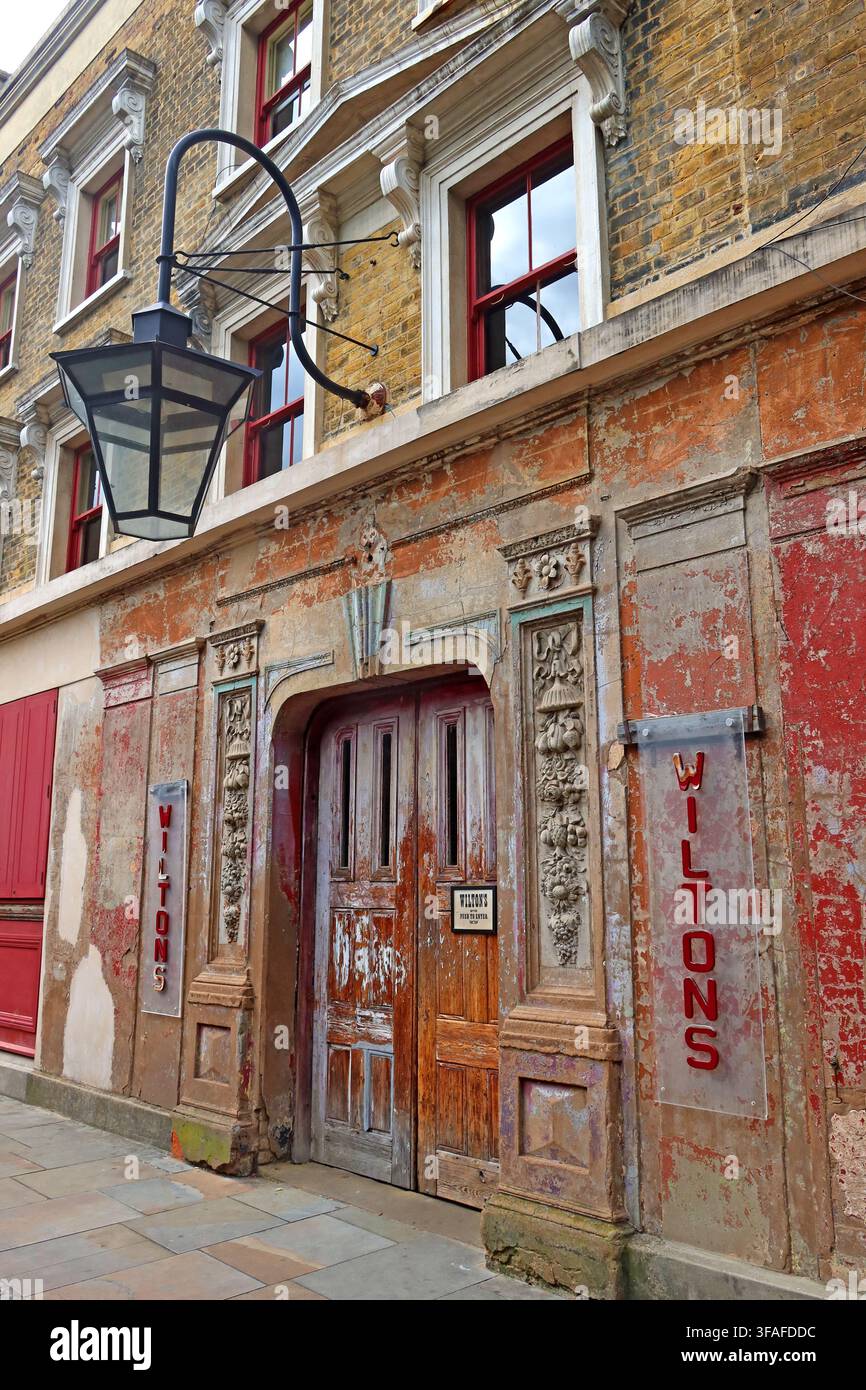
Image details
Contributor:
Tony SmithImage ID:
3FAFDDCFile size:
57.1 MB (3.2 MB Compressed download)Releases:
Model - no | Property - noDo I need a release?Dimensions:
3648 x 5472 px | 30.9 x 46.3 cm | 12.2 x 18.2 inches | 300dpiDate taken:
23 June 2024Location:
1 Graces Alley, London E1 8JB, England, UKMore information:
Oblique exterior view of Wilton's Music Hall in Graces Alley, Tower Hamlets, East London, with its weathered entrance doors, decorative stone panels, brick upper floors and traditional hanging lantern visible. The image records the unusual historic frontage of the cultural venue and the visibly aged surfaces retained through conservation. Wilton's is an important surviving example of London's music-hall heritage and today functions as a performance and arts venue, making the photograph relevant to stories about theatre history, heritage restoration, conservation, cultural tourism, the creative economy and regeneration in the East End. The narrow urban setting and mix of brick, carved stone, timber and ironwork reflect the layered architecture of the district. It also provides useful visual context for discussion of how historic entertainment buildings are adapted for contemporary public use while preserving original character. The location lies close to Cable Street and the old dockland districts, areas closely connected with London's industrial, maritime and social history. The photograph also provides a contemporary documentary record of surviving East London heritage at a time when property values, redevelopment and changing commercial uses continue to alter the character of inner-city neighbourhoods. Details in the fabric, signage and surrounding streetscape help locate the subject in its real urban setting rather than presenting it as an isolated landmark. It can therefore support features comparing historic London with twenty-first-century development, tourism and conservation policy, as well as archive-style coverage of places whose appearance may change through restoration, conversion or redevelopment.

