
Detail of the Battle of Cable Street mural referencing Mosley and 'They Shall Not Pass', Tower Hamlets, East London, UK.
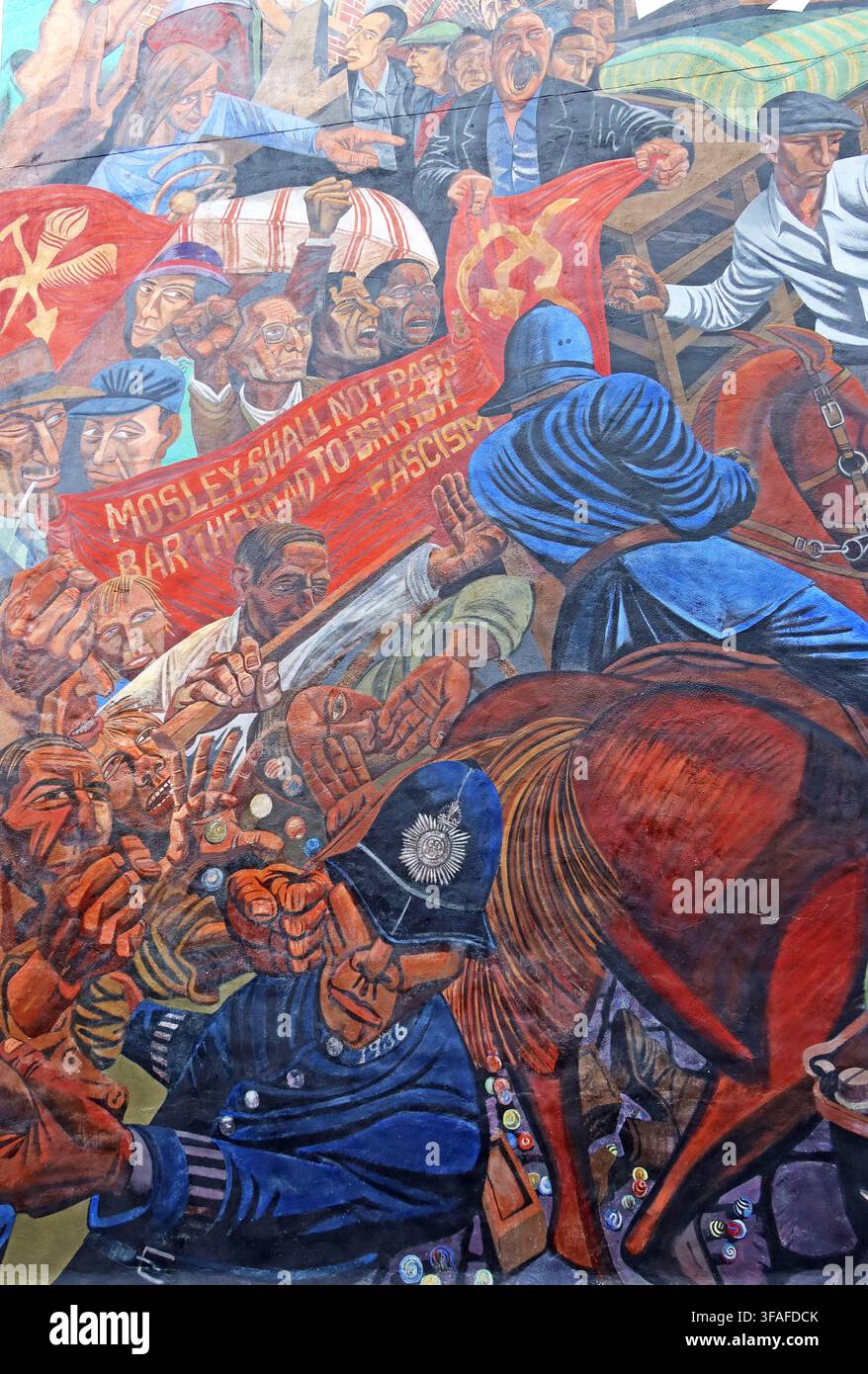
Image details
Contributor:
Tony SmithImage ID:
3FAFDCKFile size:
56.4 MB (3.7 MB Compressed download)Releases:
Model - no | Property - noDo I need a release?Dimensions:
3648 x 5400 px | 30.9 x 45.7 cm | 12.2 x 18 inches | 300dpiDate taken:
23 June 2024Location:
Cable Street, Shadwell, London E1, England, UKMore information:
Detail from the Battle of Cable Street mural in Tower Hamlets, East London, including imagery and wording associated with opposition to Oswald Mosley's fascist movement and the anti-fascist slogan 'They Shall Not Pass'. The mural commemorates the events of 4 October 1936, when residents and political activists resisted a planned British Union of Fascists march through the East End. The confrontation involved barricades, mounted police, street fighting and mass mobilisation by communities determined to prevent the march entering predominantly Jewish neighbourhoods. This close view is particularly useful for editorial stories about British fascism, political extremism, antisemitism, protest, community solidarity, the history of the labour movement, policing and civil liberties. It also documents how political memory is represented through permanent public art in contemporary London. The Battle of Cable Street remains a potent reference point in debates about racism, fascism, immigration, tolerance and collective action in Britain. The photograph also provides a contemporary documentary record of surviving East London heritage at a time when property values, redevelopment and changing commercial uses continue to alter the character of inner-city neighbourhoods. Details in the fabric, signage and surrounding streetscape help locate the subject in its real urban setting rather than presenting it as an isolated landmark. It can therefore support features comparing historic London with twenty-first-century development, tourism and conservation policy, as well as archive-style coverage of places whose appearance may change through restoration, conversion or redevelopment.

