
Walking and cycling direction sign at Appleton Thorn for Arley, Wright's Green and Dudlow's Green, promoting local active travel routes.
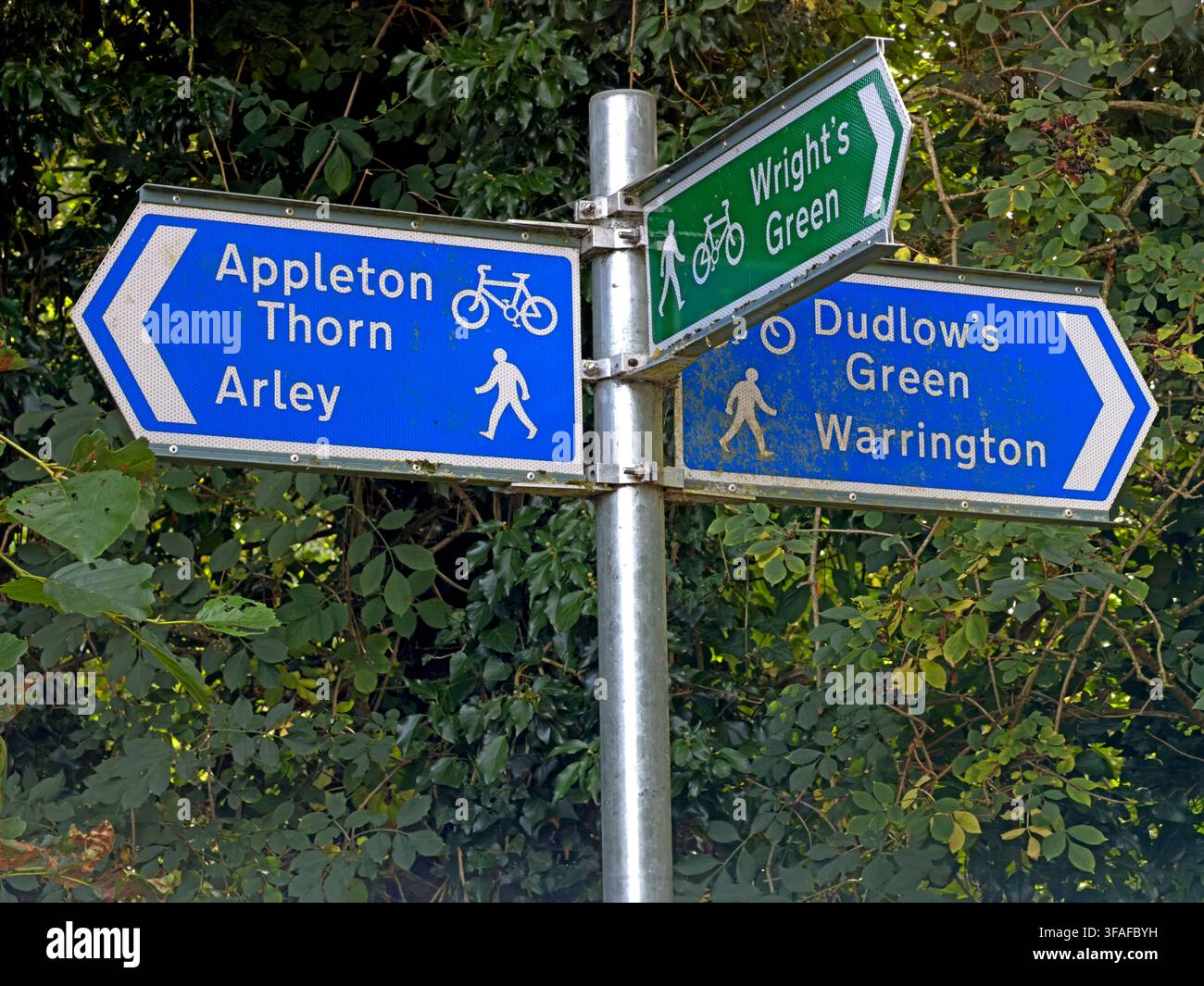
Image details
Contributor:
Tony SmithImage ID:
3FAFBYHFile size:
95.4 MB (3.7 MB Compressed download)Releases:
Model - no | Property - noDo I need a release?Dimensions:
6668 x 5001 px | 56.5 x 42.3 cm | 22.2 x 16.7 inches | 300dpiDate taken:
16 August 2026Location:
Appleton Thorn, Warrington, Cheshire, England, UKMore information:
Blue walking and cycling direction signs near Appleton Thorn, Warrington, pointing towards Arley, Wright's Green and Dudlow's Green. The signpost illustrates local active-travel provision linking villages and rural communities without requiring a car. Such routes are increasingly important in transport policy because short journeys made on foot or by bicycle can reduce traffic, improve health and provide mobility for people who do not drive. The image is suitable for editorial coverage of cycling, walking, sustainable transport, rural connectivity, rights of way, local authority infrastructure, leisure routes and public health. In semi-rural areas around Warrington, safe and clearly signed links can help residents access neighbouring settlements while also supporting recreational walking and cycling. The traditional green fingerpost visible alongside newer blue signs adds a contrast between historic road navigation and contemporary active-travel wayfinding. Photographed in Cheshire in August 2026. The photograph also has value as a record of everyday life in a North West English town at a time of substantial change to high streets, transport, housing and local services. Familiar signs, shops, pubs, roads and community facilities can become important visual evidence as regeneration projects progress and commercial uses change. The scene can support local-history comparisons as well as contemporary reporting on town-centre investment, household costs, accessibility, sustainability and the survival of traditional amenities. It is an unstaged editorial view, showing the subject in its normal physical and social setting.

