
Passengers waiting beneath departure boards at London Euston station, illustrating crowding and uncertainty at a major Network Rail terminus.
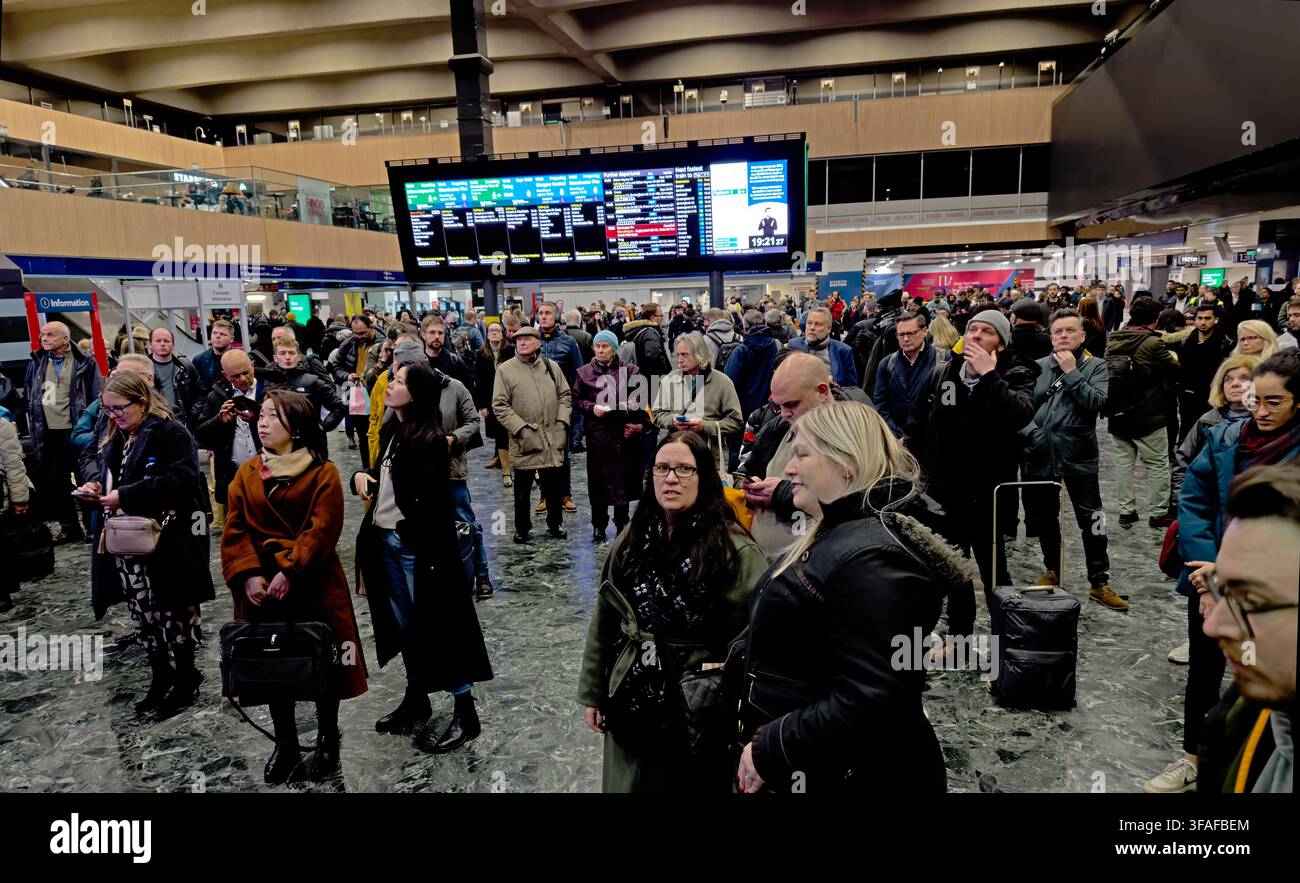
Image details
Contributor:
Tony SmithImage ID:
3FAFBEMFile size:
46.8 MB (1.7 MB Compressed download)Releases:
Model - no | Property - noDo I need a release?Dimensions:
5178 x 3159 px | 43.8 x 26.7 cm | 17.3 x 10.5 inches | 300dpiDate taken:
28 November 2023Location:
London Euston railway station, Euston Road, London NW1, England, UKMore information:
Crowd of passengers waiting beneath electronic departure boards at London Euston, one of Britain's busiest mainline railway termini. Travellers congregate on the concourse while awaiting platform information, a familiar feature of journeys from Euston where boarding details may be announced shortly before departure. The station is the London terminus for West Coast Main Line services to destinations including Birmingham, Manchester, Liverpool, Glasgow and north-west England. The image is suitable for editorial coverage of rail travel, Network Rail, passenger crowding, disruption, commuting, intercity trains, station capacity, timetable information and the passenger experience. Euston has also been central to long-running debate about redevelopment and HS2, adding relevance to stories about major transport infrastructure and investment. Photographed as a documentary travel scene, the image shows the practical pressure created when large numbers of passengers must monitor shared information screens and then move quickly towards platforms. The image also contributes to wider discussion about how Britain encourages a shift from private cars to public transport while keeping services affordable, reliable and accessible. Passenger information, interchange quality, frequency, capacity and digital ticketing all shape whether travellers find rail and bus networks practical for everyday journeys. As an unstaged documentary photograph it can be used for reporting on transport policy, fares, infrastructure investment, accessibility, decarbonisation and the passenger experience, while also providing a time-specific record of vehicles, branding and station environments that may change.

