
Senior digital Railcard displayed on a smartphone over a railway map, showing the three-year UK discount card for older train passengers.
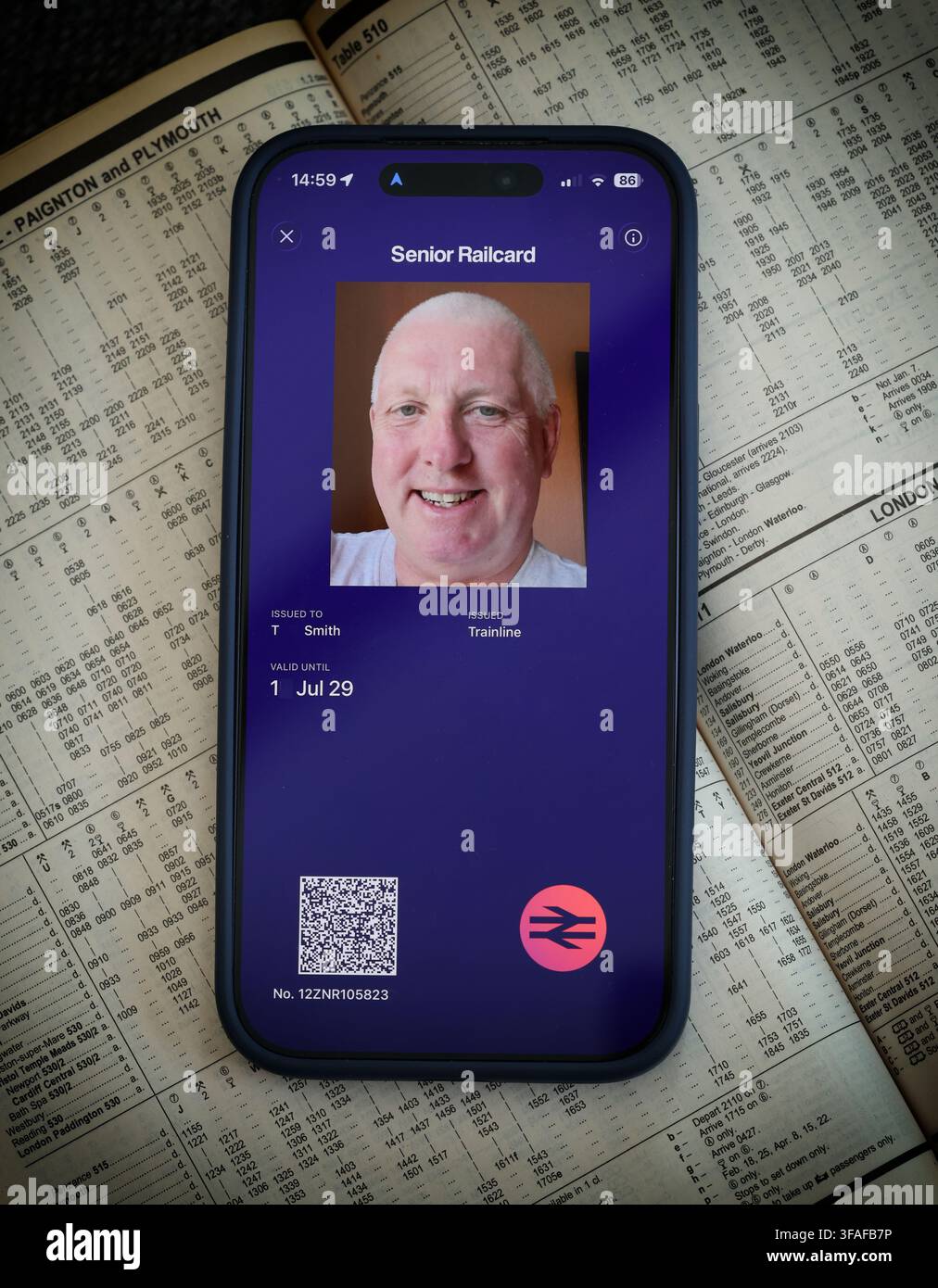
Image details
Contributor:
Tony SmithImage ID:
3FAFB7PFile size:
92.3 MB (2.8 MB Compressed download)Releases:
Model - no | Property - noDo I need a release?Dimensions:
5011 x 6435 px | 42.4 x 54.5 cm | 16.7 x 21.5 inches | 300dpiDate taken:
16 August 2026Location:
United KingdomMore information:
Digital Senior Railcard displayed on a smartphone laid across an old printed railway timetable featuring Plymouth services, creating a striking contrast between historic and modern ways of planning and paying for rail travel in Britain. The image brings together traditional paper railway information with the contemporary Railcard app and mobile technology now used by passengers on the national rail network. The Senior Railcard is available to people aged 60 and over and provides one third off most Standard and First Class rail fares across Great Britain, including Anytime, Off-Peak and Advance tickets, subject to restrictions. National Rail offers Railcards in digital form for storage on a mobile phone or tablet, reflecting the wider shift from printed timetables, ticket-office transactions and paper tickets towards apps, eTickets and digital journey planning. Plymouth has a long railway history as an important rail gateway for Devon and South West England, with services connecting the city with London, Bristol, Exeter and Cornwall. The juxtaposition provides a visual story about changing generations of railway travel: printed tables of times and routes beneath a modern smartphone carrying a passenger's photographic proof of entitlement to discounted fares. It also illustrates wider themes around the cost of train travel, concessionary fares for older people, retirement and leisure travel, social mobility, public transport accessibility and the increasing digitisation of everyday services. For many older passengers the Senior Railcard can make day trips, holidays, family visits and longer journeys more affordable, while its migration onto smartphones demonstrates how digital identity and mobile ticketing are becoming normal parts of British public transport. The composition combines railway nostalgia and ephemera with debates about rail fares, affordability, digital transformation, inclusion and the future of passenger rail in Britain.

