
West Yorkshire Police Bradford district headquarters at Trafalgar House
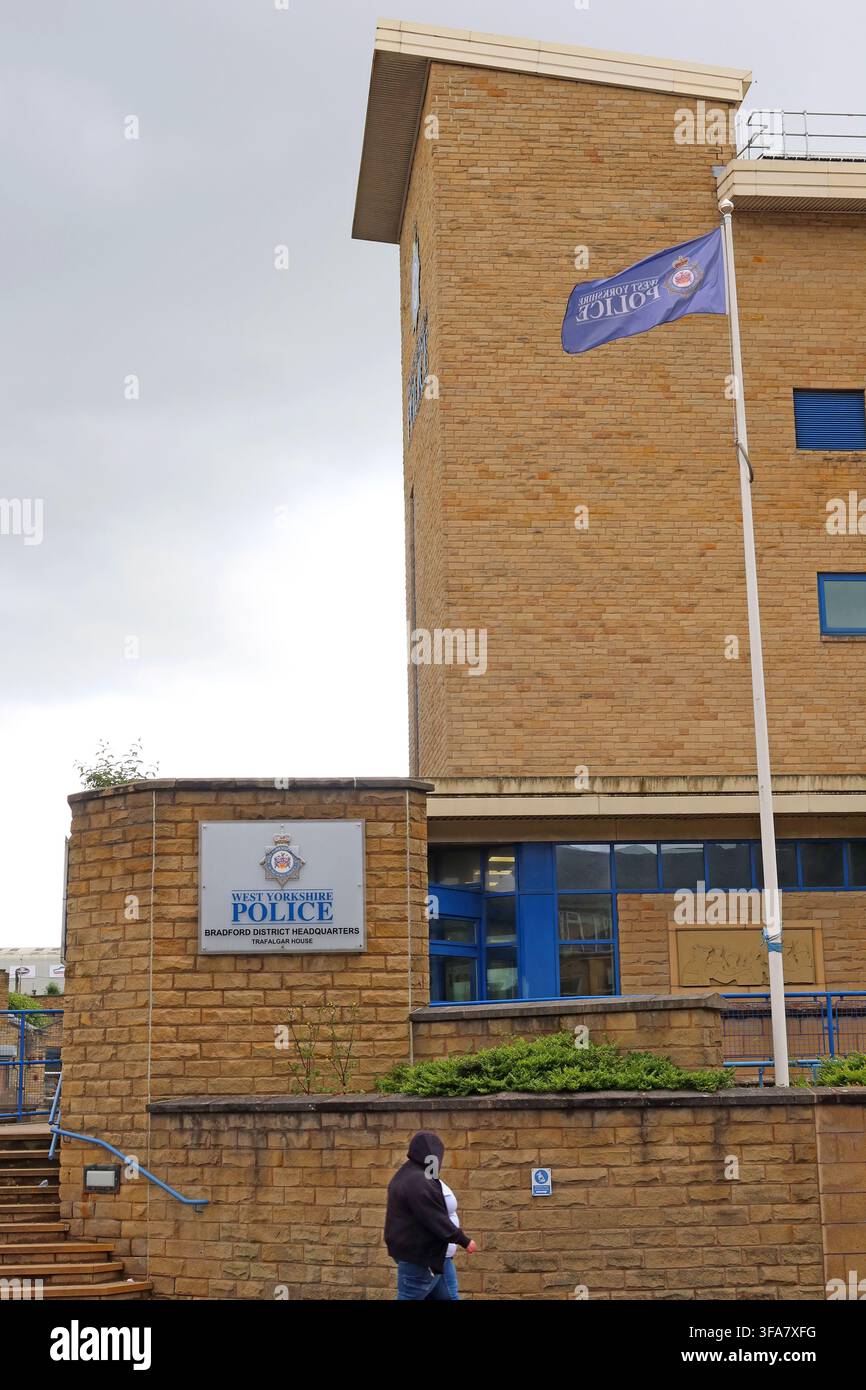
Image details
Contributor:
Tony SmithImage ID:
3FA7XFGFile size:
54.8 MB (2.1 MB Compressed download)Releases:
Model - no | Property - noDo I need a release?Dimensions:
3573 x 5360 px | 30.3 x 45.4 cm | 11.9 x 17.9 inches | 300dpiDate taken:
14 June 2024Location:
Bradford, West Yorkshire, England, UKMore information:
. West Yorkshire Police Bradford district headquarters at Trafalgar House. Photographed on 14 June 2024. The recorded location is Bradford, West Yorkshire, England, UK. The building is shown as part of the city's police and public-service estate, providing an editorial image for policing, law enforcement, local public services, crime prevention, community safety and police administration. The urban setting also records the contemporary built environment of Bradford and the physical premises from which local police operations are managed. For the story of public service, it is useful to note that police headquarters and stations record the administrative infrastructure behind everyday law enforcement; Buildings may change as forces consolidate estates, adopt new technology and move from traditional town-centre stations to larger operational hubs. The historical setting for station architecture is that railways transformed British towns from the nineteenth century onwards, concentrating passenger movement around stations while creating new suburbs, goods yards and industrial connections; Station buildings, platforms, signals and rolling stock can date a transport scene as clearly as surrounding architecture. Seen through cityscape, the earlier context is that buildings are often the most durable evidence of former institutions and businesses; Brickwork, stonework, windows, entrances and signs can survive changes of ownership or use, allowing photography to document architectural style as well as the evolution of a street or district. For present-day public service, 2026 is significant because accessibility and clear public information are increasingly significant expectations for justice buildings; Ramp signs, bilingual wording and wayfinding can therefore illustrate inclusive design as well as law, courts and public administration. Its associated themes also include urban design, adaptive reuse, heritage building, and construction.

