
Scottish Government or Goverment staff car park only sign in Oban, Scotland
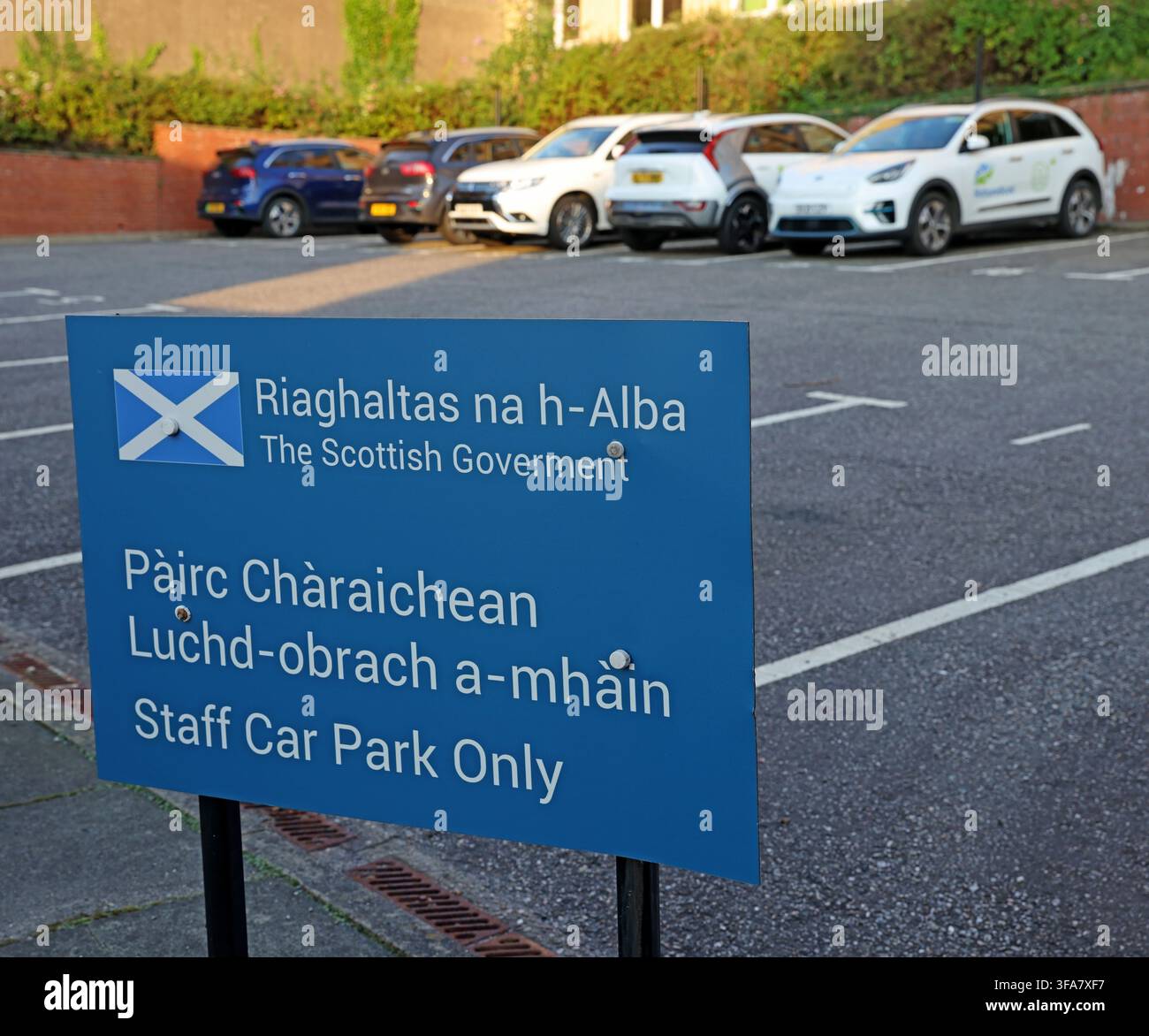
Image details
Contributor:
Tony SmithImage ID:
3FA7XF7File size:
102.6 MB (2.2 MB Compressed download)Releases:
Model - no | Property - noDo I need a release?Dimensions:
6561 x 5464 px | 55.5 x 46.3 cm | 21.9 x 18.2 inches | 300dpiDate taken:
17 August 2025Location:
Oban, Argyll and Bute, Scotland, UKMore information:
. Scottish Government or Goverment staff car park only sign in Oban, Scotland. Photographed on 17 August 2025. The recorded location is Oban, Argyll and Bute, Scotland, UK. Parked cars and the surrounding public-sector site are visible behind the sign. The image documents Scottish Government premises, workplace parking, official signage and everyday use of Gaelic in public administration, and can illustrate stories about government offices, staff travel, parking provision, public-sector estates and regional services in western Scotland. Oban grew around a sheltered bay on Scotland's west coast and expanded in the nineteenth century with steamship traffic and the arrival of the railway in 1880. It remains a major gateway to the Inner Hebrides, with CalMac ferries, rail and road connections concentrated around the waterfront. Tourism, seafood, island travel and maritime services all contribute to the town's modern economy. The historical setting for minority language is that bilingual public signage reflects the long history of Scottish Gaelic and modern efforts to increase its visibility in administration, transport and cultural life; English-Gaelic signs make language policy tangible in everyday streets and public buildings. Seen through visitor guidance, the earlier context is that wayfinding developed from painted names and fingerposts into standardised road, rail and public-information systems; Local signs still retain distinctive typography or bilingual wording even within increasingly consistent national standards. For highway signage, the historical context is that the expansion of mass car ownership after the Second World War transformed town centres and created new infrastructure for parking, one-way systems, motorways and speed management. In the 2026 discussion of minority language, gaelic visibility remains an active element of Scottish cultural policy, with public bodies continuing to use bilingual signage and services; Such photographs.

