
Oban ferry terminal passenger entrance for CalMac island services
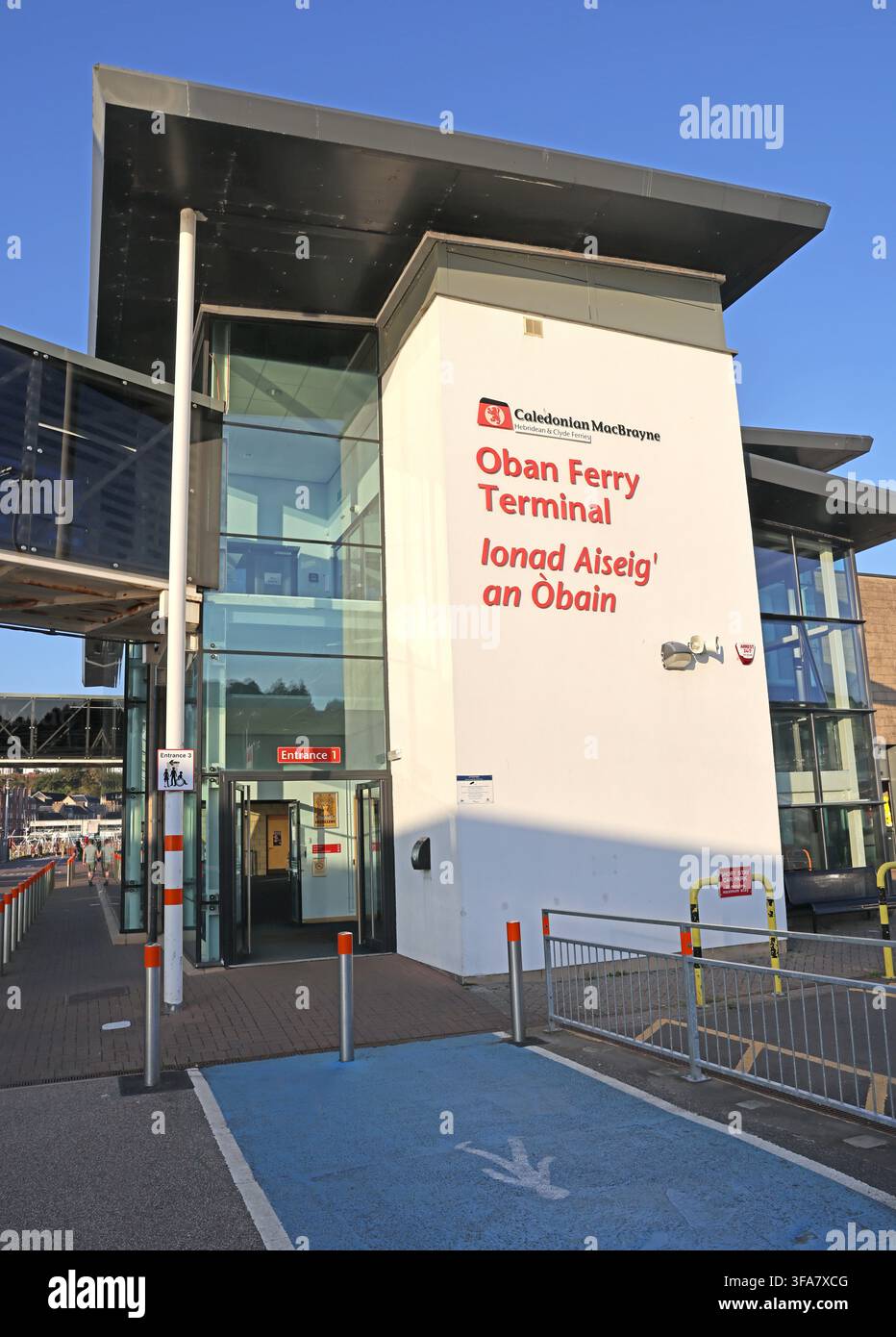
Image details
Contributor:
Tony SmithImage ID:
3FA7XCGFile size:
119.1 MB (3.8 MB Compressed download)Releases:
Model - no | Property - noDo I need a release?Dimensions:
5464 x 7616 px | 46.3 x 64.5 cm | 18.2 x 25.4 inches | 300dpiDate taken:
17 August 2025Location:
CALMAC Ferry Terminal, Oban, Argyll and Bute, Scotland, PA34 4DB, UKMore information:
. Oban ferry terminal passenger entrance for CalMac island services. Photographed on 17 August 2025. The recorded location is CALMAC Ferry Terminal, Oban, Argyll and Bute, Scotland, PA34 4DB, UK. Passenger entrance at Oban Ferry Terminal, operated for Caledonian MacBrayne services linking the mainland with islands of the Inner Hebrides. The modern terminal building and clear passenger signage are shown in daylight. Oban is one of Scotland's busiest west-coast ferry gateways, and this image provides contemporary editorial context for island travel, public transport, CalMac operations, tourism, ferry infrastructure, regional connectivity and passenger journeys in Argyll and Bute. Oban grew around a sheltered bay on Scotland's west coast and expanded in the nineteenth century with steamship traffic and the arrival of the railway in 1880. It remains a major gateway to the Inner Hebrides, with CalMac ferries, rail and road connections concentrated around the waterfront. Tourism, seafood, island travel and maritime services all contribute to the town's modern economy. Looking at coastal transport, the longer history is that harbours and ferry ports have shaped coastal communities for centuries, providing sheltered water for fishing, trade and passenger travel; Quays, piers, slipways and terminal buildings record changing vessel sizes and the transition from cargo handling to modern roll-on roll-off ferry operations. In 2026, coastal transport remains relevant because current 2026 transport policy places increasing emphasis on integrated journeys, active travel and lower-emission fleets, so ferry terminals now sit within wider networks of rail, bus, cycling and electric-vehicle infrastructure rather than functioning as isolated ports. Associated keywords and synonyms include working harbour, maritime transport, island connectivity, lifeline ferry, port infrastructure, quayside, marine travel, harbour town, passenger ferry, vehicle ferry, and maritime heritage.

