
CalMac ferry Loch Striven in Oban harbour in evening light
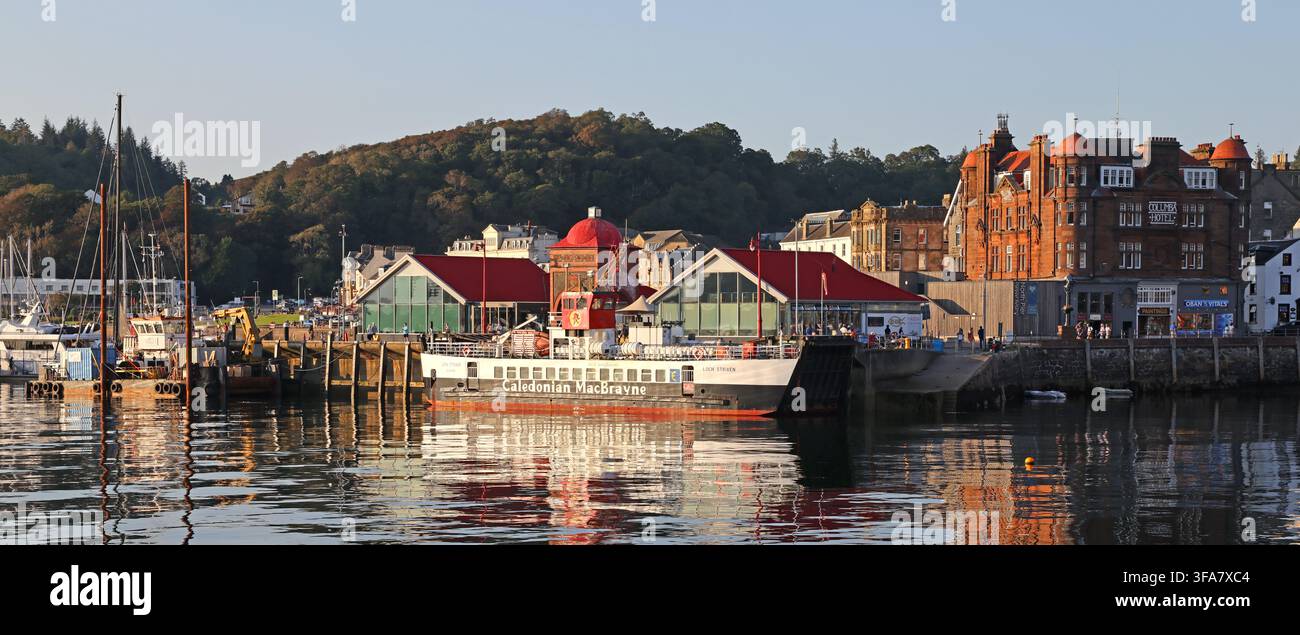
Image details
Contributor:
Tony SmithImage ID:
3FA7XC4File size:
76.7 MB (3.3 MB Compressed download)Releases:
Model - no | Property - noDo I need a release?Dimensions:
7995 x 3354 px | 67.7 x 28.4 cm | 26.7 x 11.2 inches | 300dpiDate taken:
17 August 2025Location:
Oban, Argyll and Bute, Scotland, UKMore information:
. CalMac ferry Loch Striven in Oban harbour in evening light. Photographed on 17 August 2025. The recorded location is Oban, Argyll and Bute, Scotland, UK. Caledonian MacBrayne vessel Loch Striven in Oban harbour in warm evening light, with the town waterfront and wooded hillside behind. The small ferry is part of Scotland's west-coast maritime transport landscape and is photographed in the sheltered harbour used by CalMac services, fishing boats and visiting craft. Oban grew around a sheltered bay on Scotland's west coast and expanded in the nineteenth century with steamship traffic and the arrival of the railway in 1880. It remains a major gateway to the Inner Hebrides, with CalMac ferries, rail and road connections concentrated around the waterfront. Tourism, seafood, island travel and maritime services all contribute to the town's modern economy. For the story of maritime heritage, it is useful to note that maritime gateways connect island and mainland economies, carrying residents, visitors, freight and vehicles while also supporting fishing, leisure craft and tourism; Older waterfront buildings often survive beside modern ferry infrastructure, making port landscapes unusually layered records of economic change. The historical setting for beach is that coastal safety information is shaped by local hazards such as currents, tides, mud, pollution or shipping, meaning signs can be important evidence of how a shoreline is managed. For present-day maritime heritage, 2026 is significant because current 2026 transport policy places increasing emphasis on integrated journeys, active travel and lower-emission fleets, so ferry terminals now sit within wider networks of rail, bus, cycling and electric-vehicle infrastructure rather than functioning as isolated ports. In the 2026 discussion of beach, coastal access, erosion, water quality and climate resilience continue to be important issues around Britain; Long-distance walking routes increase visitor use.

