
Fishing boats moored in Oban harbour, Argyll and Bute, Scotland
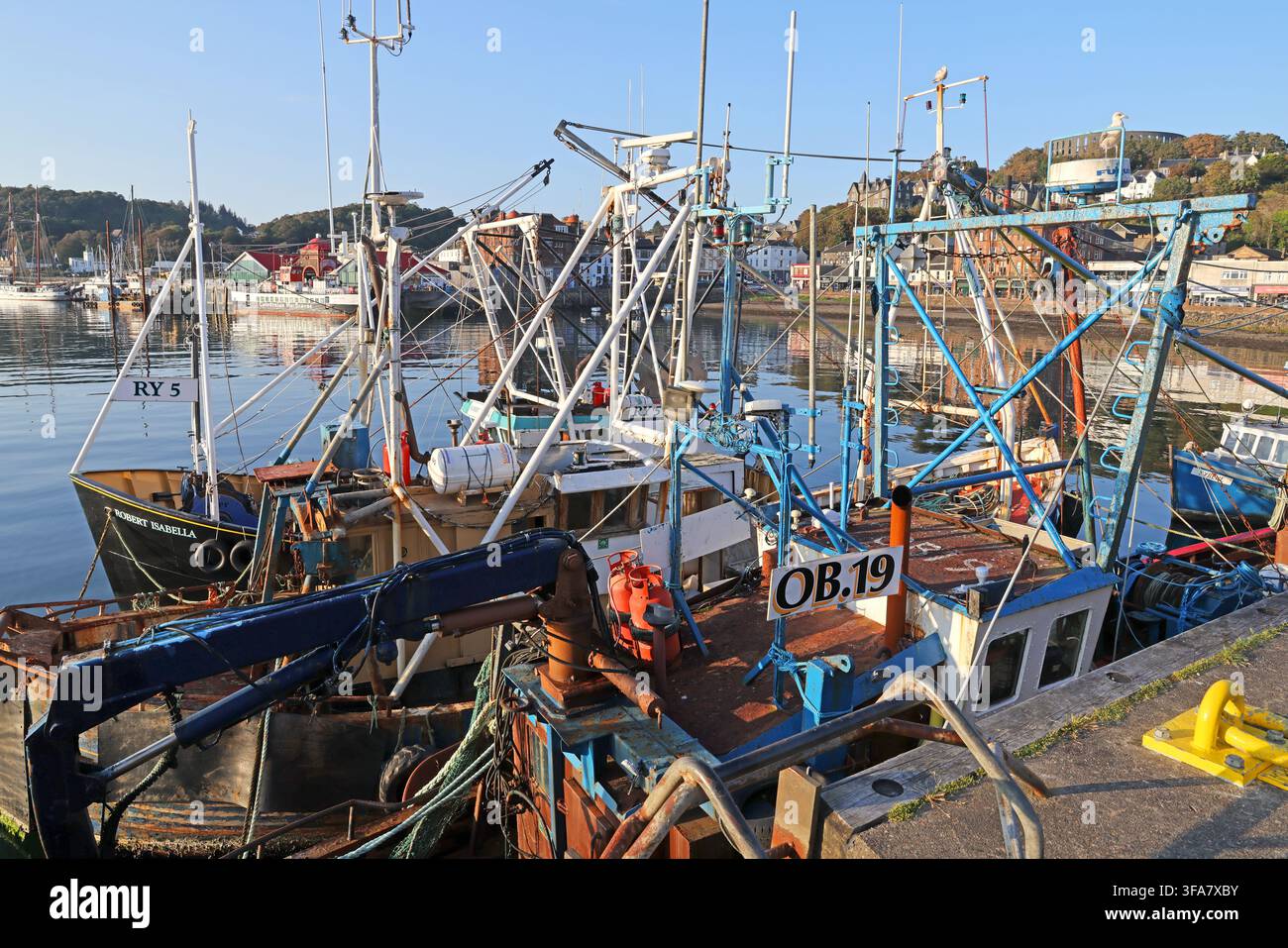
Image details
Contributor:
Tony SmithImage ID:
3FA7XBYFile size:
128.1 MB (6.4 MB Compressed download)Releases:
Model - no | Property - noDo I need a release?Dimensions:
8192 x 5464 px | 69.4 x 46.3 cm | 27.3 x 18.2 inches | 300dpiDate taken:
17 August 2025Location:
Oban, Argyll and Bute, Scotland, UKMore information:
. Fishing boats moored in Oban harbour, Argyll and Bute, Scotland. Photographed on 17 August 2025. The recorded location is Oban, Argyll and Bute, Scotland, UK. Nets, masts, rigging and deck equipment create a dense maritime scene reflecting the continuing importance of fishing and marine activity to west-coast communities. The photograph provides editorial context for the Scottish fishing industry, seafood supply chains, harbour life, coastal employment, commercial vessels and the relationship between tourism and traditional working waterfronts in Oban. Oban grew around a sheltered bay on Scotland's west coast and expanded in the nineteenth century with steamship traffic and the arrival of the railway in 1880. It remains a major gateway to the Inner Hebrides, with CalMac ferries, rail and road connections concentrated around the waterfront. Tourism, seafood, island travel and maritime services all contribute to the town's modern economy. Within the history of passenger ferry, working harbours combine civil engineering with everyday transport; Their breakwaters, piers, navigation lights and boarding areas reflect successive generations of investment as traditional fishing and coastal shipping have been joined by tourism, cruise traffic and lifeline ferry services. In relation to seaside, historical context shows that coastal paths and beaches combine recreation with navigation, safety and environmental management; Warning signs, sea walls and access routes record how authorities respond to tides, erosion and changing public use. Against the 2026 backdrop for passenger ferry, current 2026 transport policy places increasing emphasis on integrated journeys, active travel and lower-emission fleets, so ferry terminals now sit within wider networks of rail, bus, cycling and electric-vehicle infrastructure rather than functioning as isolated ports. The subject additionally connects Oban, harbour, fishing, boats, Argyll, maritime, and trawler.

